
Most Instant Pot problems come down to three things – not enough thin liquid, lid-related errors (the sealing ring, the steam release valve or the lid itself) or normal behavior that’s mistaken for a problem. If your Instant Pot won’t turn on, push the power cord firmly into the back of the base or try another outlet. To reset any Instant Pot, press Cancel so the display says OFF, then press and hold Cancel until it beeps. Unplugging it isn’t a reset, but it allows you to start over.
This post contains affiliate links. As an Amazon Associate, I earn from qualifying purchases. Please read the disclosure.
ℹ️ Introduction
I’ve been using an Instant Pot for more than 10 years and have owned most of the models along the way, from the basic Duo to the Ultra, the Pro and the Pro Crisp.
This is a living document and has collected over 250 reader comments, and I keep up with the Instant Pot groups on Facebook and Reddit too. The same problems come up again and again, and most of them have a simple fix.
➡ Check these first. Before you scroll any further, these are some of the most common problems:
- the power cord has come loose from the base (for models with detachable cords)
- the sealing ring isn’t securely fitted in the lid
- the steam release is not on Sealing
- the lid isn’t turned all the way, and isn’t locked
- there isn’t enough thin liquid (e.g. broth, water) in the pot
Find Your Problem
IS THIS NORMAL?
- Says On or Preheating, no countdown
- Hissing and steaming while heating
- Float valve moving up and down
- Clicking or crackling
- Counting up after cooking
- Says OFF
- Water in the cup or under the pot
- Plastic smell on a new Instant Pot
- Rainbow or white stains
- Taking too long to cook
BEFORE YOU COOK
- Won’t turn on
- Display frozen or buttons dead
- How to reset an Instant Pot
- One button or program doesn’t work
- Sauté too weak to sear
- Can’t set the cook time
- Not heating
- Lid won’t close
- Lid, Close Lid or Open Lid message
- Pot message
COMING TO PRESSURE
- Won’t seal or come to pressure
- Steam leaking during cooking
- Float valve won’t go up (or down)
- Burn, Food Burn or OvHt
- Tomato or jarred sauces
- PrSE on the display
- Other error codes
COOKING PROCESS
FOOD PROBLEMS
- Undercooked
- Overcooked or mushy
- Rice burns or won’t seal
- Meat dry and tough
- Slow cook not hot enough
- Yogurt didn’t set
- Eggs have green ring
CARE, WEAR AND ACCIDENTS
- Sealing ring smells
- New sealing ring won’t seal
- Float valve or steam release fell off
- Pitting or flaking in the inner pot
- Melted base or lid
- Water poured into the base
- Steam damaging cabinets
STILL NOT WORKING?
- Run a water test
- Contact Instant Pot
- How long Instant Pots last
- Bought it secondhand
- Not an Instant Pot
☗ LID PARTS
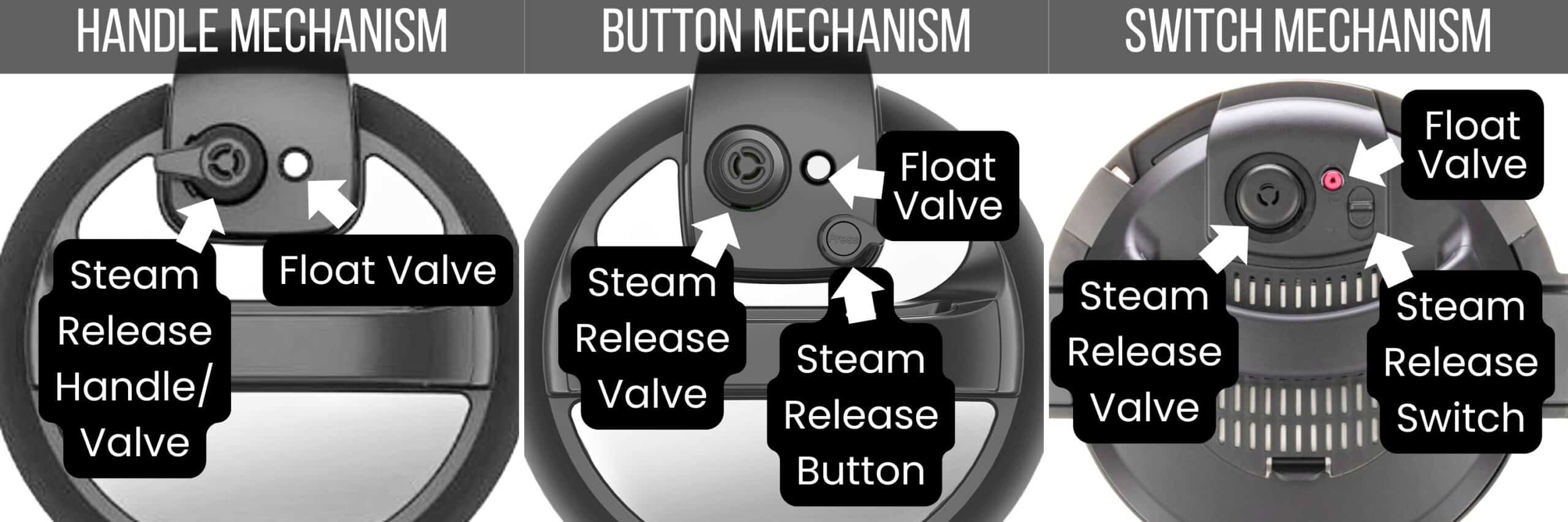
If you’re not sure which part is the float valve and which is the steam release, this photo labels them on several lid styles. My Instant Pot quick start guide walks you through every part if you’re brand new.
✅ Is This Normal?
A lot of panicked posts in the Instant Pot groups turn out to be the Instant Pot doing exactly what it should. These are all normal.
Says On or Preheating but No Countdown
PRESSURE COOK
When the Instant Pot is heating up and building pressure, some models say On; some newer models show Preheating with a row of bars. The countdown only starts once it reaches pressure and the float valve pops up.
How long that takes depends on how much food and liquid is in the pot. It’s usually 10 to 30 minutes. A full pot of soup, a big roast or frozen meat can take longer.
If steam keeps pouring out and the float valve never rises, it isn’t sealing. See won’t seal.
Once in a while, the float valve does come up but the display says On and never counts down. It happened to me once while making hard boiled eggs, and I suspect I’d used too little water.
If it happens to you, set a kitchen timer for the cook time as soon as the float valve is up, press Cancel when it goes off, and release the pressure the way your recipe says.
SLOW COOK
When using the Slow Cook program, On or Preheating can last a long time before the countdown starts. That’s normal; see slow cook.
SOUS VIDE
Sous Vide can show On or Preheating for a long time too, and that’s also normal. The water doesn’t circulate, so the sensor at the bottom may not pick up that the rest of the water is hot.
Stir the water and check it with a separate thermometer. If it’s at the desired temperature, ignore the screen, put your sous vide bags in and set an external timer.
The countdown often won’t start on its own, but the food is still cooking. Starting with hot water speeds up the preheat. My Instant Pot sous vide guide has the full steps.
Hissing and Steam Escaping While Heating
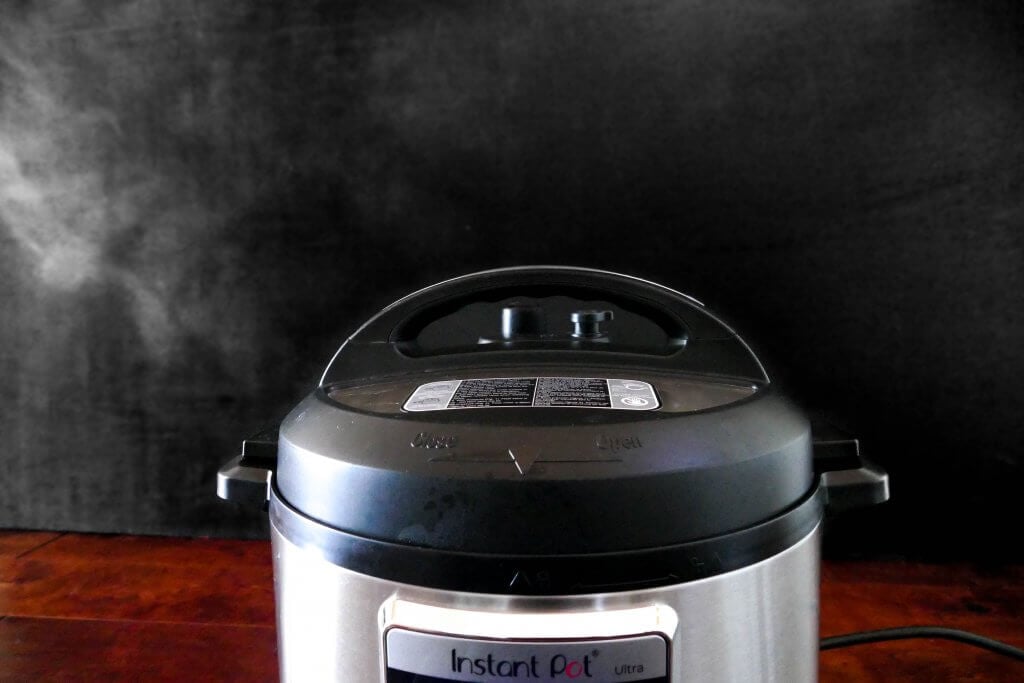
A little steam and some hissing from the float valve and the steam release valve are normal while it comes to pressure. That will stop once the float valve pops up. After that, a tiny wisp now and then is fine too, especially with soups and stews.
Steam that keeps pouring out after 10 minutes or so, or steam coming out around the edge of the lid, isn’t normal. See steam leaking.
Float Valve Moving Up and Down
Just before it seals, the float valve can jiggle and move up and down for a few seconds while steam escapes around it. That’s the pressure building. Give it a minute and it usually pops up and stays up.
If it continues to move up and down for minutes and never stays up, there’s usually too little liquid, or the float valve’s small silicone cover is dirty or worn. Both are covered under won’t seal.
Clicking, Crackling or Popping Sounds
A soft click now and then is the heating element switching on and off to hold the temperature. That’s normal.
A crackle or pop in the first minute usually means the outside of the inner pot was wet. It’s nothing to worry about. Next time, wipe the bottom of the inner pot dry before you put it in the base.
Counting Up After Cooking
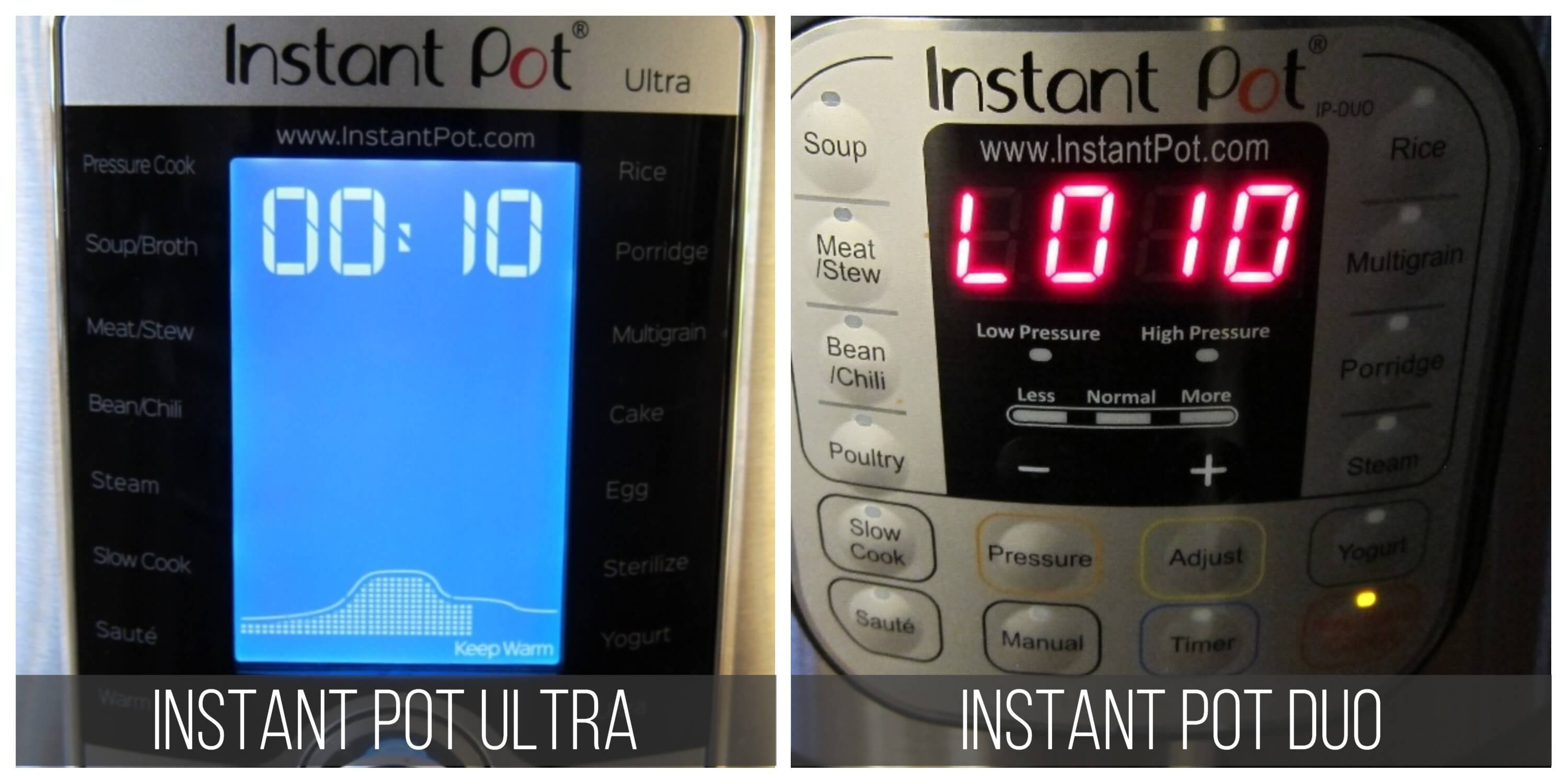
When the cook time ends, your Instant Pot switches to Keep Warm and counts up. For example, L0:10 (00:10 with Keep Warm showing on some models) means it finished 10 minutes ago. The pressure is coming down on its own during that time, so it doubles as a timer for a natural release. My Instant Pot tips and FAQs post explains the rest of the display.
Says OFF
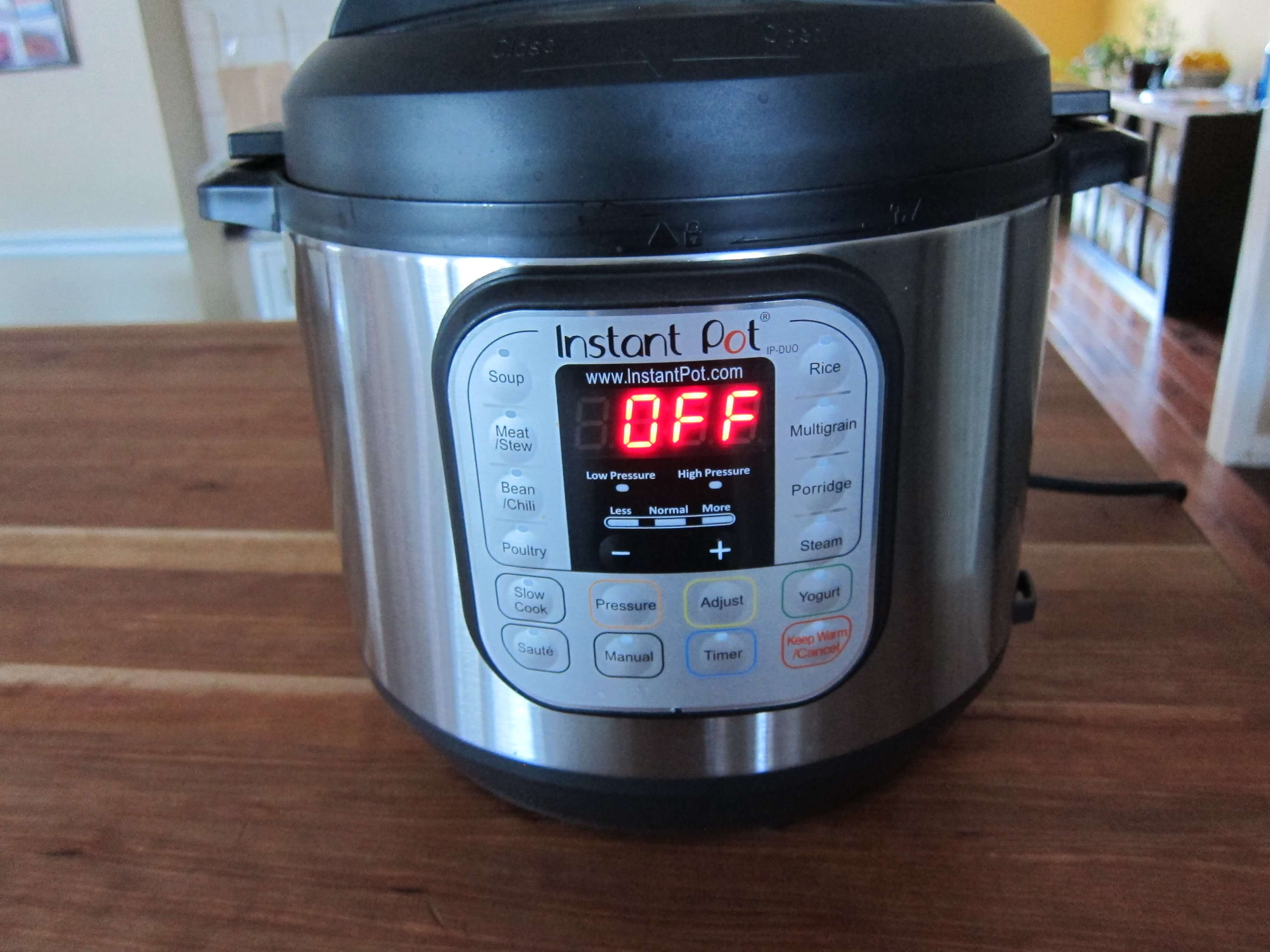
OFF on the display when you plug it in means it’s ready and waiting. It stays lit the whole time it’s plugged in, and there’s no setting to turn it off. If it bothers you, unplug it when you’re not using it.
If it goes straight to OFF (or End on newer models) when the cook time ends, instead of counting up, then Keep Warm is turned off. The pressure still comes down on its own, so natural release works the same way; you just have to time it yourself. Turn Keep Warm back on before you start the next cook if you want the count-up timer.
If it says OFF and none of the buttons respond, see display frozen.
Water in the Cup on the Back or Under the Pot
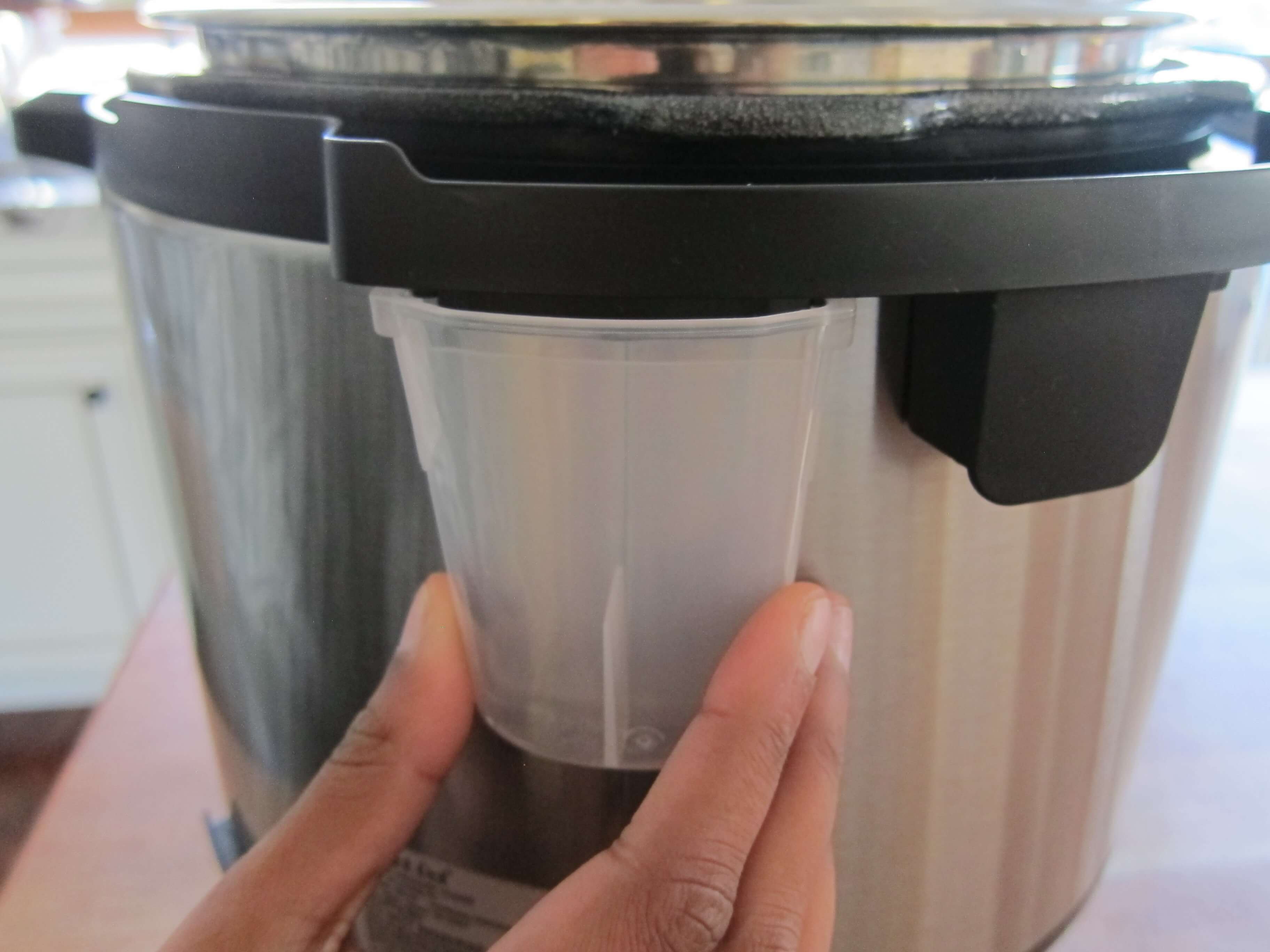
The clear plastic cup on the back of the base is the condensation collector. It catches the water that drips off the rim when you open the lid. Empty it after cooking.
It doesn’t always fill up. Pastas and soups are most likely to fill it up. If water ends up under the pot, check that the cup is clipped on and not already full.
Water running out of the bottom of the base isn’t normal! Unplug it and see water poured into the base.
Plastic Smell on a New Instant Pot
A brand new Instant Pot can smell a little like plastic. I’ve had this happen with some of mine. Run a water test and it usually fades after the first or second use. If the smell gets stronger or you see smoke, unplug the unit and contact Instant Pot customer care.
Rainbow or White Stains on the Inner Pot
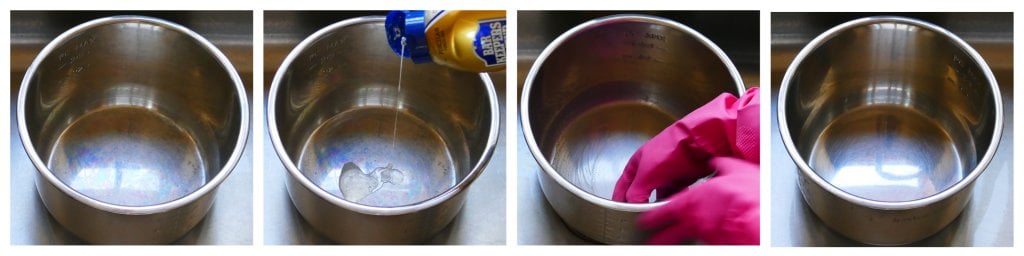
Stainless steel can get a rainbow or blue-purple tint, especially after it overheats. It can also get white spots from minerals or starch. They’re harmless and they can be cleaned.
Bar Keeper’s Friend is my go-to for the inner pot, and I use it on all my stainless steel pots and my kitchen sink too. It comes as a powder or a liquid. I prefer the liquid; shake it well first.
Run a fingertip over the spot. If it’s smooth, it’s a stain. If it feels rough or dented, see pitting.
Instant Pot Taking Too Long to Cook
The time in a recipe is only the pressure cooking part. The real total is the time to come to pressure, plus the cook time, plus the time to release pressure.
For example, a recipe that pressure cooks for 10 minutes might take 15 minutes to come to pressure and another 5 to 20 minutes to release naturally. A bigger batch takes longer on both ends.
🔌 Before You Cook – Power, Buttons and Lid
Instant Pot Won’t Turn On
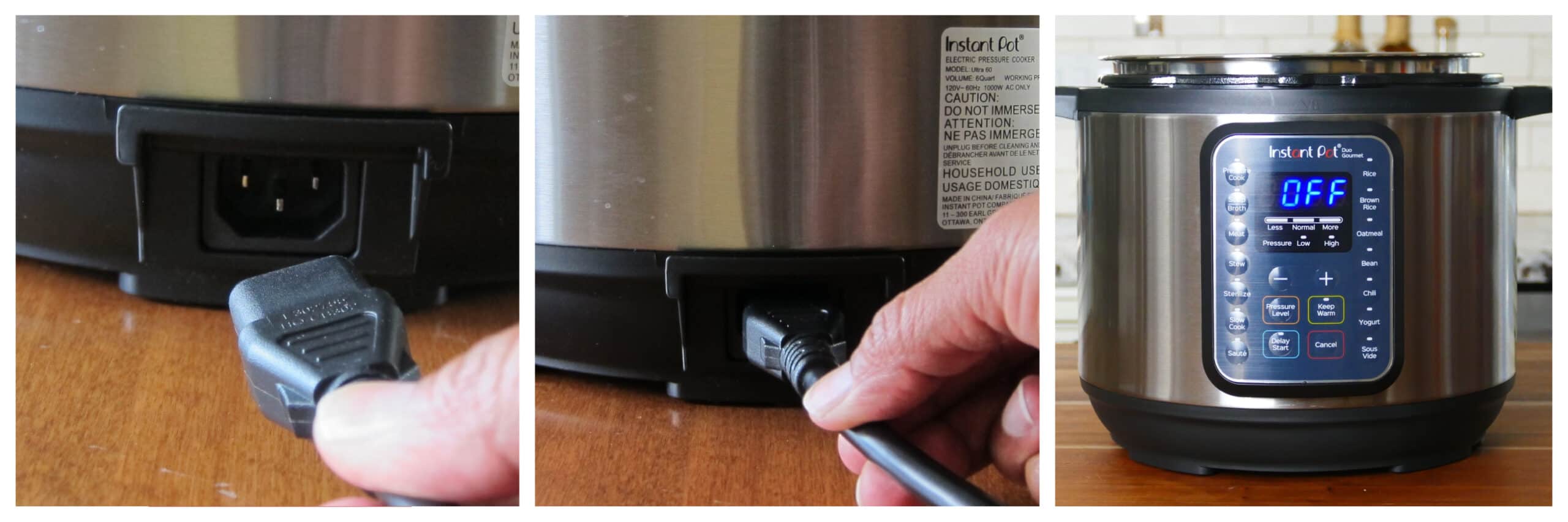
Start with the cord. If your model has a detachable power cord, push it firmly into the back of the base. It becomes loose more often than you’d think, and it’s the fix in a surprising number of “my Instant Pot died” complaints.
Next, rule out the outlet. Plug in another appliance, check the outlet with an electrical outlet tester, or try another outlet. Kitchen outlets with a reset button (GFCI) trip easily, so press the outlet’s reset button if it has tripped.
If it died in the middle of cooking, often on Sauté, and won’t come back with any outlet, an internal thermal fuse has probably blown. It’s a safety part that cuts the power when the base overheats. You’ll need to create a support ticket.
Out of warranty, some owners replace the fuse themselves. It’s a soldered part inside the base, right next to the wiring that carries power from the outlet, and opening the base voids any warranty, so I don’t give steps for it here.
If you’re comfortable with a soldering iron and want to try, search YouTube for “replace instant pot thermal fuse” and follow a video for your model. Unplug it first, and do it at your own risk.
Display Frozen or Buttons Not Responding
Unplug the Instant Pot, wait about a minute, then plug it back in. The display should say OFF. Unplugging doesn’t erase your saved settings, so your Instant Pot still remembers the times you used last.
If that doesn’t help, try this trick a reader shared. It brought his Duo back to life.
“I have an Instant Pot DUO-60 and the keypad became unresponsive. When switched on, the keypad went straight to the Sauté setting and wouldn’t do anything else. I discovered that by holding down the Cancel button BEFORE switching the mains power on, then releasing the button, the keypad reset itself and it is now working fine.”
– David
If the buttons still won’t respond, the keypad or circuit board is probably faulty. Contact Instant Pot customer care.
How to Reset an Instant Pot
A reset puts every program back to its factory time, pressure level and temperature. It won’t fix a broken part, but it clears settings you changed and forgot about, like a Sauté timer that keeps shutting off early.
To reset all programs: press Cancel so the display says OFF, then press and hold Cancel until it beeps. It works the same on most models.
To reset one program: on models with a button for each program, hold that program’s button while the display says OFF, until it beeps. Models with a knob (such as the Ultra) work differently – turn the knob to the program first, press the knob to select the program, then hold Cancel until it beeps. Be sure to turn the sound on first, or you won’t hear the beep.
One Button or Program Doesn’t Work
If Sauté keeps switching off or doesn’t work, check that the lid is off and the timer hasn’t run out. Sauté has an automatic shutoff (30 minutes by default, but it can be changed). If you change it, it remembers. A reset will fix that.
If Pressure Cook, Rice or another program doesn’t work while the rest work, check that you didn’t change the default time, temperature or pressure level for that specific program.
If it still doesn’t work, clean the float valve. Take it out and scrub it with a small brush, even if it looks clean. Wash the sealing ring and the metal rack that holds it. Then unplug the Instant Pot and plug it back in.
If that button still won’t work, the switch behind it may be broken, so contact customer care. In the meantime, most programs can be duplicated using the Pressure Cook function. Meat/Stew or Soup work the same way as Pressure Cook; just set your own time. For rice, use Pressure Cook on low pressure for 12 minutes.
Sauté Too Weak to Sear

Pat meat dry first and brown it in smaller batches so it doesn’t steam. The inner pot is small, so a big roast never browns as well as it would in a wide skillet.
If Sauté still isn’t hot enough to brown meat, check the temperature setting. It may be on a low setting. Each model adjusts it a different way – on some models, you press Sauté repeatedly to toggle between the temperature settings. On others you press Adjust, while on the Ultra and Pro you turn the knob.
Your manual will show you the steps for your model. Pick the highest setting, then wait until the display says Hot before the food goes in.
If Sauté used to sear well and now barely heats up on its highest setting, the heating element may be failing.
Can’t Set the Cook Time
This one fills my comments! Readers tell me that the time won’t go past 4 minutes, or that it jumps back to 0. The display shows hours and minutes, so 04:00 is 4 hours, not 4 minutes. Some models max out at 4 hours of pressure cooking, so pressing + past 04:00 will wrap back to 00:00. If you’re setting 10 minutes, the display should read 00:10.
On some models, you press the cooking program first (Pressure Cook or Manual), then use + and – to set the time. On other models, you turn the knob and press to select the program and time. On some older models there’s a Timer button that is the same as Delay Start – it sets how long to wait before cooking begins, not the cook time.
If a digit on the display doesn’t light up, or the time won’t change at all after a reset, the keypad or display is failing. Contact customer care.
Instant Pot Not Heating
Check the inner pot first. It needs to sit flat in the base with nothing under it. Wipe the bottom of the inner pot and the heating element dry before cooking, and remove any packing material or food that’s fallen in. A dented or damaged inner pot can also prevent it from heating properly.
If Sauté works fine, then there’s nothing wrong with the heating element. So if it never comes to pressure on Pressure Cook, the problem is the seal, not the heat. See won’t seal.
Lid Won’t Close
Most of the time it’s due to one of these reasons, roughly in order of how often I see them:
- The Instant Pot is already hot. After Sauté, or if you opened it partway through pressure cooking, the steam pushes the float valve up and the lid won’t turn. Set the steam release to Venting, gently push the float valve down with a chopstick, and close the lid. Then switch it back to Sealing.
- The sealing ring isn’t seated, or it’s swollen. Pull the sealing ring out and try to close the lid. If the lid closes easily with the ring out, that means the ring is the issue. Rinse it under cold water or put it in the freezer for a few minutes, or replace it if that doesn’t help. A sealing ring that’s twisted or sticking out in one spot can also prevent the lid from closing. Make sure it’s pushed into the metal rack all the way around.
- The inner pot is sitting too high. Something under it, a dent, or an inner pot that isn’t the right size can keep the lid from closing. Try closing the lid without the inner pot. If it closes easily, the inner pot is the problem.
- The food is too high. A chicken leg or a big roast poking above the rim is blocking the lid.
- It’s the wrong lid. Some models have identical lids. However, lids can’t be swapped between every model and size, even when they look similar.
- There are two sealing rings in the lid. Some Instant Pots come with a spare ring (sometimes red). If the sealing ring is pre-installed and you try to push the spare one over it, the lid won’t close.
- The lid stops halfway, like something is in the way. That’s usually the lid locking pin sticking out. Work it back and forth gently with your finger until it moves freely. One owner’s brand new Instant Pot wouldn’t close because the two small screws on either side of the locking pin were too tight from the factory. Loosening them freed the pin. This isn’t something I’ve tried, so do it at your own risk.
- The pressure cooker part of the Ultimate Lid is in the wrong way. On models like the Duo Crisp with Ultimate Lid, the pressure cooker part only goes into the lid one way. If it’s in wrong, the lid won’t close. Also check that the latch is in the open position. If it’s stuck in the lock position, gently jiggle it back and forth to loosen it. If you’ve turned the sound off, turn it back on. Many owners say this fixes it.
Lid, Close Lid or Open Lid Message
Lid on the display, or a flashing lid icon, means your Instant Pot doesn’t detect the correct lid locked in place for that program.

For pressure cooking, turn the lid clockwise until it locks and the arrow lines up with the lock symbol. For Sauté, take the lid off – you can’t sauté with the lid on.
On models with an air fryer lid, like the Duo Crisp and Pro Crisp, the lid has to match the program. The pressure lid is for pressure cooking and the air fryer lid is for air frying.
If it says Lid but the lid is locked, unplug it for a minute and try again. If it keeps happening, the lid sensor may be faulty, so contact customer care. My Instant Pot symbols and icons guide explains every icon and message on the display.
Pot Message
Pot on the display means your Instant Pot doesn’t detect the inner pot. Check that it’s in the base and sitting flat, with nothing under it. Some inner pots are the same across models, but many aren’t. Some have handles and some are sized differently, so an inner pot from another model or brand won’t be recognized.
If the right one is in and you still see the Pot error, the spring-loaded sensor in the bottom of the base may be stuck or faulty, so contact customer care. My error codes guide covers Pot, C8 and the other Instant Pot codes.
♨️ Coming to Pressure
Won’t Seal or Come to Pressure
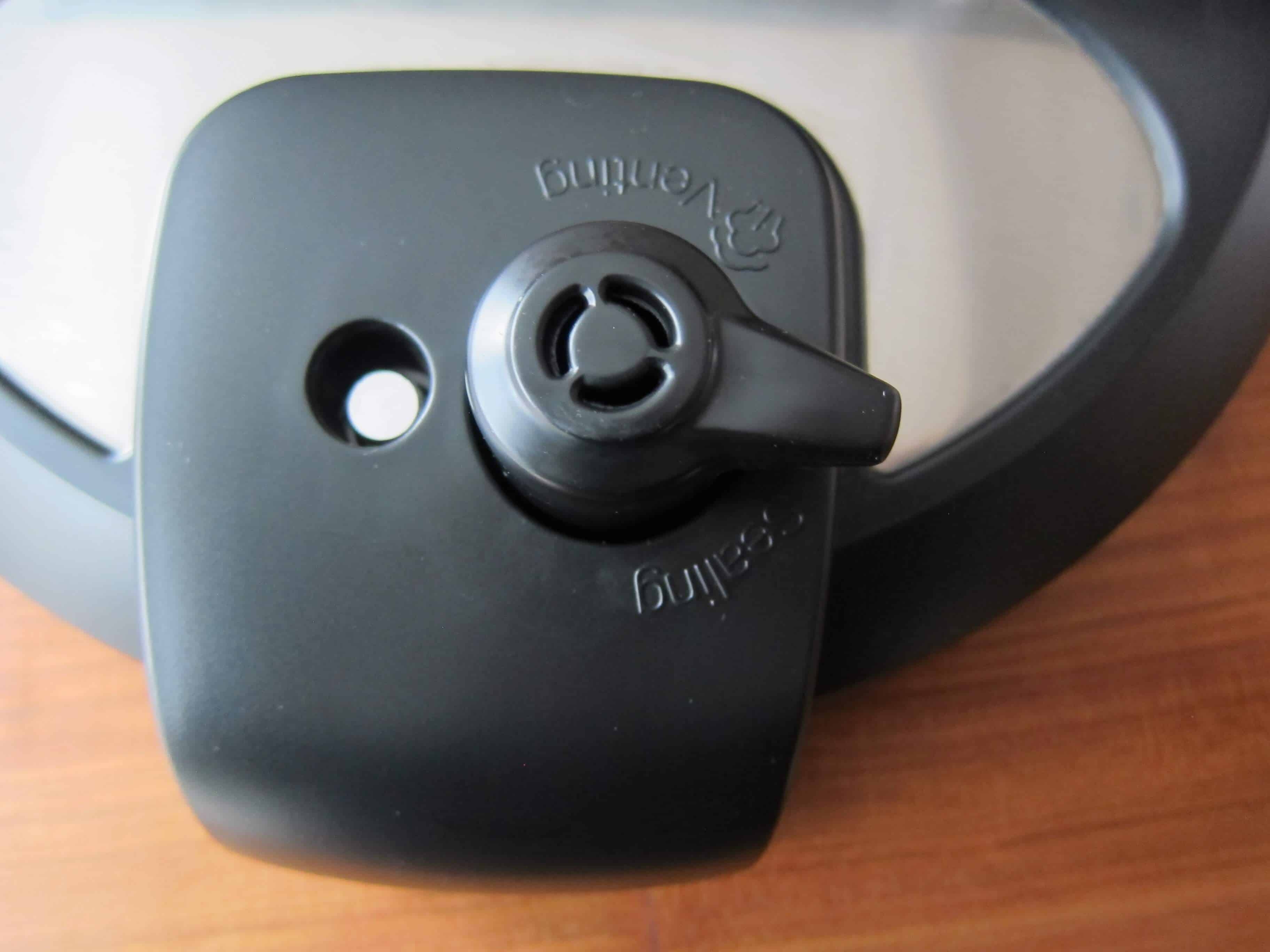
This is the most common Instant Pot problem. In my kitchen it’s almost always one of two things – not enough thin liquid, or food starting to burn on the bottom of the pot. Make sure that:
- The steam release is on Sealing, not Venting. On models with a button, the button is pressed down.
- The sealing ring sits all the way around in the lid, and it’s clean, not stretched or torn.
- You turned the lid all the way until it locks.
- There’s at least a cup of thin liquid (water or broth, not a thick sauce), and it covers the bottom of the pot.
- Nothing is stuck to the bottom. After Sauté, deglaze and scrape up every browned bit.
- The float valve and its small silicone cover are clean and in good shape. Food bits or a worn cover let steam leak from the valve.
- On models with a removable steam release valve, it’s pushed down all the way. It can wobble a bit; that’s normal.
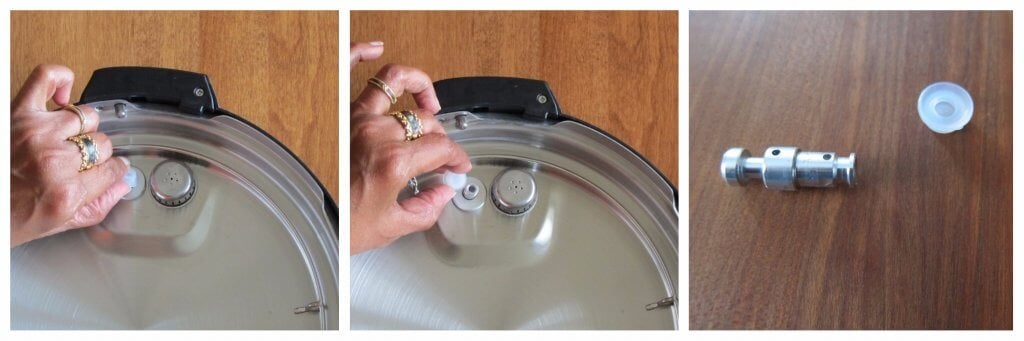
An Instant Pot that sealed fine for years and then stops sealing usually needs a new sealing ring or float valve cover. Both wear out over time. If it won’t seal for only one recipe, like rice or a thick stew, the recipe probably doesn’t have enough thin liquid.
My guide to the reasons your Instant Pot is not sealing goes through every cause in detail.
If all else fails, pressing gently on the lid while it comes to pressure can help it seal. It works in a pinch, but I try not to make it a habit.
If you have a Rio, the Rio’s sealing ring is trickier to fit than on other models, so take an extra second to push it in all the way around. Also check the little silicone cover on the float valve. On the Rio, the valves sit under a cover, so a missing cap is easy to overlook.
Steam Leaking During Cooking
Where the steam is coming out tells you what’s wrong.
- Around the edge of the lid: the sealing ring is missing, not seated, stretched or torn.
- From the float valve, for more than 2 minutes after it pops up: food on the float valve’s silicone cover, or the cover is worn. Clean it or replace it. If a new cover doesn’t help, replace the float valve itself.
- From the steam release: it’s on Venting, or the valve isn’t pushed down all the way. If it still leaks after every check, the pressure control may have failed. Contact Instant Pot customer care.
Float Valve Won’t Go Up (or Down)
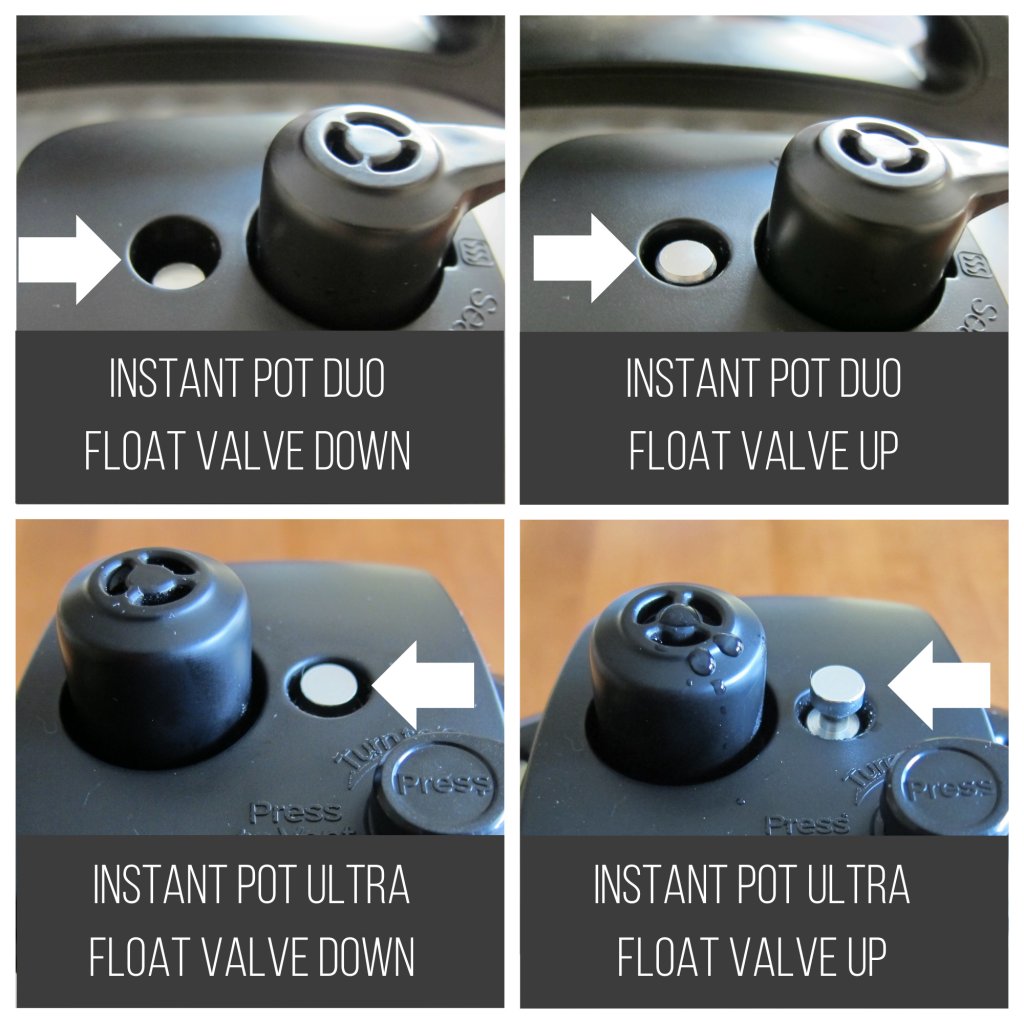
On some models the float valve sits flush with the lid when it’s up, so check the photo before you worry. It may already be up. Some models also have a red float valve. Up means it’s under pressure and the lid is locked; down means there’s no pressure and you can open it.
If it’s really stuck down, it isn’t sealing. See won’t seal.
If the countdown starts but the float valve never goes up, the food won’t cook through. Clean the float valve and the sealing ring. Then check the outside bottom of the inner pot. A build-up of burnt-on residue there can throw off the sensor so it starts the timer too early. Scrub it off (baking soda or Bar Keeper’s Friend works) and wipe the heating element clean.
Burn, Food Burn or OvHt
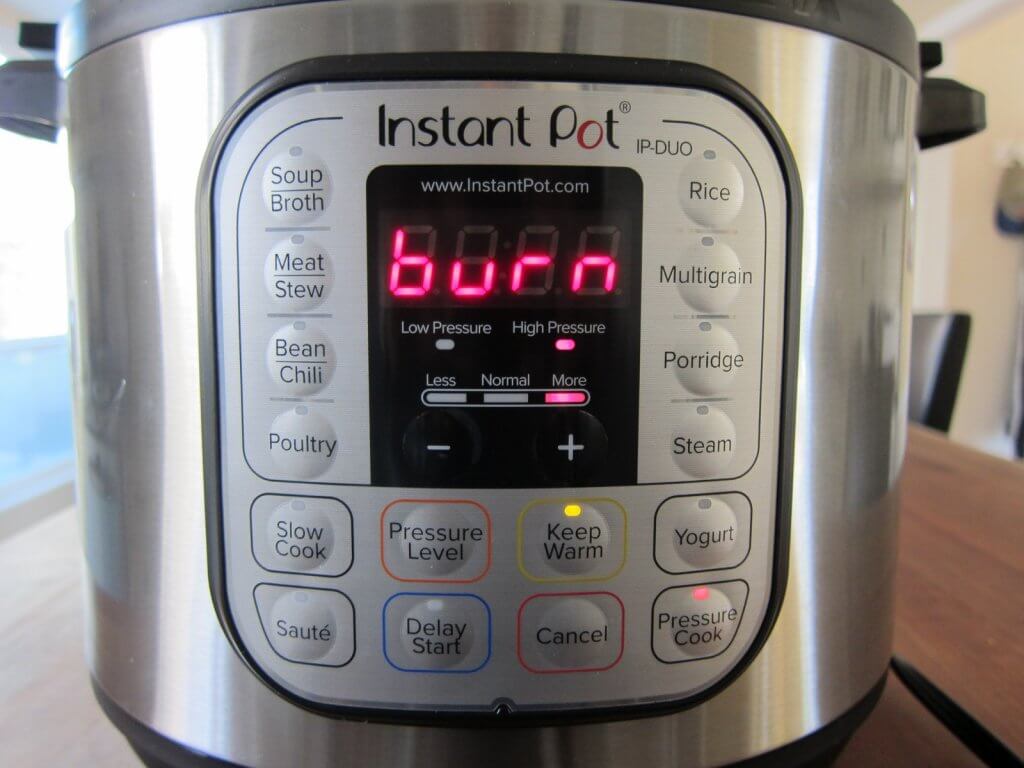
Burn, Food Burn or OvHt on the display means the bottom of the pot is overheating. Every new Instant Pot owner sees it sooner or later. To prevent it:
- Make sure there’s enough thin liquid and that it reaches the bottom. Lift the food with a spatula to let the liquid go under the food.
- Deglaze the pot after using Sauté. Add a couple of tablespoons of liquid and scrape up every browned bit.
- Let it cool for a minute after Sauté before you start pressure cooking.
- Layer the pot – thin liquid first, then meat and vegetables, with rice, pasta and tomato products or thick sauces on top. Don’t stir.
My Instant Pot burn message guide covers every cause, plus how to save dinner when it happens.
Won’t Come to Pressure With Tomato or Jarred Sauces
Tomato sauce, tomato paste and tomato puree are thick enough to scorch on the bottom. So are store-bought sauces with sugar, cornstarch or flour, like Alfredo sauce. That scorching triggers the burn message and keeps it from sealing.
Layer these sauces on top of everything else without stirring, thin them with water or broth, or cook them using the pot in pot technique. Stir in cornstarch, flour or cream only after pressure cooking.
PrSE on the Display
PrSE means pressure has built up during a program that shouldn’t build pressure, like Sauté, Slow Cook or Yogurt. Don’t use the lid in Sauté mode – that’s the most common reason. For Slow Cook and Yogurt, you can use the lid but set the steam release to Venting. Clean the lid and remove food stuck around the steam release, float valve, sealing ring or anti-block shield.
If you get PrSE in Sauté mode with the lid off, the temperature may be too high. Reduce the Sauté temperature. If that doesn’t resolve the issue, the pressure sensor may be faulty, so contact customer care.
Other Error Codes
Codes like C7, NoPr or C5 each point to a specific problem. My Instant Pot error codes guide explains each one and how to clear it.
⏲️ Cooking Process
Turns Off or Beeps Mid-Cook
Check the display. Burn, Food Burn or OvHt means the bottom overheated (see burn). Any other code is in my error codes guide.
In Slow Cook mode, a beeping PrSE usually means the steam release was on Sealing. See PrSE.
If the display goes completely dark and won’t come back, see won’t turn on.
Lid Won’t Open
First, turn the steam release to Venting. If steam comes out, it’s still under pressure and the lid is supposed to be locked. See won’t release pressure.
If no steam comes out and the lid still won’t open:
- Press Cancel and unplug it.
- Push the float valve down with a wooden chopstick and wiggle the lid back and forth. A float valve stuck in the up position is the most common reason a lid stays locked.
- Sometimes the inner pot gets stuck to the lid because there’s a vacuum. Leave the steam release on Venting to release the vacuum.
- You may have used the wrong lid, or the lid was put on crooked. Let everything cool completely first. I’ve had to set it on the floor and have someone hold on to the base while I twist the lid counterclockwise with some force. Or lift it off the floor by an inch and swing it in a counterclockwise direction.
- On models with the Ultimate Lid, like the Duo Crisp with Ultimate Lid, lift the whole thing by the lid and tap it firmly on the counter a few times.
Won’t Release Pressure
If the float valve is already down, there’s no pressure left to release. If the lid still won’t open, see lid won’t open.
If the float valve is up and turning the steam release to Venting does nothing, or only lets out a trickle of steam, the steam release valve or the anti-block shield under the lid is probably clogged with food or foam. Never force the lid open. That’s the safety lock doing its job.
Unplug the Instant Pot, leave it on Venting, and let the pressure come down on its own. That can take up to 60 minutes. A cold, wet towel laid on the lid speeds it up.
Once the float valve comes down, open the lid. Take out the steam release valve and the anti-block shield and clean both, along with the float valve and its silicone cover.
If the steam release mechanism feels loose and doesn’t move the valve, it may be broken. See parts.
Liquid Sprays Out on Quick Release
Liquid spitting from the valve during cooking, not just at the end, usually means the pot is overfilled.
Starchy foods like pasta, mac and cheese, oatmeal, beans, rice and big pots of soup can cause foam to shoot out of the steam release. A fuller pot makes this even worse. Here are some solutions:
- Let it sit for 5 to 10 minutes before you do a quick release.
- Turn the steam release to Venting for a second and move it back to Sealing. Wait a couple of seconds, and repeat until the steam coming out is less forceful. Then do a regular quick release to let out the rest of the steam.
- I used to lay a towel over the steam release, but now I prefer to release the steam in short bursts. If you use one, lay it very loosely over the valve and leave plenty of open space for the steam to escape. Keep your hands clear of the steam.
- Stay well under the max line with starchy foods.
My natural release vs quick release guide explains each steam release method and when to use it.
🍲 Food Problems
Food Is Undercooked
Dried beans are the usual suspect. Old beans can stay hard no matter how long you cook them, and hard water can affect cook time too. Rice comes out crunchy when the water ratio is off or you open the lid too early.
The fix is the same either way – make sure there’s still some thin liquid in the pot, close the lid, and pressure cook for a few more minutes. It comes back to pressure quickly because everything is already hot. How much more time depends on how underdone it is; if it’s close, 2 to 3 minutes may be enough.
If it came to pressure, the timer ran, and the food is still raw, check the pressure level. Many models remember Low if that’s what you used last time, and low pressure cooks much more slowly. If an older Instant Pot has slowly started taking longer, a worn sealing ring is the usual cause. Replace it.
Food Is Overcooked or Mushy
Food keeps cooking while the pressure comes down, and again on Keep Warm. For quick-cooking food like vegetables, pasta and seafood, do a quick release as soon as the timer ends. If you won’t be around, turn off Keep Warm before you start.
Rice Burns or Won’t Seal
Rice is the food that triggers the burn message most often. When it does, it’s usually because of something else in the pot, like tomato sauce, or browned bits left from Sauté that weren’t deglazed well.
To avoid this, rinse the rice until the water runs clear, measure the water exactly, and stir well so no grains are stuck to the bottom. Then add the thick sauces on top before closing the lid.
Meat Comes Out Dry and Tough
This is a common complaint I hear from new Instant Pot owners. Pressure cooking is best with fattier cuts like chicken thighs, pork shoulder and beef chuck.
Lean cuts like chicken breast, pork chops and tenderloin need a much shorter time. I cook pork tenderloin for about 4 minutes; pork shoulder can take 50.
More time isn’t always better. Meat gets tender in about a third of the stovetop cooking time, and going past that squeezes out the juices. If it’s already overcooked, keep cooking until it falls apart. You’ll lose some flavor, but it’ll be tender.
Let the pressure come down on its own with a natural release, especially for meat that isn’t sitting in liquid. The meat rests and holds on to its juices. If your model has a Sous Vide program, it’s the best way to cook lean meat.
Laura at Hip Pressure Cooking has a helpful guide to choosing the right cut of meat.
Slow Cook Not Getting Hot Enough
This is another common complaint. The Instant Pot’s heating element is only on the bottom, while a slow cooker heats from the sides too. So it heats more slowly than a crock pot.
Newer Instant Pots only have Low and High settings. But most older Instant Pots have Low, Medium, High or Less, Normal, More. The settings don’t match a crock pot’s Low and High.
- Use the highest setting (More or High) for recipes written for a slow cooker’s High, and the middle one (Medium or Normal) for Low. Less or Low works more like a slow cooker’s Warm.
- Bring the food to a simmer on Sauté first, then switch to Slow Cook. The inner pot is already hot, which saves time compared to starting from cold.
- Put the steam release on Venting, or use a glass lid.
On some newer models, the display can sit on Preheating for an hour or more on Slow Cook, and the countdown takes a long time to start. That’s normal. A full pot just heats slowly. Check the food with a thermometer instead of trusting the display.
Converting a slow cooker recipe takes some extra time. Some people add about 15 minutes per hour for High, and 1 to 2 more hours for Low. Do a test run before you leave the house with it on.
Yogurt Didn’t Set
If your yogurt is still just milk after 8 hours, your starter may be the problem. Plain yogurt works best – live and active cultures, no additives, and not an old tub, which can be too weak.
Milk that’s too hot when you stir in the starter kills the cultures.
Organic and ultra-pasteurized milk may need a couple of extra hours of fermentation. I make mine two ways – cold start yogurt with Fairlife and pot in pot yogurt. All kinds of tips on those posts.
Eggs Have Green Ring
If your boiled eggs have a green ring, it’s because they’re overcooked. I’ve tried all kinds of methods and the one that works best for me is the 1-minute method. Pressure cook the eggs for 1 minute and do a 10-minute natural release. See my 1-minute hard boiled eggs post for details.
🧽 Care, Wear and Accidents
Sealing Ring Smells

The silicone sealing ring holds on to the smell of whatever you cooked last. I’ve tried the usual fixes like sunlight, denture tablets, lemon juice and vinegar. They help a little, but the smell never goes away completely.
I’ve never noticed it carrying over into savory food, so I only worry about it for desserts and yogurt. I keep a second ring just for sweet things. Rings come in multi-colored packs, which makes it easy to tell them apart.
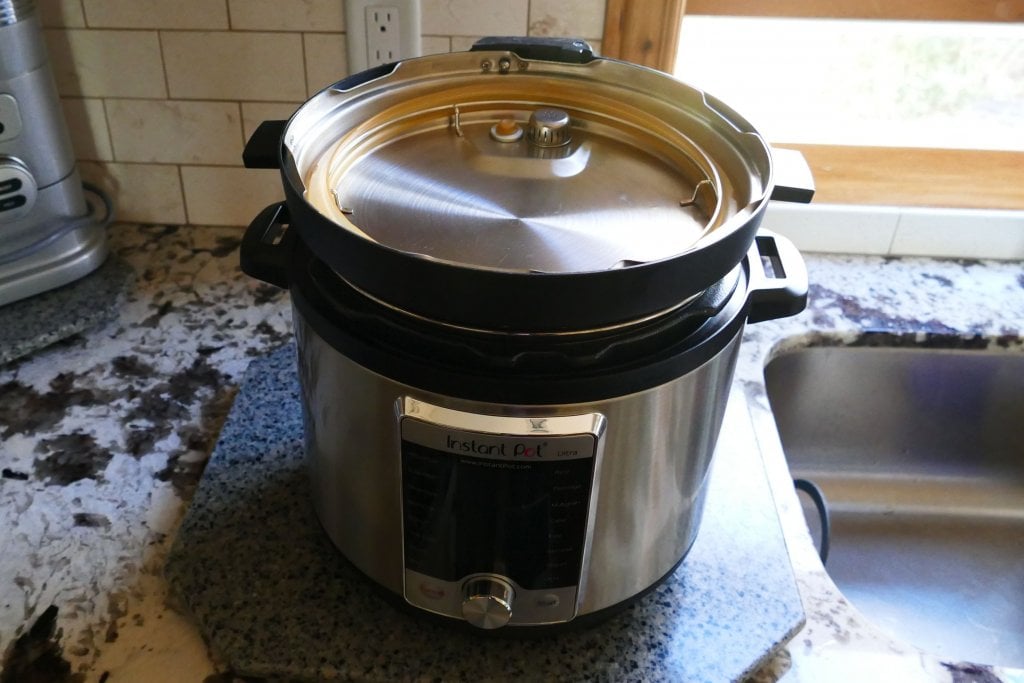
Don’t store the Instant Pot closed with the ring in the lid. I keep my lid upside down on the base, which lets the ring air out.
Some owners wash the ring, then bake it on an aluminum foil-lined rack at 300°F for 30 minutes (only a genuine silicone ring). Others store their sealing rings in the freezer.
New Sealing Ring Won’t Seal
Replace the ring when it’s stretched or cracked. A stretched ring can sometimes be rescued. Put it in the freezer for a few minutes and it shrinks back enough to seal.
If a brand new ring won’t seal, check that it’s the right size for your model (a 6-quart ring won’t seal an 8-quart) and that it’s seated in the rack all the way around. Cheaper rings don’t always fit as snugly as Instant’s own, so I use genuine Instant Pot rings. If you buy a generic one, check the reviews first.
Float Valve or Steam Release Fell Off
On most models the steam release valve just lifts off for cleaning. Push it back down all the way onto its post – it may wobble a little; that’s perfectly normal.
The float valve drops into its hole from the top of the lid, and the small silicone cover fits onto it from underneath. That cover holds the float valve in place, so if the float valve keeps falling out, the cover may be missing or loose.
Don’t pressure cook with a missing or cracked steam release, float valve or float valve cover. They’re the parts that control the pressure.
If you dropped the lid and it won’t seal anymore, one of these parts may be bent or out of place. Amazon sells parts for most models, and so do a few other places:
- Amazon: Replacement parts (Disclosure: I earn a commission from any purchase you make.)
- Instant Pot Facebook group for parts: Instant Pot Parts Swap or Sale
- ebay.com
Pitting or Flaking in the Inner Pot
Small rough dents or flaking spots in the inner pot aren’t stains. Pitting can happen when coarse salt sits undissolved on the bottom, so stir salt into the liquid. If a new inner pot has pits after a few uses, contact Instant Pot; several owners got a replacement inner pot.
Melted Base or Lid
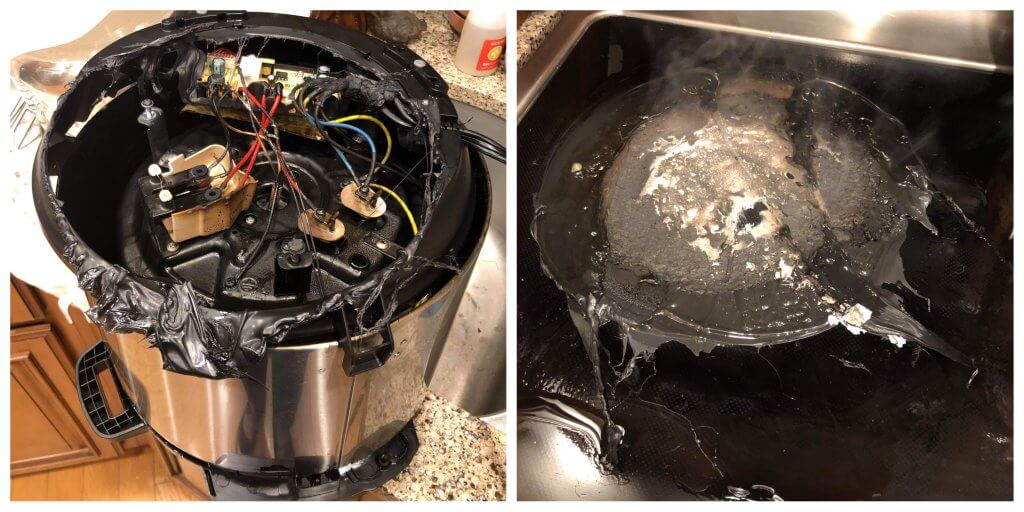
My thanks to Dale Falconer for these photos.
This happens more often than you’d think. People keep the Instant Pot or its lid on the stovetop, and then someone turns on the wrong burner. If the base melts, replace the unit. It isn’t worth the risk of damaged wiring. A melted lid won’t seal safely either, so replace it.
Water Poured Into the Base Without the Inner Pot
It’s easy to do when the inner pot is in the dishwasher. If it happens, don’t panic. Here’s what Instant recommends for water or food spills:
- Unplug the Instant Pot right away.
- Wipe the inside of the base and the heating element with a dry cloth to soak up as much liquid as you can.
- Turn the base upside down to let the rest drain out.
- Unscrew the plastic vent cover on the bottom of the base. Be gentle with the wires and circuitry while it’s off.
- Carefully reach up into the housing to remove any food, if needed.
- Let everything dry for 72 hours. A fan speeds it up.
- Put it back together, insert the inner pot and plug it in.
- If it turns on, heat 2 cups of water on Sauté. If that works, do a water test.
- If you smell burning at any point, turn it off, unplug it and contact Instant Pot customer care.
If it won’t turn on or won’t pass the water test, it’s time for a new base or a new Instant Pot.
If oil spilled into the base, turn it upside down to let it drain, but there’s no safe way to know whether it’s usable again. Even turning it on to test it is a fire risk.
To keep it from happening, leave something in the empty base while the inner pot is out, like a long wooden spoon or a ladle, so you can’t miss it.
Steam Damaging Upper Cabinets
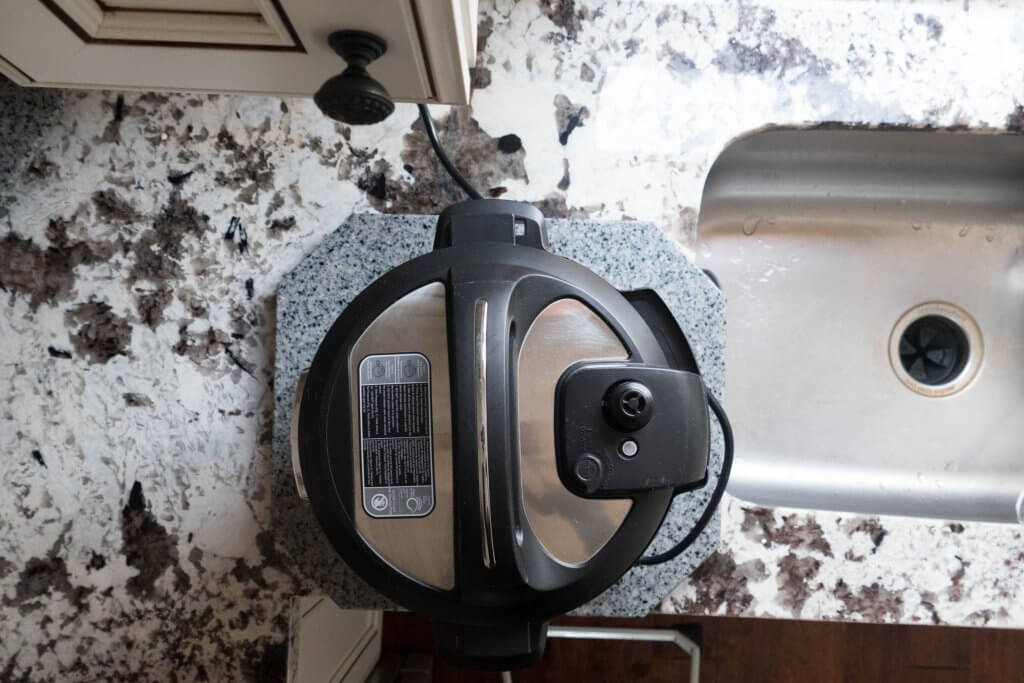
On the counter, the steam release can blast straight up at your cabinets. Moving it onto the stovetop isn’t the answer (see the melted base above). I turn my Instant Pot so the steam release faces the front or side, away from the cabinets. A side table or cart works too.
🛠️ Still Not Working?
Run a Water Test
A water test tells you whether the problem is your Instant Pot or the recipe. Add 2 cups of water to the inner pot, close the lid, set the steam release to Sealing and pressure cook for 5 minutes. If the float valve pops up and the countdown starts, your Instant Pot is fine and the recipe needs more thin liquid or less thick sauce on the bottom. If it fails with plain water, there’s something wrong with the Instant Pot.
Contact Instant Pot customer care
Have your model name and the serial number from the label on the bottom of the base ready, plus a short video of the problem if you can. Contact Instant Pot customer care. Warranty terms are in your manual and vary by model and country.
How Long Do Instant Pots Last
The company doesn’t publish a number. Some owners report 4 to 5 years while cooking a few times a week, and some have had theirs more than 7 years while cooking twice a day.
My oldest Instant Pot is over 10 years old and still works great. The parts that wear out are the sealing ring, the float valve cover and sometimes the inner pot, and they’re cheap to replace (regular cooks swap the ring about every couple of years).
The base itself usually goes when the heating element, the control board or the thermal fuse fails.
Bought It Secondhand
Check that the lid matches the model and size printed on the base, and that the steam release, float valve, sealing ring and float valve cover are all there. The sealing ring and float valve cover should still be soft and pliable, the inner pot shouldn’t be dented, and the cord should fit snugly.
Not an Instant Pot
Readers often ask me about Power Pressure Cooker XL, Pressure King Pro, Ninja Foodi, Chefman, Bella and other brands. Most of this page still applies, since every electric pressure cooker needs thin liquid, a seated ring and a sealed valve. Button names, error codes and parts are different, though, so check your own manual for those.
If you’re new to the Instant Pot and aren’t familiar with how to use it, here are my guides on how to use some popular Instant Pot models:
- Instant Pot Directions for Beginners
- Instant Pot ULTRA Beginner’s Manual
- Instant Pot DUO EVO PLUS Beginner’s Manual
- Instant Pot DUO NOVA Beginner’s Manual
- Instant Pot DUO GOURMET Beginner’s Manual
- Instant Pot PRO Beginner’s Manual
- Instant Pot DUO CRISP Beginner’s Manual
- Instant Pot PRO CRISP Beginner’s Manual
- Instant Pot PRO CRISP vs DUO CRISP
If you found this article helpful, please share it on social media using the social media share buttons at the top and bottom of this post. Thank you so much!
📚 More Instant Pot Help






Jackie says
Every time I use the instant pot’s rice feature to cook rice, the lid comes off spilling all the contents – despite securing the lid tightly and valve in position. Help!
Paint the Kitchen Red says
Jackie, do you mean that the steam release is messy or that the lid actually comes off? If it’s the former, you can try and do an intermittent steam release (see my post Instant Pot Natural vs Quick Release). If it’s the latter, that sounds like something you should be filing a support ticket for.
Sanam says
I was cooking and it suddenly turned off and I tried to switch it on but it’s dead.what should I do ?help
Paint the Kitchen Red says
Hi Sanam, do you have a removable power cord? My first guess would be that the power cord is not pushed in all the way on the unit. It could be a short circuit too, in which case you might have some luck if you contact the company. Also try the trick shared by a reader (#19 on this post).
Mike says
Timer starts before the seal valve is up
Paint the Kitchen Red says
Mike, that usually happens when you don’t have enough liquid to seal the pot. This can happen if there’s too little liquid in the recipe, if the liquid evaporated, if there are dense ingredients at the bottom of the Instant Pot.
Try reading these articles to see if you’re making any mistakes:
Instant Pot Burn Message
Reasons why your Instant Pot is not sealing
Carol says
When I turn release valve it doesn’t release the steam valve. I have enough liquid and everything else works , have to pull release valve up manually. Lid all clean
Paint the Kitchen Red says
Carol, if you have the kind that you have to turn the steam release handle from sealing to venting, there is a slight upward motion when you turn it.
zackmann says
I realized why I got a burnt then a failed cook test seems to be because I put the knob on my older instant pot mini on backwards after cleaning it 🙂 Now that I put it on right it seems to be working, Of course extra rinsing the steam ports in the cover may have helped too.
Paint the Kitchen Red says
Lol, I’m glad you figured it out.
Holly says
What would be going on with the IP if it doesn’t cook after running? I’ve tried making yogurt and followed the directions yet it didn’t cook it. It took three times to get it to cook it.
Paint the Kitchen Red says
Holly, if you have the yogurt set to “Less” or “Low”, that could be the issue. You need to set it to “Normal”. On “Less” it takes much longer. It’s used to make a Chinese fermented rice.
Judi says
Pls ignore my last note, and thank you for your reply to another of your correspondents.
So glad the state wouldn’t allow me to enter 10 hrs instead of 10. Would have been very dry chicken.
Will keep a close eye on your site. Helps me be a little more confident in my InstaPot cooking!!
Thanks again.
Paint the Kitchen Red says
Hi Judi, you’re welcome – it’s a common mistake. Enjoy your new Instant Pot!
jerry says
sometimes i can’t get the lid to go in place and slide to the “lock” position
Paint the Kitchen Red says
Jerry, that can happen if you’ve just finished cooking something. The heat won’t allow the lid to close. What you can do is put the steam release handle in ‘venting’, close the lid and then put it back to ‘sealing’.
Lianne says
Hi,
I have read through a number of sites trying to diagnose the problem. All seem to have the same result. I have had my Duo for 2 years and no issues until this past week. Two days ago, cooking oats, at 3 minutes into the cycle and the lid error started flashing. I shut it down and took the lid apart and cleaned well. Also did a very good clean around the top of the pot. Just tried again and this time just as it got to pressure the lid error started again? Any thoughts? Thanks
Paint the Kitchen Red says
Lianne, have you checked the black spring-loaded pin on the base unit that gets pushed in when the lid is closed? It could be stuck or not able to move freely.
Janet V. says
I’ve had my old Instant Pot Duo for years and yet there are things I learned from reading this. Very helpful resource, I’ll be keeping it handy. Thank you!
Paint the Kitchen Red says
Thanks for the feedback, Janet!
Kay Lister says
Using the duo instant pot for the second time and the timer won’t goi above 8 minutes.. Please help.
Paint the Kitchen Red says
Kay, the format for the time is HH:MM (H=hours, M=minutes). Make sure you’re not trying to go past 8 hours.
Judi says
First time using instapot after steam test. Trying to cook bone in chicken. Time will not go past 6 min. Have tried to cancel both global and individual settings to no avail. Please give me easily understood directions, as I have obviously misinterpreted the booklet! Will have to cook chicken in the oven
Bea Pierre says
Hello! Thank you for this article and including photos. I was using my Instant Pot without the float valve silicone seal! 😳
I did the 2-minute test and thought everything was all right. But, now that I have the silicone seal in place, I see (redoing the 2-minute test) that NOW everything is all right.
Paint the Kitchen Red says
Hi Bea – I’m glad you found the post helpful. Thank you for your feedback!
Nancy Comeaux says
Fashing C6 plus all keys light up
Paint the Kitchen Red says
This is a faulty sensor error, Nancy and you’ll probably need to submit a ticket.
Neetha says
Hi am neetha my instant pot pressure cook button is not working ..all buttons are working properly..please suggest .
Paint the Kitchen Red says
Hi Neetha, did you try to do tip #19? There might be a malfunction and you may need to contact the company. Keep in mind that some of the presets are the same as Pressure Cook except their default time is preset for that type of food e.g. Meat/Stew. You can use that button and change the time and it will operate in almost the same way as Pressure Cook. Hope that helps.
Sandra says
I have the IP Duo Gourmet from Costco and I’m loving it, but today I had a fail making yogurt. How do I change the temperature setting from low to normal? My yogurt stayed at room temperature for 8 hours and thickened slightly but never really set.
Paint the Kitchen Red says
Sandra, the low setting is for a special long-time fermentation. To set it to Normal, press the Yogurt button repeatedly – it will toggle between less, normal and more. Hope that helps.
Jay says
My Instapot is not turn on. I switched to different outlet but no result
Paint the Kitchen Red says
If you have a detachable cord, make sure it’s pushed in all the way. Other than that, I think you’d probably need to contact the company – sorry!
Luly says
Since few weeks my Instant Pot just says EC and it looks like it can’t build pressure anymore, do you know what does it means? Instant Pot support doesn’t aswer, I’m so disappointed!
Paint the Kitchen Red says
Luly, the EC error is like the C6 error so you may need to be persistent about contacting them – maybe through Facebook? But make sure you press Cancel after you do Saute – that will cause the EC error.
Gerri says
We turned on the InstantPot / Air Fryer yesterday and it caused the power to turn off. We believe the lid is shorting out. Is this a common issue?
Paint the Kitchen Red says
Gerri, it’s not something that I’ve heard about before. Have you tried using a different outlet? Maybe that outlet is getting overloaded.
Nenita Panganiban says
I cannot use the saute function any more. The heat is too low. I have had the Lux model for a little over a year now. It was fine before but not any more. The other settings have no problem. So what I do is saute in a regular pot and transfer to the InstantPot for pressure cooking. But I wonder if there’s a fix to this issue.
Paint the Kitchen Red says
Nenita, it’s unfortunate but this issue has been known to come up for some users. I think you need to open a ticket with them and maybe they can help you resolve it. Let me know if you figure it out.
Missy says
I use my instant every weekend to hard boil eggs. Today it was not working. The first batch was still raw. The second and thirds batch were shot boiled snd the shell was extremely hard to peel. My insta is only 6 months old. Very disappointed if it’s broken already.
Paint the Kitchen Red says
Missy, make sure you check to see that your weren’t accidentally using low pressure mode – I’ve done that before.