Paint The Kitchen Red

  • HOME
  • RECIPES AND GUIDES
  • ABOUT
menu icon
go to homepage
  • HOME
  • RECIPE INDEX
  • MEET NEENA
subscribe
search icon
Homepage link
  • HOME
  • RECIPE INDEX
  • MEET NEENA
×
Home » Page Templates

Cucumber Pachadi | Kerala Kichadi Recipe

September 25, 2025 by Neena Panicker 2 Comments

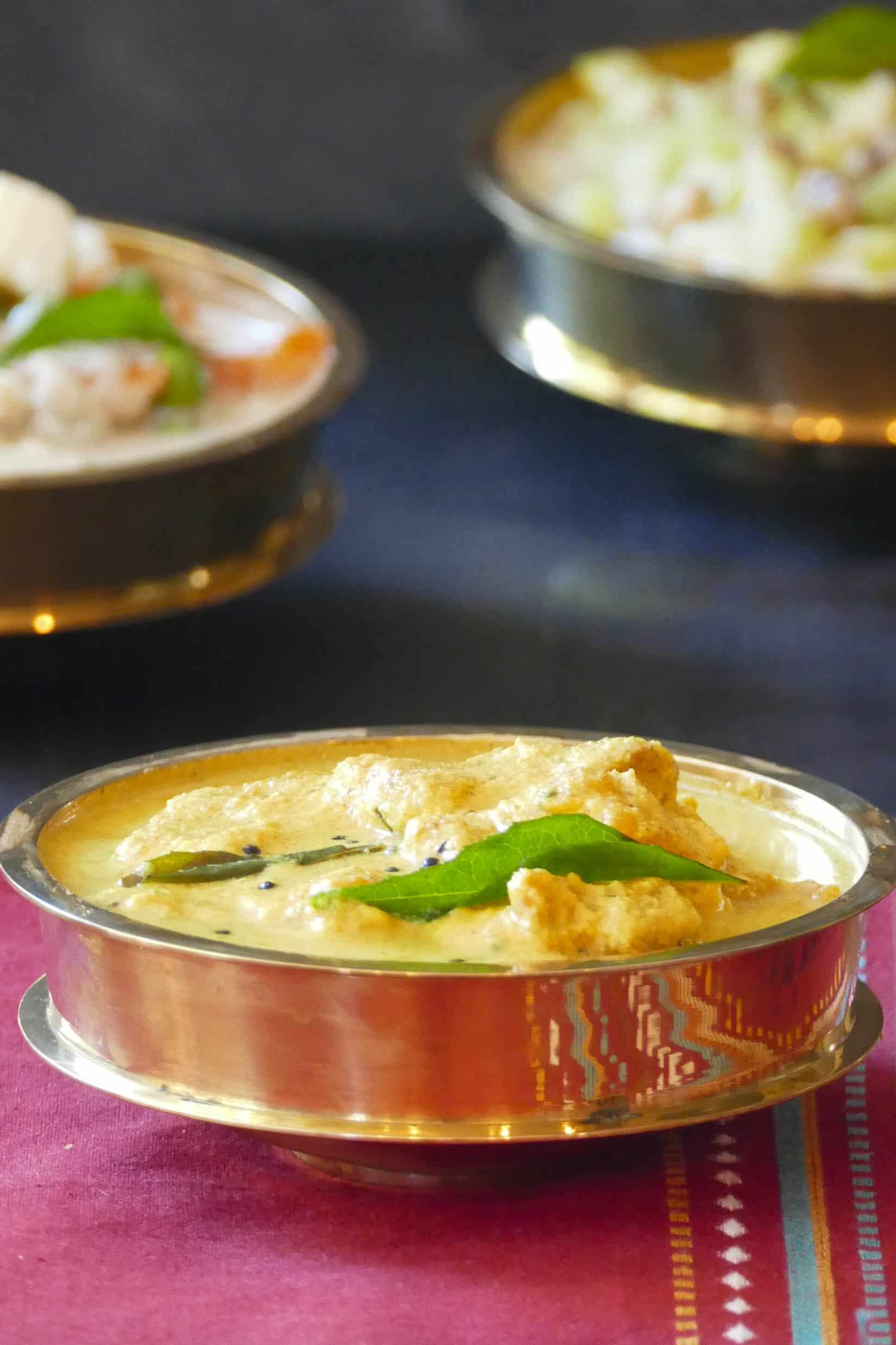
Cucumber kichadi in brown bowl with curry leaf on top.

Cucumber pachadi is a popular vegetarian side dish that’s an important part of the traditional Kerala Onam Sadhya feast. This dish is also known as cucumber kichadi in many parts of Kerala. It’s a cooling vegetarian side dish that’s simple but flavorful. This recipe combines fresh cucumber with coconut, yogurt, and spices, creating a light and healthy side dish that goes well with rice.
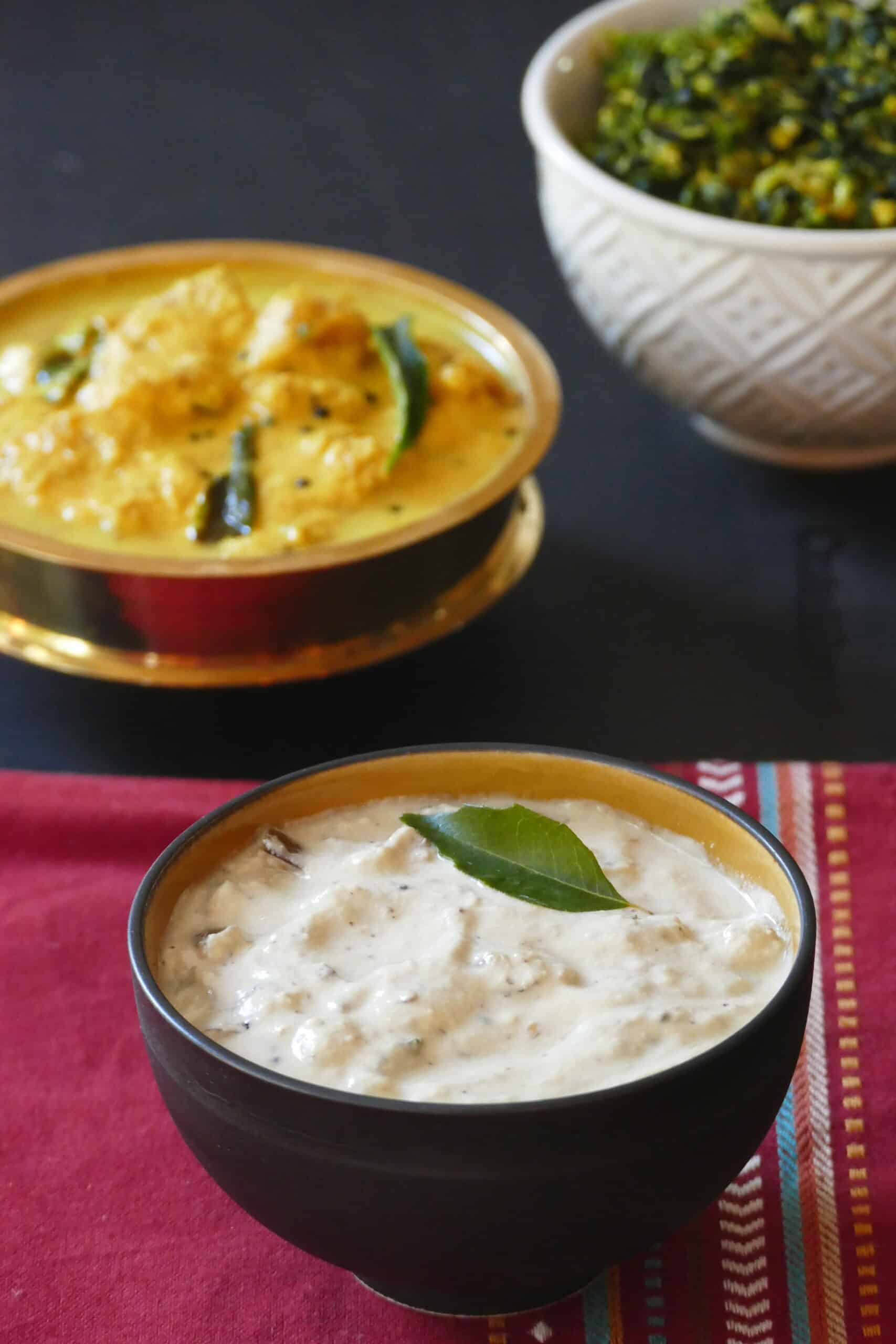
Cucumber kichadi in brown bowl with curry leaf on top.

This post contains affiliate links. As an Amazon Associate, I earn from qualifying purchases. Please read the disclosure.

➡ If you’re new to Kerala cooking, start with my Kerala Cooking Basics guide for ingredient tips, shopping advice, and more authentic recipes.

Cucumber pachadi is one of those typically Kerala dishes that works just as well for everyday meals as it does for special occasions like the Kerala feast called Onam sadhya (see image below).

Kerala sadya - typical banana leaf meal with various vegetables, papadam, and rice. Onam sadhya dishes.

It’s a cooling, refreshing side dish similar to North Indian raita that’s super simple to make and comes together in under 20 minutes!

In my family, sweeter versions of this type of recipe are called pachadi, and savory versions are called kichadi, so we refer to this dish as cucumber kichadi.

However, this recipe seems to be more commonly referred to as pachadi, so I will use that name to prevent any confusion.

You may have tried my mango pachadi, another Onam favorite. It’s made similarly to this cucumber (vellarikka) pachadi.

Some families make this pachadi recipe without coconut, but we like to add coconut.

➡ If you’re looking for more Onam Sadhya recipes, try Kerala parippu, mango pachadi, vegetable stew, potato stew (ishtu), kootu curry, carrot beans thoran, inji curry, sambar, and semiya payasam.

Ingredients and Tips

🧂 Ingredients for Cucumber Pachadi (Kichadi)
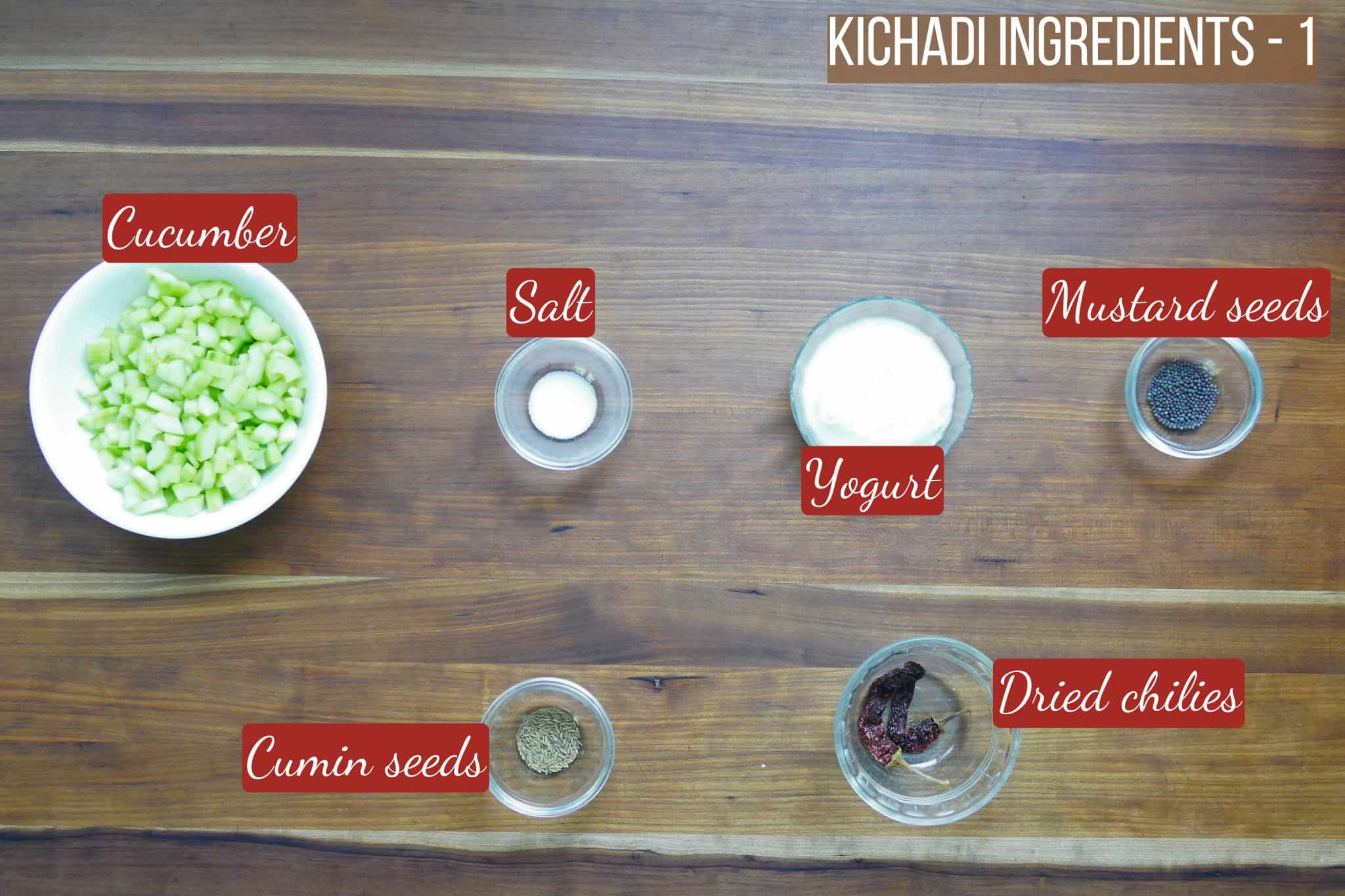
Kichadi ingredients on wooden counter - part 1.
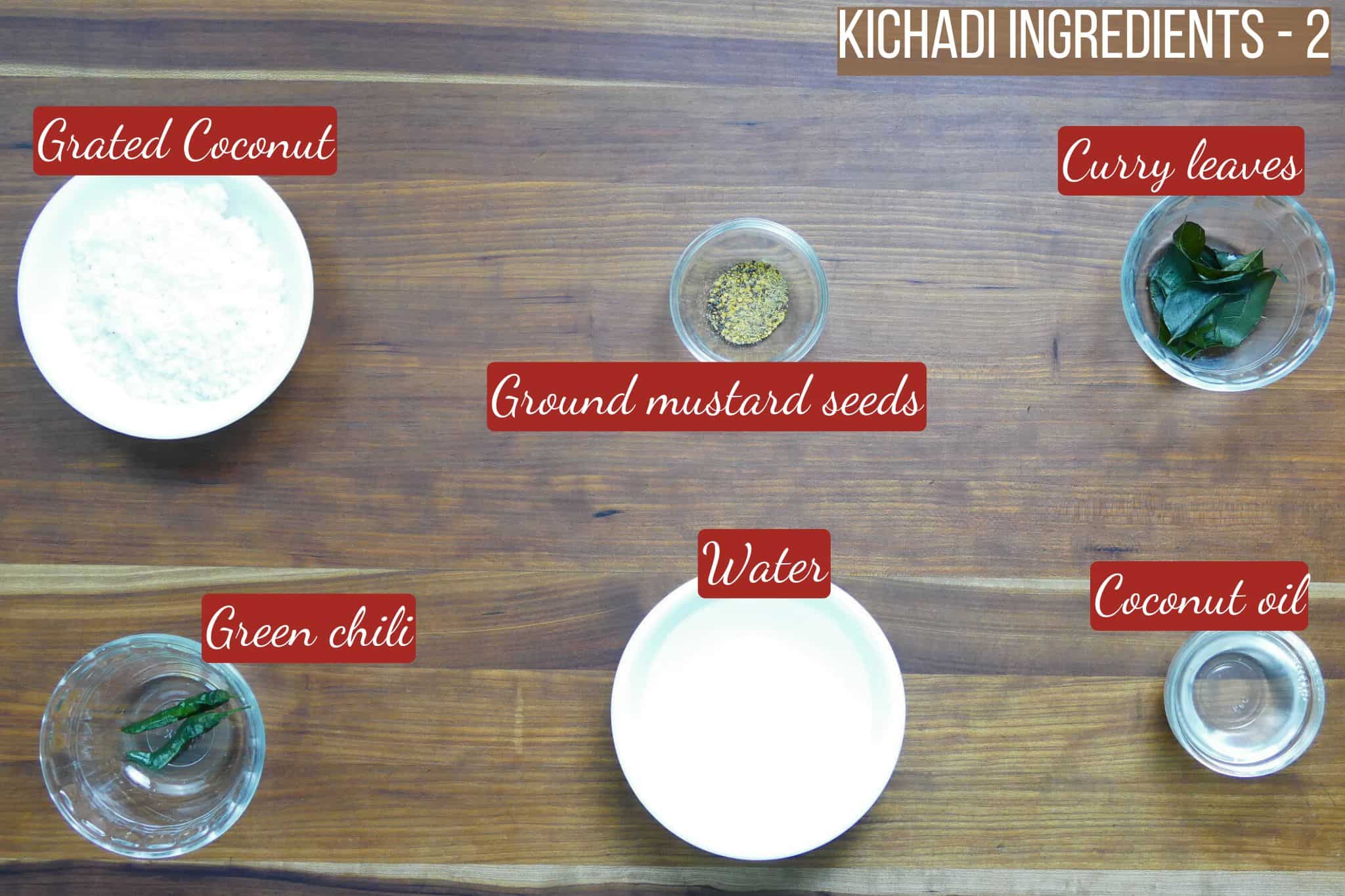
Kichadi ingredients on wooden counter - part 2.

💡 Ingredient and Recipe Tips

🥥 Fresh Coconut: Use fresh or frozen coconut for the authentic flavor and texture. Desiccated coconut doesn’t work as well, but if that’s all you have, soak unsweetened dried coconut in enough hot water to cover it for 15-20 minutes (or longer) before using. The ground coconut needs to be smooth but still grainy, like pesto.

🌶️ Dried Chillies: I use Kashmiri dried chillies. Adjust the quantity according to your heat tolerance. I sometimes omit the dried chillies and just use green chillies, depending on my audience.

᠅ Mustard Seeds: For the ground mustard seeds, use a mortar and pestle or a spice grinder. I have a separate coffee grinder for spices.

🌿 Curry Leaves: If you’re serious about cooking Kerala recipes, you need to get curry leaves, which are usually available in the refrigerated section of Indian grocery stores. They have an authentic flavor that just cannot be replicated. Many people grow their own curry plant for an endless supply of curry leaves!

🥛 Yogurt: Use thick, whole milk yogurt for the best creamy texture. Greek yogurt works well also, but you might need to thin it slightly with water.

❓ FAQS


Can cucumber pachadi be made ahead?

This dish is served at room temperature, so you can make it a few hours ahead and let the flavors develop.

How long will it keep?

Although it tastes best the same day, you can refrigerate the kichadi for up to 3 days.

Can I use any other vegetable?

Yes, you can use okra (vendakka) or eggplant (vazhuthananga), but you’ll need to saute them first. Beetroot pachadi has a beautiful pink color. The beets should be cooked first.

🥭 How to Make Cucumber Pachadi
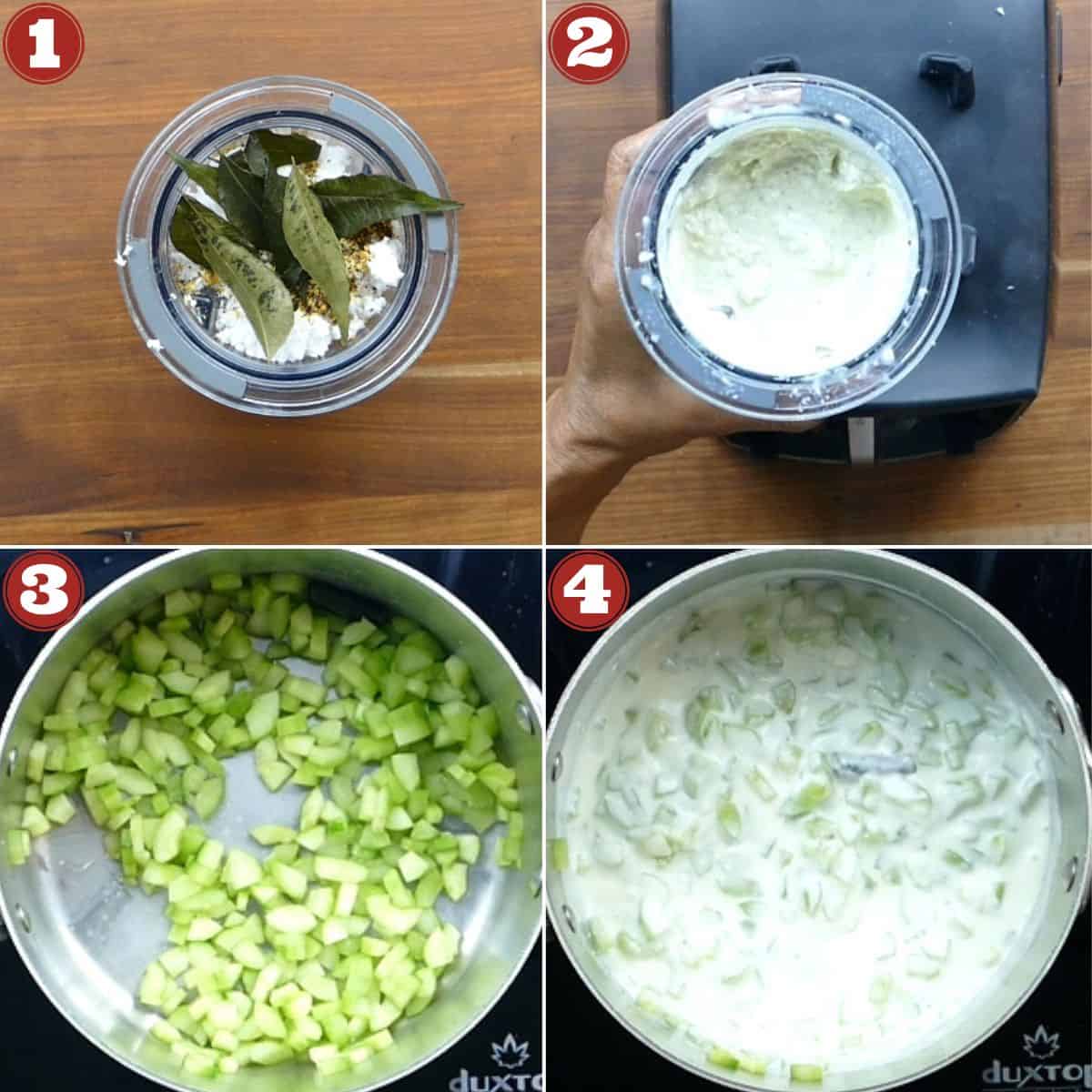
Cucumber kichadi instructions collage with coconut and cumin blended and cucumbers cooked with coconut.
  1. In a blender, combine grated coconut, crushed mustard seeds, half the quantity of curry leaves, and green chillies with enough water to make a thick paste (about 3 to 4 tablespoons).
  2. Blend to a smooth paste that’s slightly grainy, about the consistency of pesto. Set aside.
  3. In a medium saucepan, bring cucumber, salt, and water to a boil. Reduce the heat and simmer until the cucumber is cooked but not mushy (about 6 to 8 minutes).
  4. Add the coconut mixture and heat through, stirring gently. Turn off the heat, add the yogurt and mix thoroughly.
Cucumber kichadi instructions collage with curry leaves and mustard in oil and added to kichadi.
  1. In a small saucepan or frying pan, heat the coconut oil. Add the whole mustard seeds and cover. When they finish popping, add cumin, whole Kashmiri chillies (if using), and curry leaves.
  2. Pour the hot oil and aromatics into the cucumber mixture and stir gently to mix thoroughly. Taste and adjust flavors as needed.

🥗 Okra Pachadi (Vendakka) Variation

This same recipe works really well with okra! Follow the same method, substituting 1 lb (½ kg) of fresh okra.

  • Trim the okra and slice it into ⅛ inch rounds.
  • Deep fry the okra until crisp OR
  • Air fry the okra until crisp at 370 degrees F (188 degrees C) for about 20 to 25 minutes. Coat the okra with oil before air frying, and toss every 5 minutes while cooking.
  • Sprinkle with salt and set aside.
  • Add the okra to the coconut and yogurt mixture right before serving, to prevent sogginess.

🍆 Eggplant Pachadi (Vazhuthananga) Variation

To make eggplant pachadi, follow the same method, substituting ½ lb (¼ kg) of Japanese eggplant.

  • Cut the eggplant into ¼ inch slices.
  • Sauté the eggplant slices in batches in a nonstick frying pan until browned on both sides OR
  • Air fry the eggplant until crisp at 370 degrees F (188 degrees C) for about 20 minutes. Coat the eggplant with oil before air frying.
  • Drain the eggplant slices on a paper towel.
  • Once the eggplant has been cooked, cut it into ¼ inch strips.
  • Sprinkle with salt and set aside.
  • Add the eggplant to the coconut and yogurt mixture right at the end.

See the recipe card below for detailed instructions.
Cucumber kichadi in brown bowl with curry leaf on top.
Print Recipe
5 from 1 vote

Traditional Kerala Cucumber Pachadi Recipe | Cucumber Kichadi

This authentic Kerala cucumber pachadi (also called kichadi) is a cooling, creamy vegetable curry made with fresh cucumber, coconut, and yogurt. An important part of Onam sadhya feasts, this recipe is easy to make and is ready in 20 minutes.
Prep Time10 minutes mins
Cook Time10 minutes mins
Total Time20 minutes mins
Course: Sides
Cuisine: Indian
Main Ingredient: vegetarian
Method: Non Instant Pot
Servings: 6 servings
Calories: 98kcal
Author: Paint the Kitchen Red

Ingredients

  • ¾ cup grated coconut [See Note 1]
  • 1 green chilli
  • ½ teaspoon black mustard seeds crushed
  • 6 curry leaves
  • 3 to 4 tablespoon water
  • 2 cups English cucumber about 1 large [See Note 2]
  • ¾ teaspoon salt or to taste
  • 3 to 4 tablespoon water
  • 1 cup yogurt preferably whole milk

For Tempering

  • 1 T coconut oil
  • ½ teaspoon black mustard seeds
  • 6 curry leaves
  • 2 whole Kashmiri chilies optional
  • ½ teaspoon cumin seeds

Instructions

  • Blend the ¾ cup grated coconut, 1 green chilli, crushed ½ teaspoon black mustard seeds, 6 curry leaves, and 3 to 4 tablespoon water in a blender or food processor until it's the consistency of smooth pesto. Set aside. Don't add too much water, or the coconut will not blend properly.
  • In a medium saucepan, mix the 2 cups English cucumber, ¾ teaspoon salt, and 3 to 4 tablespoon water. Bring to a boil, reduce the heat and simmer over medium-low heat until the cucumber is cooked but not mushy, about 6 to 8 minutes.
  • Stir in the reserved coconut mixture. Mix gently and cook until warmed through. Turn off the heat. Beat the 1 cup yogurt with a whisk and gently stir in.

Tempering

  • Heat 1 T coconut oil in a frying pan and add ½ teaspoon black mustard seeds and cover. Once the mustard seeds have stopped popping, add 6 curry leaves, 2 whole Kashmiri chilies (if using), and ½ teaspoon cumin seeds. Pour the mixture over the cucumber curry and stir carefully.

Video

Notes

Note 1: For best results, use fresh coconut, though frozen coconut works as a good alternative. If you only have desiccated (dried, unsweetened) coconut available, soak it in warm water for 15 to 20 minutes or longer, until softened.
Note 2: Peel the cucumber, cut it into quarters lengthwise, and scrape the seeds off using a spoon. Cut into small ⅛ inch pieces. See the blog post for okra and eggplant variations.
 

Nutrition

Serving: 0.5cup | Calories: 98kcal | Carbohydrates: 4g | Protein: 2g | Fat: 8g | Saturated Fat: 6g | Polyunsaturated Fat: 1g | Monounsaturated Fat: 1g | Cholesterol: 5mg | Sodium: 303mg | Fiber: 1g | Sugar: 4g

I am not a certified nutritionist.  I provide my best estimate of nutritional information merely as a courtesy to my readers.  If you depend on nutritional information for dietary or health reasons,  I suggest using your favorite online nutrition calculator to confirm the nutritional value of this recipe based on the actual ingredients that you use.

Did you know that the best way to support your favorite bloggers is to comment and rate recipes, and share on social media? If you loved this recipe, please comment and give it a five ⭐ rating in the comment section below. If you’re a pinner, pin this post using the Pin buttons at the top and bottom of this post and in the recipe card above. Thank you for your support!
BACK TO TOP

Kerala Mango Pachadi (with Pineapple Variation)

September 24, 2025 by Neena Panicker 4 Comments

Mango pachadi in brass bowl.

Kerala Mango Pachadi is a popular sweet and spicy vegetarian side dish that’s an important part of the traditional Kerala Onam Sadhya feast. This recipe combines ripe mango with aromatic spices and curry leaves, giving it that typical South Indian flavor. The recipe works just as well with pineapple, creating the popular pineapple pachadi variation.

Mango pachadi in brass bowl.

This post contains affiliate links. As an Amazon Associate, I earn from qualifying purchases. Please read the disclosure.

➡ If you’re new to Kerala cooking, start with my Kerala Cooking Basics guide for ingredient tips, shopping advice, and more authentic recipes.

Mango pachadi and pineapple pachadi are very popular in Kerala, and they’re two of my family’s favorite Kerala dishes. Other parts of South India also have pachadi, but they can be vastly different from Kerala pachadi!

Telugu pachadis are more like a chutney or pickle with notably tart flavors. And Tamil mango pachadi uses raw mango and contains tamarind, but no coconut.

Pachadi is a crucial component of the Kerala feasts of Onam and Vishu. On these occasions, we have a banana leaf meal called sadhya. Below is a photo of my last Onam Sadhya feast.

Kerala sadya - typical banana leaf meal with various vegetables, papadam, and rice.

Pachadi can also be made with pineapple (kaithachakka pachadi). Here in the United States, I have also used mangos (mambazha pachadi), grapes, or peaches, and although they have different flavor profiles, they come out quite well.

➡ If you’re looking for more Onam Sadhya recipes,try Kerala parippu, cucumber pachadi (kichadi), vegetable stew, potato stew (ishtu), kootu curry, carrot beans thoran, inji curry, sambar, and semiya payasam.

Ingredients and Tips

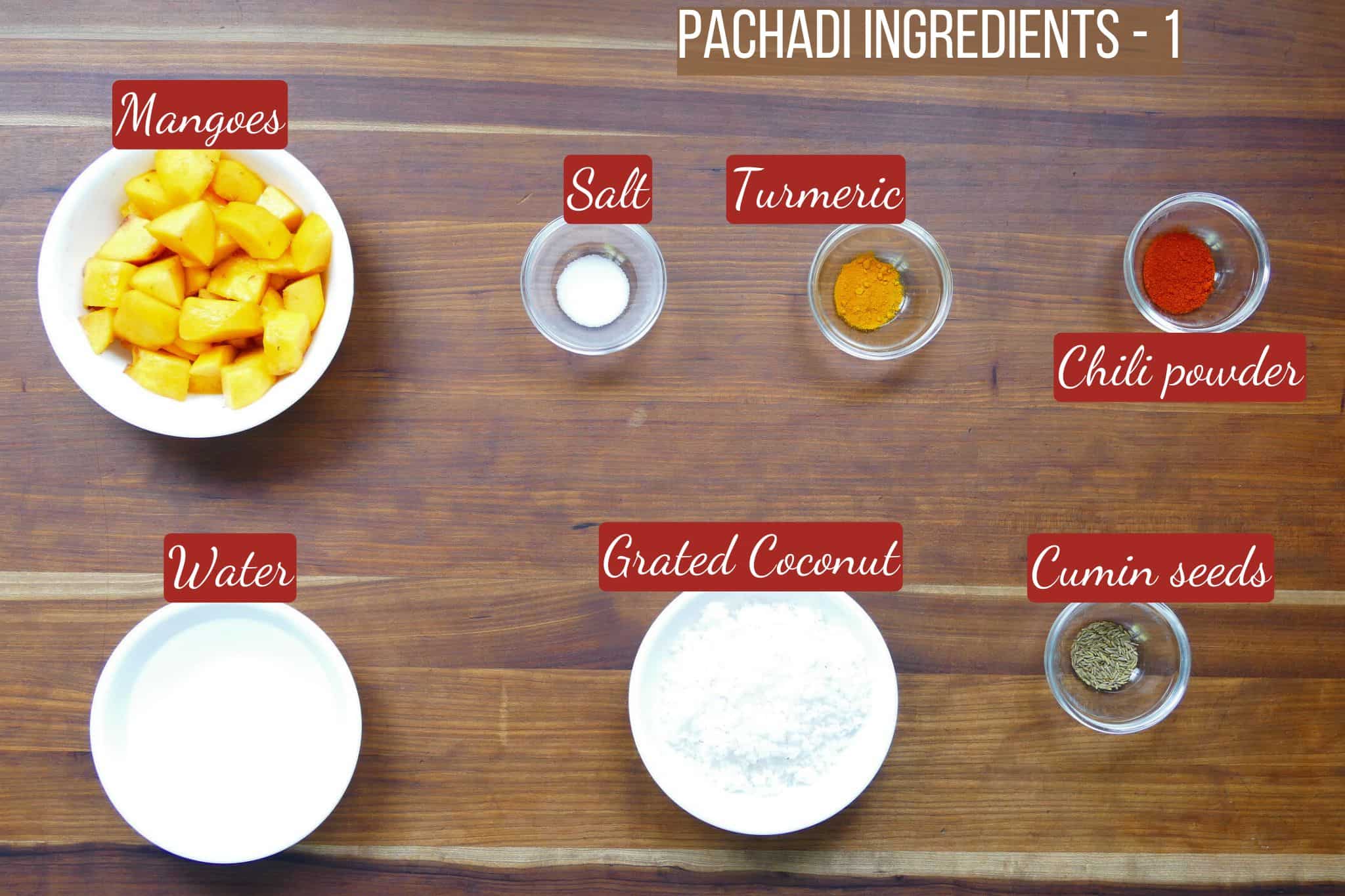
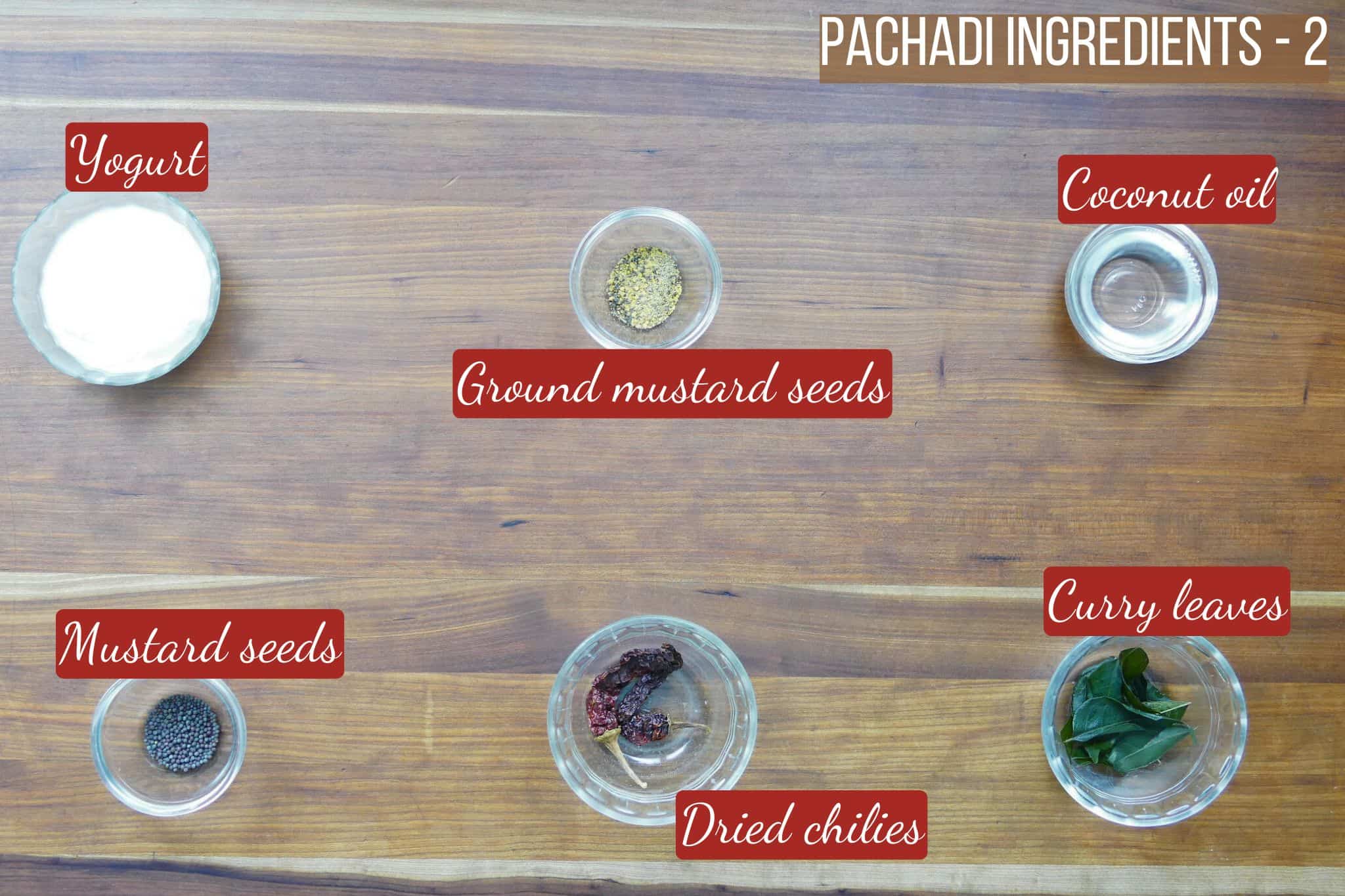
🧂 Ingredients for Pachadi

Mango pachadi ingredients on wooden counter - part 1.
Mango pachadi ingredients on wooden counter - part 2.

💡 Ingredient and Recipe Tips

🥥 Fresh Coconut: Use fresh or frozen coconut for the authentic flavor and texture. Desiccated coconut doesn’t work as well, but if that’s all you have, soak unsweetened dried coconut in enough hot water to cover it for 15-20 minutes (or longer) before using. The ground coconut needs to be smooth but still grainy, like pesto.

🌶️ Chili Powder and Dried Chillies: I use Kashmiri chili powder and Kashmiri dried chillies. Adjust the quantity according to your heat tolerance. I sometimes omit one or the other depending on my audience.

᠅ Mustard Seeds: For the ground mustard seeds, use a mortar and pestle or a spice grinder. I have a separate coffee grinder for spices.

🌿 Curry Leaves: If you’re serious about cooking Kerala recipes, you need to get curry leaves, which are usually available in the refrigerated section of Indian grocery stores. They have an authentic flavor that just cannot be replicated. Many people grow their own curry plant for an endless supply of curry leaves!

🍬 Flavor: The pachadi should be slightly tart with a noticeable sweetness. If the fruit is not sweet enough, add some jaggery or brown sugar.

❓ FAQS


Can pachadi be made ahead?

Both mango pachadi and pineapple pachadi are served at room temperature, so you can make them a few hours ahead and let the flavors develop.

What is the consistency of pachadi?

Pachadi is usually thick when it’s served for Onam sadhya, but if I’m making it for a regular meal, I like to have a bit more gravy to mix into my rice.

Can I use coconut milk instead of grated coconut?

No, coconut milk will make it too thin, and it won’t have the texture of pachadi.

How long will the pachadi keep?

Although it tastes best the same day, you can refrigerate the pachadi for up to 3 days.

How is pineapple pachadi different from mango pachadi?

They both use the same recipe and method, but pineapple creates a slightly tangier flavor profile. Both are traditional in Kerala cuisine.

🥭 How to Make Mango Pachadi

Mango pachadi instructions collage with coconut and cumin blended and mangoes cooked with coconut.
  1. In a blender, combine grated coconut and cumin seeds with yogurt.
  2. Blend to a smooth paste that’s slightly grainy, about the consistency of pesto. Set aside.
  3. In a medium saucepan, bring the mango, salt, turmeric, chili powder, and water to a boil. Reduce the heat and simmer, covered, until the mango is cooked but not mushy. Add the reserved coconut paste, crushed mustard, and jaggery, if using.
  4. Cook on medium-low heat to prevent curdling and stir gently to avoid breaking the mango pieces. Do not let it come to a boil, just heat through.
Mango pachadi instructions collage with curry leaves and mustard in oil and added to pachadi.
  1. In a small saucepan or frying pan, heat the coconut oil. Add the whole mustard seeds and cover. When they finish popping, add whole Kashmiri chillies (if using) and curry leaves.
  2. Pour the hot oil and aromatics into the mango curry and stir gently to mix thoroughly. Taste and adjust flavors as needed.

🍍 Pineapple Pachadi Variation

This same recipe works really well with pineapple! Follow the same method, substituting 2 cups of cubed fresh pineapple for the mango. Choose a pineapple that’s ripe but still firm to keep it from getting mushy during cooking.

Pineapple-Specific Tips:

  • Depending on the tartness of the pineapple, you might need more jaggery.
  • Use slightly less water when cooking the pachadi.
  • Grapes can also be added to pineapple pachadis. Add the grapes at the same time that you add the coconut paste.

See the recipe card below for detailed instructions.

Mango pachadi in brass bowl.
Print Recipe
5 from 2 votes

Traditional Kerala Mango Pachadi Recipe with Pineapple Variation

This mango pachadi recipe is an authentic South Indian side dish that's popular for everyday meals, but especially for special festival meals like Onam sadhya or Vishu sadhya. Coconut pachadi is an iconic traditional Kerala food that also happens to be vegetarian.
Prep Time15 minutes mins
Cook Time15 minutes mins
Total Time30 minutes mins
Course: Sides
Cuisine: Indian
Main Ingredient: vegetarian
Method: Non Instant Pot
Servings: 6 servings
Calories: 167kcal
Author: Paint the Kitchen Red

Ingredients

  • 1 cup grated coconut [See Note 1]
  • ½ teaspoon cumin seeds
  • ½ cup yogurt preferably whole milk
  • 2 cups mango ripe but firm [See Note 2]
  • ½ teaspoon salt
  • ½ teaspoon turmeric powder
  • ½ teaspoon Kashmiri chili powder
  • ⅓ to ½ cup water
  • ½ teaspoon black mustard seeds crushed
  • jaggery powder or brown sugar [See Note 3]
  • 1 tablespoon coconut oil
  • ½ teaspoon black mustard seeds
  • 2 whole Kashmiri chilies optional
  • 12 curry leaves

Instructions

  • Blend the 1 cup grated coconut, ½ teaspoon cumin seeds, and ½ cup yogurt in a blender or food processor until it's the consistency of smooth pesto.
  • In a medium saucepan, mix the 2 cups mango, ½ teaspoon salt, ½ teaspoon turmeric powder, and ½ teaspoon Kashmiri chili powder and ⅓ to ½ cup water. Bring to a boil, cover, reduce the heat and simmer over medium-low heat until the mango is cooked but not mushy.
  • Stir in the coconut, crushed mustard seeds, and jaggery powder (if using). Mix gently to avoid breaking up the mango pieces. Cook until warmed through.
  • Heat 1 tablespoon coconut oil in a frying pan and add ½ teaspoon black mustard seeds and cover. Once the mustard seeds have stopped popping, add 2 whole Kashmiri chilies (if using), and 12 curry leaves. Pour the mixture over the mango curry and stir carefully.

Video

Notes

Note 1: For best results, use fresh coconut, though frozen coconut works as a good alternative. If you only have desiccated (dried, unsweetened) coconut available, soak it in warm water for 15 to 20 minutes or longer, until softened.
Note 2: For pineapple pachadi, substitute 2 cups of cubed ripe but firm pineapple pieces. You can also add a few grapes when you’re adding in the coconut paste.
Note 3: If the fruit isn’t sweet enough, add jaggery powder to taste. Start with 2 teaspoons and adjust as needed.
 

Nutrition

Serving: 0.5cup | Calories: 167kcal | Carbohydrates: 19g | Protein: 5g | Fat: 12g | Saturated Fat: 9g | Polyunsaturated Fat: 1g | Monounsaturated Fat: 2g | Cholesterol: 2mg | Sodium: 200mg | Fiber: 4g | Sugar: 16g

I am not a certified nutritionist.  I provide my best estimate of nutritional information merely as a courtesy to my readers.  If you depend on nutritional information for dietary or health reasons,  I suggest using your favorite online nutrition calculator to confirm the nutritional value of this recipe based on the actual ingredients that you use.

Did you know that the best way to support your favorite bloggers is to comment and rate recipes, and share on social media? If you loved this recipe, please comment and give it a five ⭐ rating in the comment section below. If you’re a pinner, pin this post using the Pin buttons at the top and bottom of this post and in the recipe card above. Thank you for your support!
BACK TO TOP

How to Make Perfect Masala Dosa at Home

September 17, 2025 by Neena Panicker 4 Comments

Two masala dosas on plate and green and red chutneys and dosas and sambar in background.

Masala dosa is a crispy South Indian crepe filled with spiced potatoes (potato masala) and served with chutney and sambar. While this authentic masala dosa recipe requires 2-day planning for fermentation, the results are so worth it. Learn how to make restaurant-quality homemade masala dosa with this step-by-step guide.

Two masala dosa on plate and green and red chutneys and dosas and sambar in background.

This post contains affiliate links. As an Amazon Associate, I earn from qualifying purchases. Please read the disclosure.

➡ If you’re new to Kerala cooking, start with my Kerala Cooking Basics guide for ingredient tips, shopping advice, and more authentic recipes.

Masala dosa is easily one of my top 10 favorite dishes of all time. It’s basically a crispy crepe stuffed with spiced potatoes.

The beauty of the dish is that when you bite into a perfectly prepared one, you get this amazing contrast: the crispy, golden outside and a perfectly spiced potato filling inside.

Masala dosa has become so popular that you’ll find restaurants serving this South Indian classic all over the world. Most people only ever eat it at restaurants and with good reason: the prep work can be intimidating.

And I get it – between making the batter, letting it ferment, preparing the filling, and making the sambar and chutney, it feels like a weekend project. Which it kinda is – not gonna lie.

I’ll be honest – I was intimidated about making masala dosa at home for the longest time.

But I promise you, once you try this homemade dosa recipe, you’ll see that it’s not that scary. Sure, it may not come out perfect the first time, but that’s how you’ll learn.

The key is organization. Here’s my schedule for how I plan for this meal. I prefer to start 2 days before, because making everything on the day of is too overwhelming for me:

  • 2 days before (morning): soak rice and urad
  • 2 days before (evening): grind the rice and urad and leave to ferment
  • 1 day before (morning): once the dosa batter has fermented, refrigerate
  • 1 day before: make red chutney and/or green chutney and potato filling and refrigerate
  • Morning of: make sambar and refrigerate if not using right away
  • 1 hour before: take out the amount of dosa batter you’ll use and thin it out with water if needed
  • Serving time: heat the sambar and potatoes, and start making dosas

Trust me, this approach for how to make masala dosa at home makes the whole thing way less overwhelming.

I use the Instant Pot to ferment the batter. For oven and countertop fermentation instructions and step-by-step details, check out how to make dosa.

I also use the Instant Pot to make the potato masala. If you want stovetop instructions, read my potato masala post.

➡ For more information about the accompaniments for masala dosa, read about how to make sambar, red chutney for masala dosa, and cilantro coconut green chutney. For a shortcut to making crispy dosas, learn how to make dosa on a crepe maker!

❓ FAQS


Can I make the masala dosas ahead of time?

I recommend making them fresh and serving them immediately. They don’t taste as good when they’ve been made ahead. However, if you need to, you can assemble each one and place it on a baking sheet that’s kept in a 200 degrees Fahrenheit (93 degrees Celsius) oven.

What’s the difference between masala dosa and Mysore masala dosa?

Mysore masala dosa has a spicy red chili chutney spread inside the dosa before adding the potato filling, while regular masala dosa just has the potato filling.

Two masala dosas on plate and green and red chutneys and dosas and sambar in background.
Print Recipe
5 from 2 votes

How to Make Masala Dosas at Home

Try this recipe for crispy South Indian dosas filled with spiced potato masala, served with coconut chutney and sambar. Requires a little pre-planning for fermentation, but it's worth the effort!
Prep Time5 hours hrs 30 minutes mins
Cook Time1 hour hr
Fermentation12 hours hrs
Total Time18 hours hrs 30 minutes mins
Course: Main Dishes
Cuisine: Indian
Method: Non Instant Pot
Servings: 9
Calories: 210kcal
Author: Paint the Kitchen Red

Ingredients

Dosa

  • ½ cup urad gota or split urad dal
  • 1 teaspoon fenugreek seeds (methi seeds)
  • 1½ cups idli rice
  • 5 cups water preferably filtered
  • 3 tablespoon cooked rice day-old
  • 1¼ teaspoon kosher salt or 1 teaspoon table salt [See Note 1]
  • 1½ tablespoon vegetable oil

Potato Masala

  • 1 tablespoon coconut oil or vegetable oil
  • 1 teaspoon black mustard seeds
  • 10 curry leaves
  • 1½ cup onion chopped
  • 2 teaspoon ginger minced
  • 1 to 2 jalapeno pepper sliced or cut in half lengthwise (optional)
  • ½ teaspoon turmeric powder
  • ¼ teaspoon Kashmiri chili powder
  • 1 teaspoon salt or to taste
  • 2 lb potatoes cubed into 1 inch pieces, about 1 kg or 6 cups
  • ½ cup water
  • ½ teaspoon lemon juice
  • 2 tablespoon cilantro chopped

To Serve

  • coconut red chutney room temperature
  • cilantro coconut green chutney room temperature
  • sambar hot

Instructions

DOSA

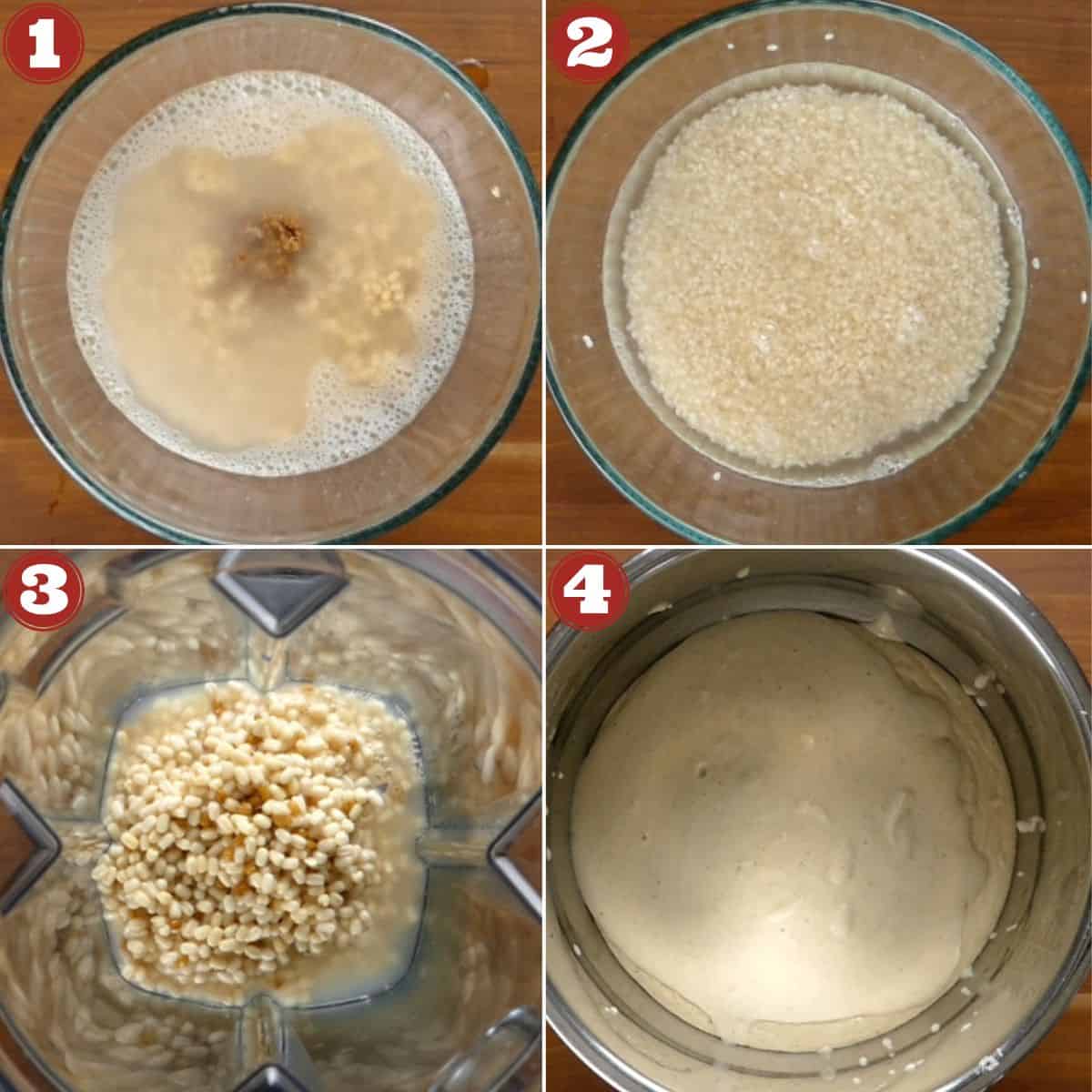
  • Wash the ½ cup urad gota and 1½ cups idli rice separately multiple times, until the water runs clear. Soak the urad and 1 teaspoon fenugreek seeds in 2 cups of filtered water in a medium bowl. Soak the rice in 3 cups of filtered water in a separate medium bowl. After 4 to 6 hours (or overnight), drain both, but reserve the urad soaking water. Blend the urad with enough of the reserved soaking water to get a smooth pancake batter consistency (pourable but not runny). You might use about ⅔ to ¾ cup of water. Pour into your Instant Pot stainless steel liner.
    Collage of dosa batter - urad and fenugreek being soaked, rice being soaked, urad in blender, urad batter in pot.
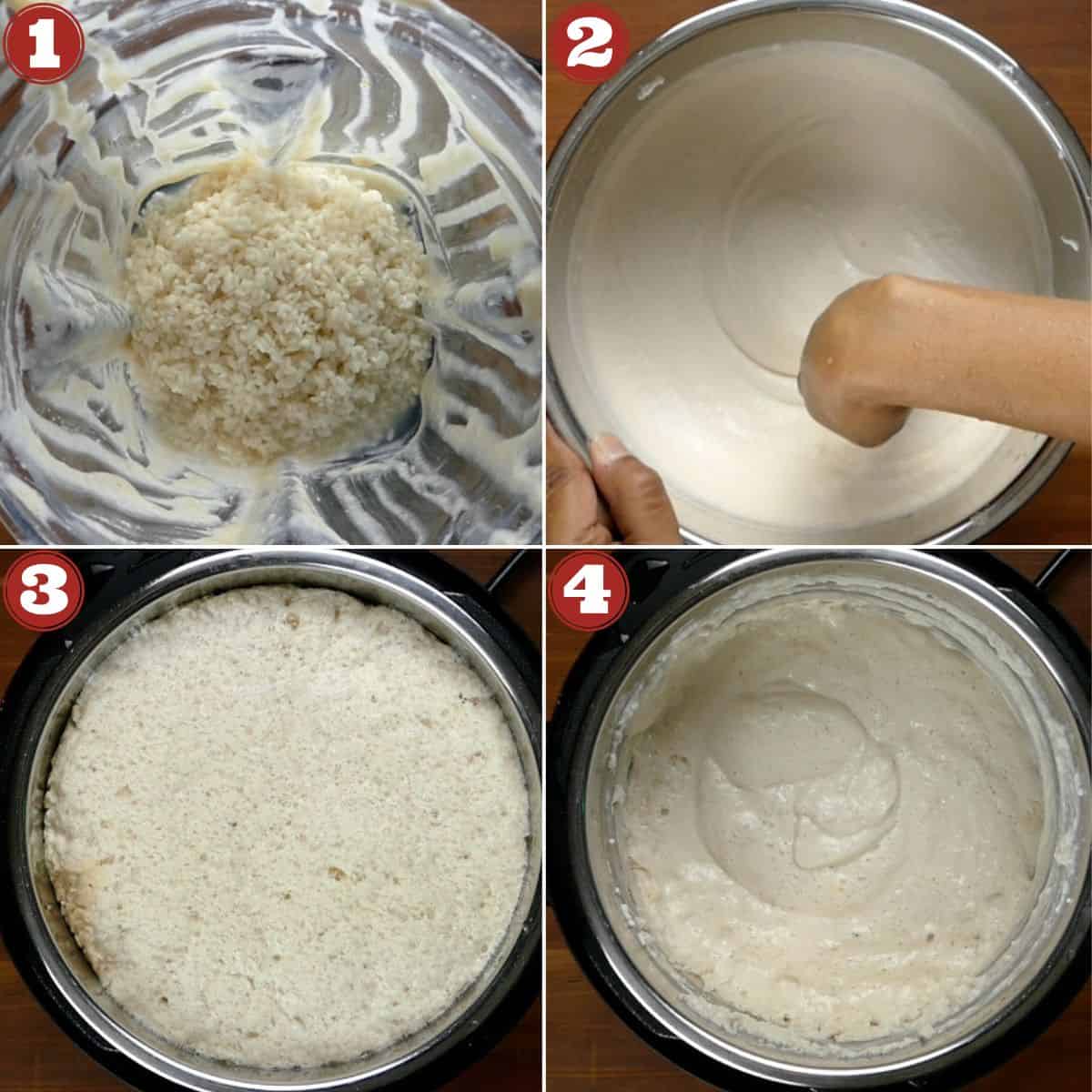
  • Blend the 3 tablespoon cooked rice with the soaked rice using the reserved soaking water. If you run out, use plain filtered water. You may end up using a total of about ½ to ¾ cup of water. The batter should be a bit grainy. Rub a little batter between your fingers. The grains should be like granulated sugar. The consistency should be pourable (like pancake batter), but not too thin. Transfer to the same container as the urad. [See Note 2]
    Add 1¼ teaspoon kosher salt and mix the two batters with a clean hand for about two minutes. This helps with the fermentation process. The consistency should be pourable, but not too thick or thin. Add more soaking water or filtered water to thin out, if needed.
    Ferment the dosa batter in the Instant Pot using the Yogurt function for 12 hours in normal mode (not low or boil). If it has doubled and smells slightly sour, it's ready. If not, ferment for another couple of hours. If you're not going to make the dosas right away, refrigerate immediately. About half an hour before making the dosas, remove the batter from the fridge. [See Note 3]
    Collage of dosa batter - rice in blender, batter stirred by hand, batter risen in Instant Pot, batter mixed.
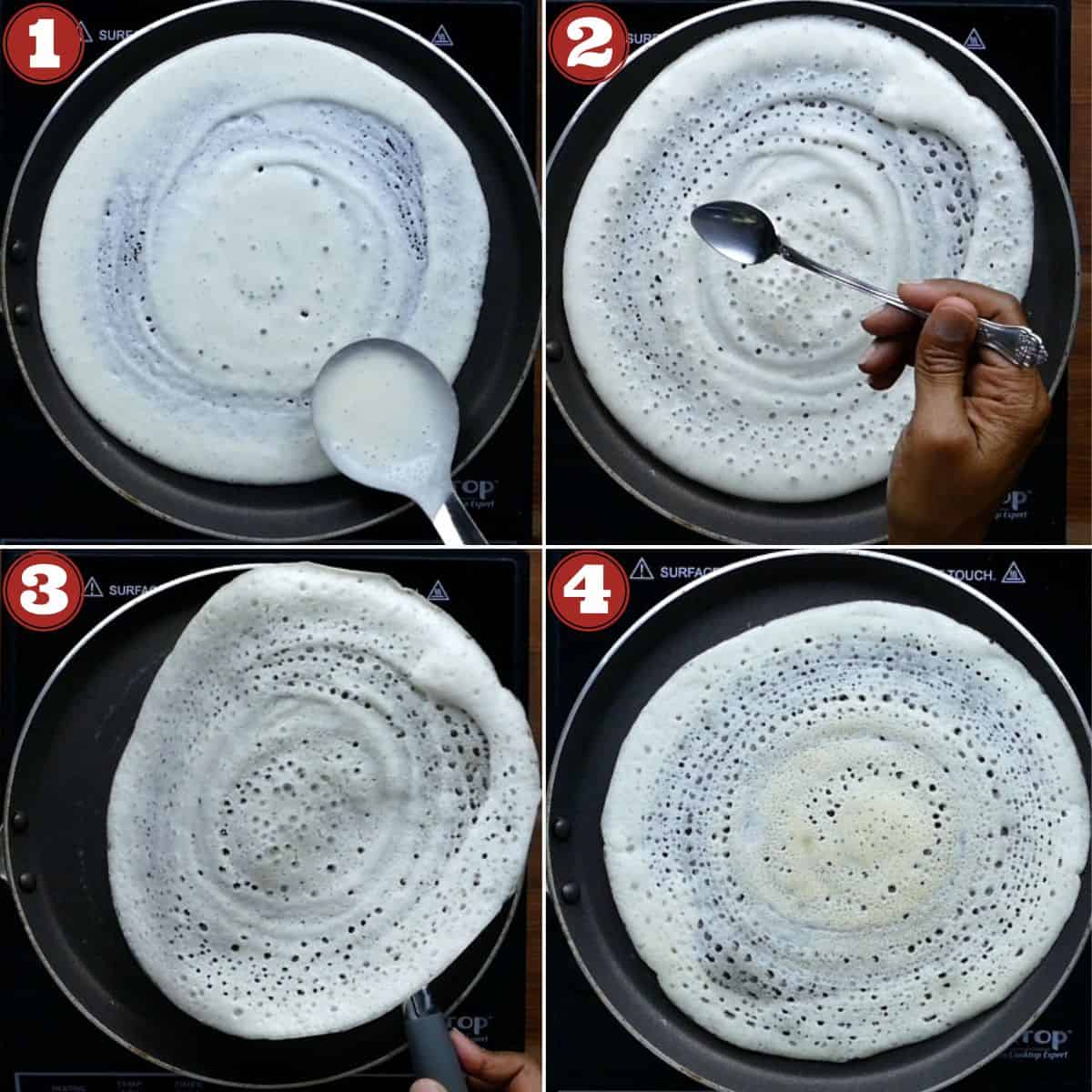
  • Heat a griddle or tawa over medium heat. Test to see if the pan is hot enough by sprinkling a few drops of water on the pan. The water should sizzle and slide around the pan. Lower the temperature to medium-low. Add ¼ teaspoon of oil to the pan and spread it around with a folded-up paper towel. Pour about ¼ cup of batter in the middle of the pan using a ladle. Immediately, using the back of the ladle, spread the batter in a circular motion, starting at the center and working your way out. If the batter doesn’t spread easily, thin it with a little water or reduce the temperature.
    You will have a thin crepe and you should see small holes forming. Drizzle a few drops of oil all over the surface to help crisp up the dosa.
    After about a minute, the bottom will turn golden. Use a spatula to flip the dosa to the other side. After 30 seconds or when it’s lightly browned, fold the dosa in half and place on a serving plate. Repeat with remaining batter and serve immediately.
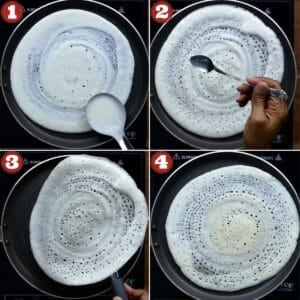
    Dosas made in a pan collage. Spread batter, cook first side, flip, cook second side.

POTATO FILLING (Instant Pot) [See Note 4]

  • Select Saute mode, and once the Instant Pot is hot, heat 1 tablespoon coconut oil. Add 1 teaspoon black mustard seeds and cover. When the popping stops, add 10 curry leaves  and saute briefly. Stir in 1½ cup onion, 2 teaspoon ginger, and 1 to 2 jalapeno pepper. Saute until the onions are translucent. Press Cancel. Add ½ teaspoon turmeric powder, ¼ teaspoon Kashmiri chili powder, 1 teaspoon salt, and saute in the residual heat for 30 seconds to 1 minute. Be careful not to burn. Deglaze with water if there's anything stuck to the bottom, and stir to scrape up all the brown bits. Add 2 lb potatoes and ½ cup water and close Instant Pot.
    Potato masala steps collage- mustard seeds, onions and ginger, cooked onions, potatoes.
  • Pressure cook on High Pressure for 4 minutes. Do a quick release of pressure. [Read More: The Different Pressure Release Methods]. Open the lid and mash the potatoes slightly with a wooden spoon. Stir in ½ teaspoon lemon juice. Garnish with 2 tablespoon cilantro.
    Potato masala cooked and stirred.

ASSEMBLY

  • Dosas are best served fresh off the griddle, as they are made. I don't recommend assembling them and storing them. Make sure the potato masala filling has been reheated if you made it in advance.
  • Place a freshly cooked dosa on a plate, brown side down. Spread 2 tablespoons of potato masala closer to one edge. Roll the dosa around the filling. You can also spread the filling on one half of the dosa and gently fold the other half over the filling to form a semi-circle.
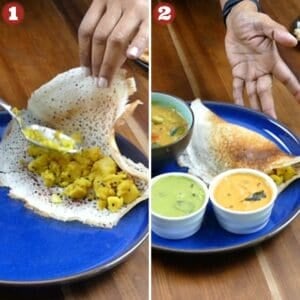
    Collage of potato being placed in dosa and plate with masala dosa, sambar, green chutney and red chutney.
  • You can place it back on the griddle to briefly reheat before serving.
  • Serve with green and/or red chutney, and sambar in individual bowls.
    Two masala dosas on plate and green and red chutneys and dosas and sambar in background.

Notes

Note 1: If using table salt, add it after fermentation is done and before making the dosas.
Note 2: If the blender becomes too hot, blend in 1-minute increments and let it rest for a few minutes till it cools down. Overheating can affect the fermentation process. A high-powered blender is required for best results (Vitamix, Blendtec, Ninja, Nutibullet).
Note 3: Read how to make dosa to get instructions on how to ferment in oven or on the countertop.
Note 4: Read how to make potato masala to get instructions on how to make the potato filling on the stovetop.

Nutrition

Serving: 2dosas | Calories: 210kcal | Carbohydrates: 33g | Protein: 6g | Fat: 6g | Saturated Fat: 2g | Polyunsaturated Fat: 2g | Monounsaturated Fat: 2g | Sodium: 320mg | Fiber: 4g

How to Make Potato Masala for Masala Dosa (Restaurant Style)

September 16, 2025 by Neena Panicker 2 Comments

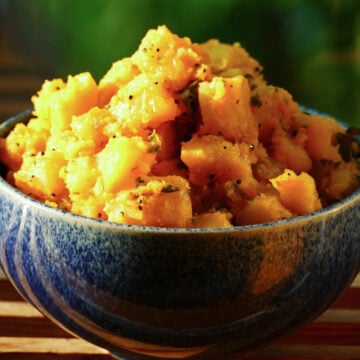
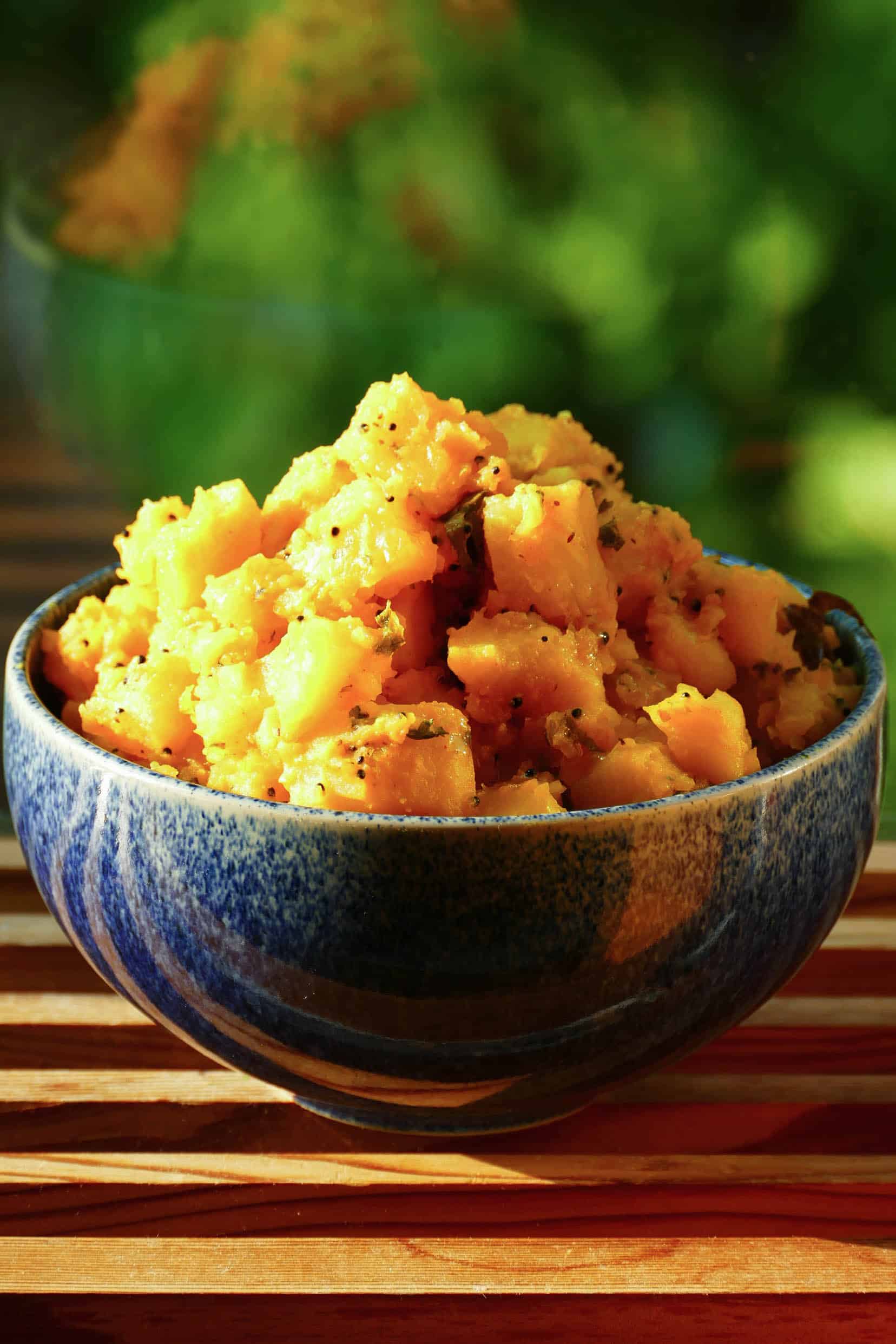
Potato masala in blue bowl.

This traditional masala dosa potato recipe creates the perfect dosa masala filling for authentic South Indian masala dosa. Learn how to make the best potato for masala dosa with tender potatoes, curry leaves, and spices that’s even better than restaurant quality!

Potato masala in blue bowl.

This post contains affiliate links. As an Amazon Associate, I earn from qualifying purchases. Please read the disclosure.

➡ If you’re new to Kerala cooking, start with my Kerala Cooking Basics guide for ingredient tips, shopping advice, and more authentic recipes.

A great masala dosa isn’t just about the crispy crepe. The potato filling inside needs to have just the right texture (not too mushy) and bold flavor.

I’ve perfected a traditional potato masala recipe for a filling that’s even better than what you’ll find at most restaurants.

The potatoes hold their shape, the spices are just the right combination, and the curry leaves provide that South Indian flavor that makes masala dosa so addictive.

This South Indian potato curry for dosa not only works as a filling for crispy dosas for a weekend brunch, but it’s also a versatile potato dish that tastes so good with puris and chapatis.

Plus, it actually tastes better the next day, making it perfect for meal prep or keeping leftovers on hand for quick meals throughout the week.

➡ If you’re looking to make authentic masala dosas, try my dosa, sambar, cilantro coconut chutney, and red chutney. Learn how to put it together with how to make masala dosa.

Ingredients and Tips

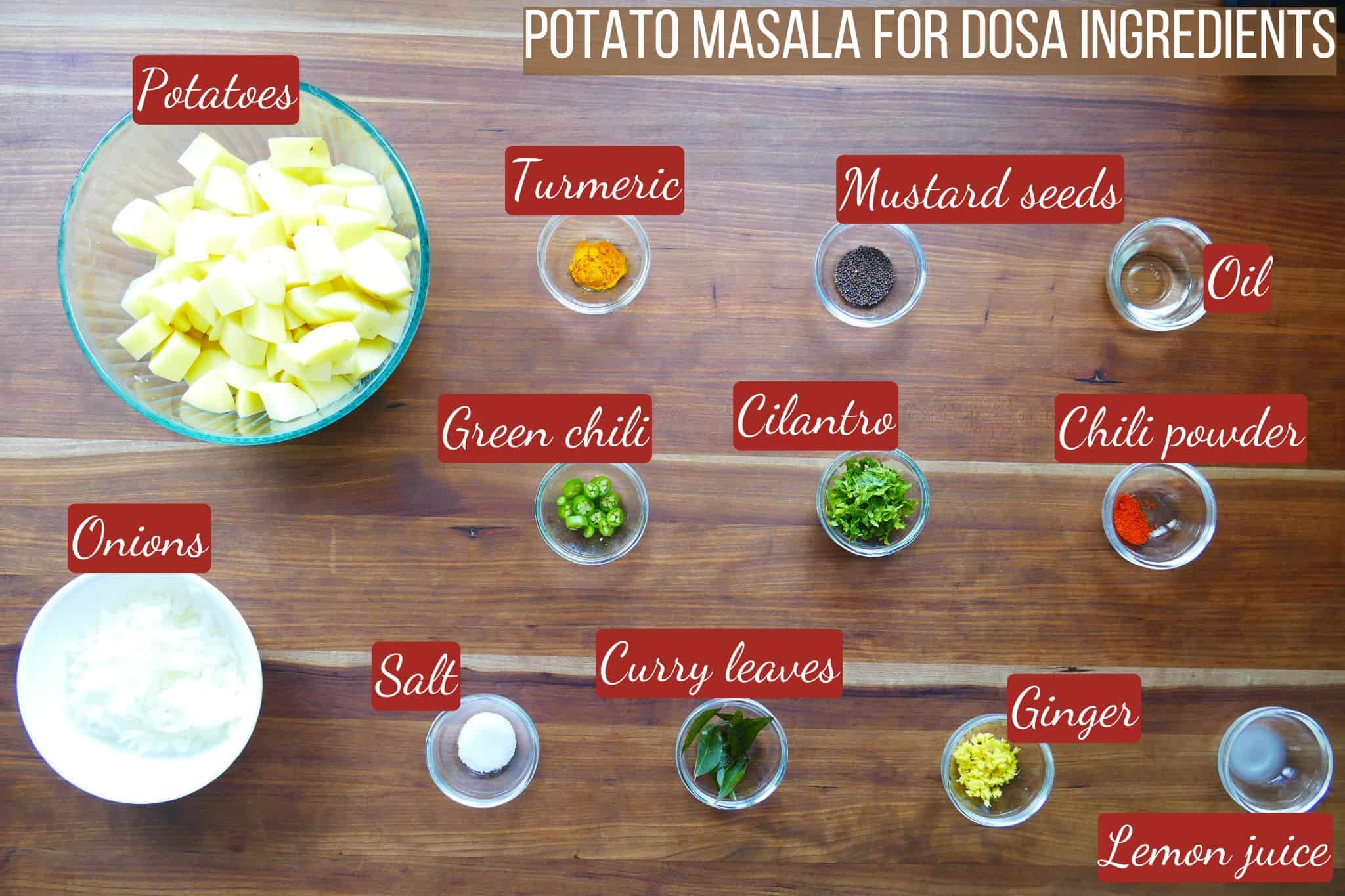
🧂 Ingredients for Authentic Dosa Masala

Potato masala for dosa ingredients.

💡 Ingredient and Recipe Tips for Dosa Masala Potato

🥔 Potatoes: Use Yukon Gold or red potatoes for the best results. They hold their shape and have just the right texture. Russet potatoes can get mushy.

🧅 Onions: Yellow onions work well because of their slight sweetness and neutral color. Chop them small so they blend well with the potatoes. Red onions are fine too.

🌶️ Chilies: The quantity of green chilies is based on your heat tolerance. Mincing them finely will make the masala spicier, while slicing them lengthwise in half will make it milder.

🍃 Curry Leaves: Fresh curry leaves are essential for authentic flavor. If you can’t find them, omit them – it will still taste great!

🫒 Oil: Coconut oil gives that authentic South Indian taste, but vegetable oil works well too.

🍋 Lemon juice: Lemon juice is optional, but I love the flavor it gives this potato masala.

🫘 Dal: Chana dal adds a bit of crunch to the filling. Some people like the crunch, while others don’t, so it’s optional. Soak the chana dal in water for about 15 minutes.

❓ FAQS


Can I make this ahead of time?

Yes! This tastes even better the next day because the flavors meld. Store covered in the fridge for 3 to 4 days. Reheat in the microwave.

Can I freeze potato masala?

The texture of potatoes changes slightly after freezing, but it can be frozen in an airtight container. Cool completely before freezing.

Can I add other vegetables?

Although potatoes are the traditional choice, you can add other veggies, especially if you’re eating them with puris or chapatis. Green peas, carrots, or green beans are good choices.

How to Make Potato Masala

♨️ Stovetop Instructions

  1. In a large saucepan, boil the potatoes with turmeric and salt until a knife is able to pierce them easily, about 10 minutes. Drain and set aside.
  2. Heat oil in a frying pan over medium-high heat. Add mustard seeds and cover. When they’ve finished popping, add the curry leaves and stir for a few seconds.
  3. Add the drained chana dal (if using) and saute until golden. Sauté the onions, ginger, and green chilies until the onions are translucent. Add the turmeric, chili powder, and salt, and saute for 30 seconds to a minute.
  4. Add the cooked potatoes with a few tablespoons of water, cover, and cook until they’re well-cooked but not too mushy, about 5 to 7 minutes. Add more water as needed. The final texture should be mostly dry. Stir in the lemon juice. Garnish with cilantro.

⏲️ Instant Pot Instructions

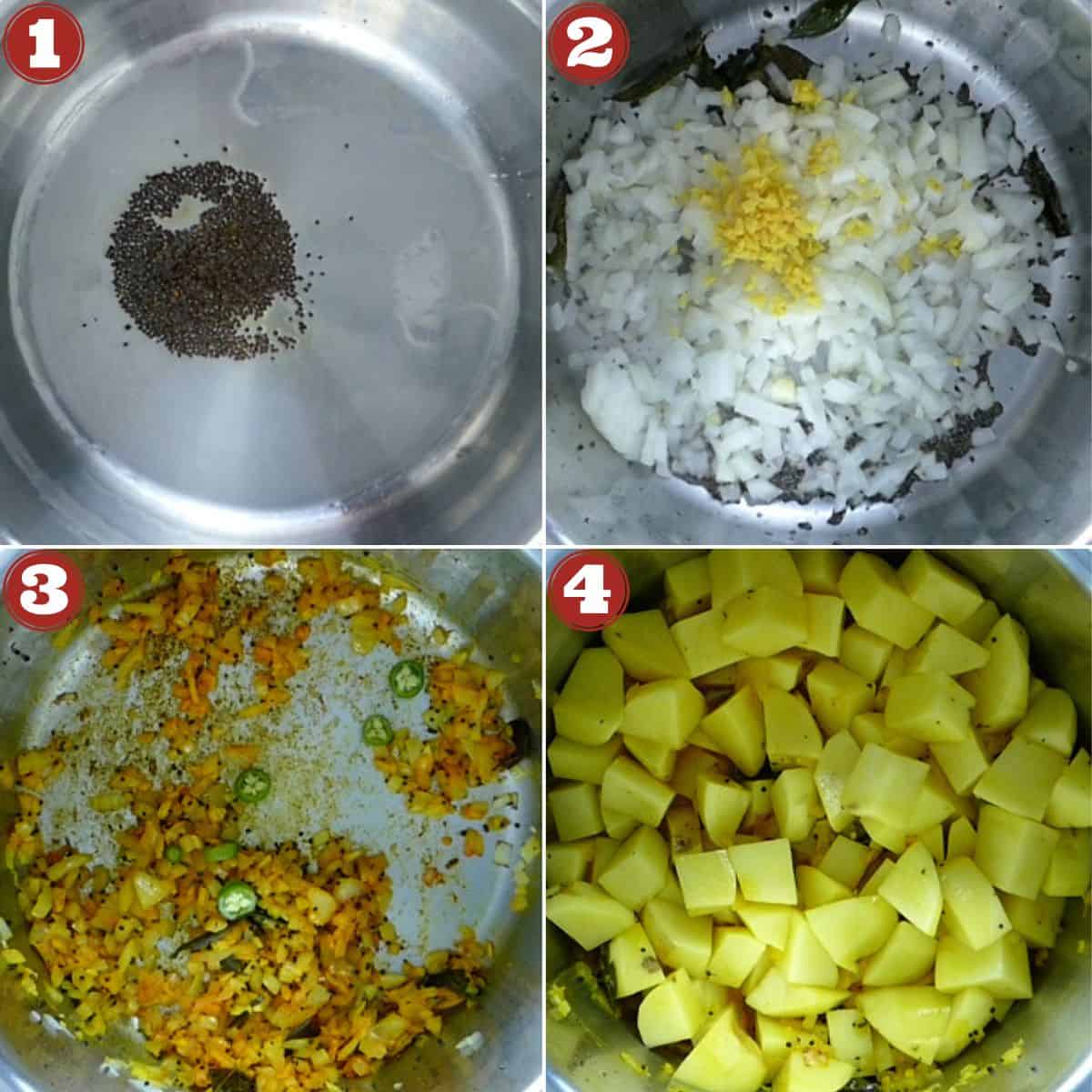
Potato masala steps collage- mustard seeds, onions and ginger, cooked onions, potatoes.
  1. Heat the Instant Pot in Saute mode. Add the oil, and once the oil is hot, add the mustard seeds. Cover with a lid and once the popping has stopped, add the curry leaves and let them sizzle.
  2. Add the drained chana dal (if using) and saute until golden. Sauté the onions and ginger until the onions are translucent.
  3. Add the turmeric, chili powder, salt, and green chilies and saute for 30 seconds to a minute.
  4. Stir in the potatoes and water. Do a quick release of pressure and open the lid.
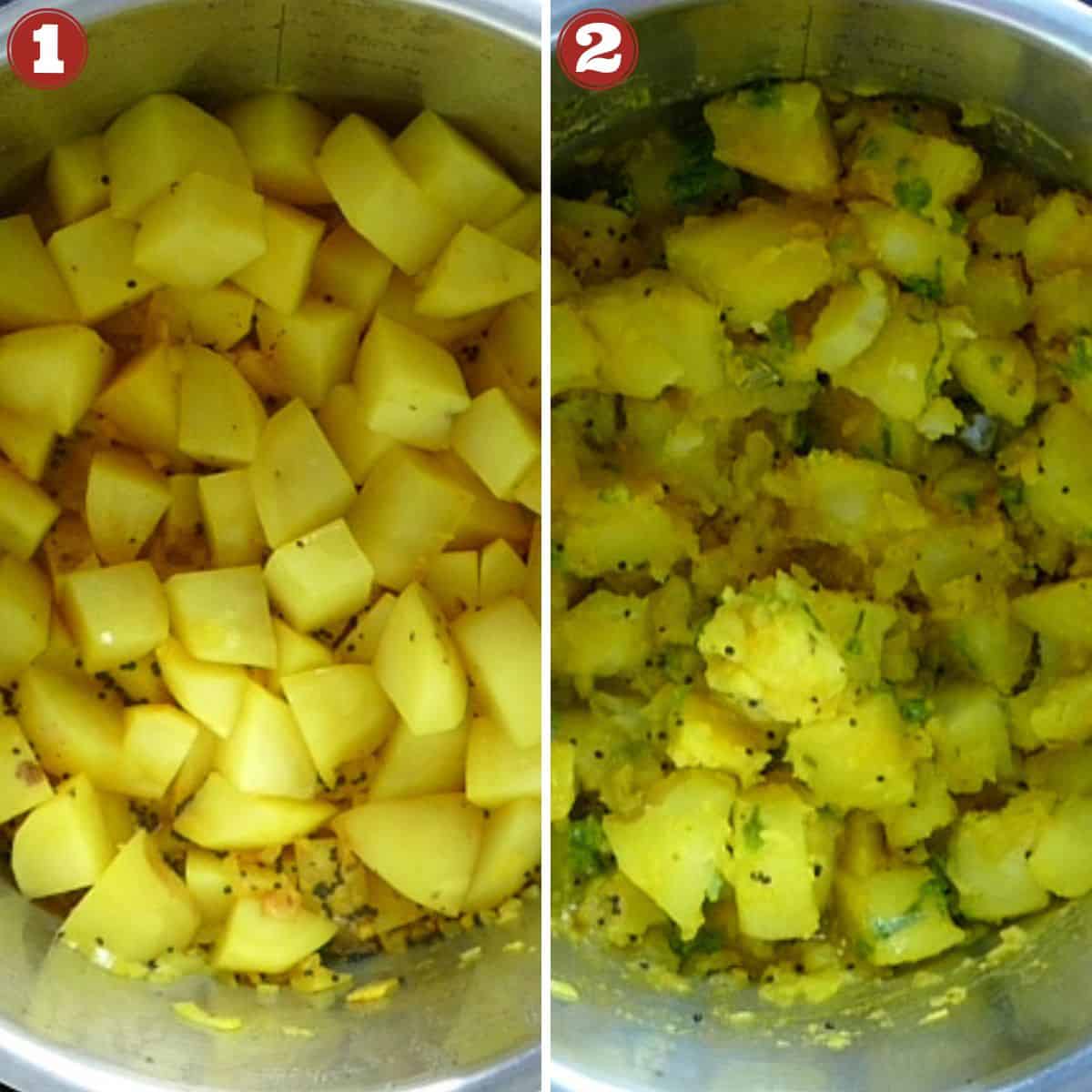
Potato masala cooked and stirred.
  1. Add the lemon juice.
  2. Stir it up and mash up some of the potatoes with a wooden spatula. Garnish with cilantro.

See the recipe card below for detailed instructions.

➡ Try some other South Indian recipes like Kerala parippu, vegetable stew, chicken curry, and Kerala beef fry.

Potato masala in blue bowl.
Print Recipe
5 from 1 vote

Potato Masala for Masala Dosa or Puris

This masala potato for dosa is so versatile! It's perfect for filling crispy masala dosas, but it also works as a potato bhaji served with puris or chapatis.
Prep Time15 minutes mins
Cook Time15 minutes mins
Total Time30 minutes mins
Course: Main Dishes
Cuisine: Indian
Main Ingredient: vegetarian
Servings: 6 servings
Calories: 135kcal
Author: Paint the Kitchen Red

Ingredients

  • 1 tablespoon chana dal optional [See Note 1]
  • 1 tablespoon coconut oil or vegetable oil
  • 1 teaspoon black mustard seeds
  • 10 curry leaves [See Note 2]
  • 1½ cup onion chopped
  • 2 teaspoon ginger minced
  • 1 to 2 jalapeno pepper sliced, or cut in half lengthwise (optional)
  • ½ teaspoon turmeric powder
  • ¼ tsp  Kashmiri chili powder
  • 1 teaspoon salt or to taste
  • 2 lb potatoes cubed into 1 inch pieces (about 1 kg or 6 cups)
  • ½ cup water
  • ½ teaspoon lemon juice
  • 2 tablespoon cilantro chopped

Instructions

  • Soak 1 tablespoon chana dal (if using) in hot water for 15 minutes, drain, and set aside.

Instant Pot Instructions

  • Select Saute mode, and once the Instant Pot is hot, heat 1 tablespoon coconut oil.
  • Add 1 teaspoon black mustard seeds and cover. When the popping stops, add 10 curry leaves and saute briefly. Add the chana dal and saute till golden brown, stirring constantly.
  • Stir in 1½ cup onion, 2 teaspoon ginger, and 1 to 2 jalapeno peppers. Saute until the onions are translucent. Press Cancel.
  • Add ½ teaspoon turmeric powder, ¼ tsp  Kashmiri chili powder, 1 teaspoon salt, and saute in the residual heat for 30 seconds to 1 minute. Be careful not to burn.
  • Deglaze with water if there's anything stuck to the bottom, and stir to scrape up all the brown bits. Add 2 lb potatoes and ½ cup water and close Instant Pot.
  • Pressure cook on High Pressure for 4 minutes. Do a quick release of pressure. [Read More: The Different Pressure Release Methods]
  • Open the lid and mash the potatoes slightly with a wooden spoon. Stir in ½ teaspoon lemon juice. Garnish with 2 tablespoon cilantro.

Stovetop Instructions

  • In a large saucepan, boil the potatoes in enough water to cover, with turmeric and salt, until a knife is able to pierce them easily, about 10 minutes. Drain and set aside.
  • Heat oil in a frying pan over medium-high heat. Add mustard seeds and cover. When they’ve finished popping, add the curry leaves and stir for a few seconds.
  • Add the drained chana dal (if using) and saute until golden. Sauté the onions, ginger, and green chilies until the onions are translucent. Add the turmeric, chili powder, and salt, and saute for 30 seconds to a minute.
  • Add the cooked potatoes with a few tablespoons of water, cover, and cook until they're well-cooked but not too mushy, about 5 to 7 minutes. Add more water as needed. The final texture should mostly dry. Stir in the lemon juice and garnish with cilantro.

Video

Notes

Note 1: Chana dal adds a slight crunch to the potatoes. They can be omitted without affecting taste.
Note 2: Curry leaves add authentic flavor, and there is no substitute. If you can’t find them, omit them.
 

Nutrition

Serving: 1serving (6 servings total) | Calories: 135kcal | Carbohydrates: 28g | Protein: 3g | Fat: 3g | Saturated Fat: 2g | Sodium: 400mg | Fiber: 3g | Sugar: 4g

I am not a certified nutritionist.  I provide my best estimate of nutritional information merely as a courtesy to my readers.  If you depend on nutritional information for dietary or health reasons,  I suggest using your favorite online nutrition calculator to confirm the nutritional value of this recipe based on the actual ingredients that you use.

Did you know that the best way to support your favorite bloggers is to comment and rate recipes, and share on social media? If you loved this recipe, please comment and give it a five ⭐ rating in the comment section below. If you’re a pinner, pin this post using the Pin buttons at the top and bottom of this post and in the recipe card above. Thank you for your support!
BACK TO TOP

Make Dosa on a Crepe Maker

September 15, 2025 by Neena Panicker 2 Comments

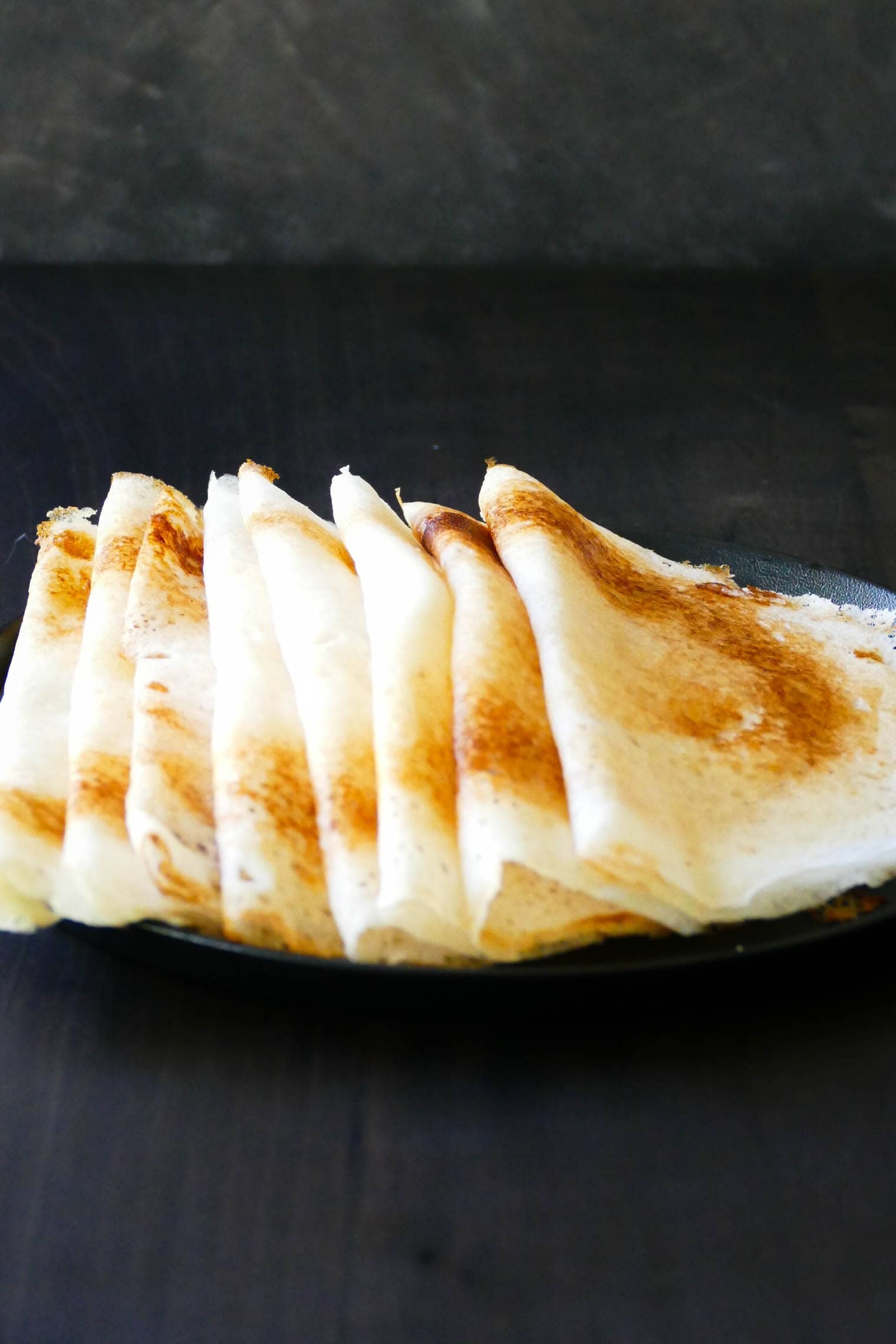
Dosa stacked on a plate.

Make perfectly crispy dosas in minutes using an electric crepe maker! Dosa on a crepe maker is a dosa-making hack that is perfect for when you’re craving dosa on a weeknight.

Dosa stacked overlapping on a plate.

This post contains affiliate links. As an Amazon Associate, I earn from qualifying purchases. Please read the disclosure.

➡ If you’re new to Kerala cooking, start with my Kerala Cooking Basics guide for ingredient tips, shopping advice, and more authentic recipes.

Why I Love Making Dosa with a Crepe Maker

I visited a dear friend recently, and she told me that she makes dosas using a crepe maker. We ended up thawing her frozen dosa dough and making dosas with the crepe maker.

And I was hooked immediately! I returned home and immediately bought myself a crepe maker from Amazon.

I do love using my griddle because that’s what I’ve done for years, but the crepe maker is a way to make dosa quickly, and it’s especially helpful on busy weeknights.

And they always come out super crispy, just the way my family likes them.

Pros:

  • Thin, crispy dosas that are perfectly cooked
  • Consistent dosas every time
  • It’s faster – perfect for weeknight meals
  • No oil needed for the cooking surface

Cons:

  • The dosas are much smaller than a traditional griddle
  • If the batter is too thin, the dosas are too crispy
  • The technique for dipping takes some getting used to

My verdict: I quite like it! It’s quick and convenient, perfect for weeknight dosa cravings.

➡ Need dosa batter? Try my foolproof dosa batter recipe that has tips for fermentation to make the perfect dosas. Use the crepe maker dosas to make masala dosas.

🥣 Batter Consistency

The top tip when using a crepe maker is having the right batter consistency. It needs to be slightly thinner than when using a griddle or tawa.

The perfect batter consistency:

  • Easily coats the crepe maker when dipped
  • Flows smoothly without being too runny
  • Slightly thinner than pancake batter

If your batter is too thick, add filtered water, 1 tablespoon at a time, until you reach the right consistency.

If your batter is too thin, add a few tablespoons of rice flour or semolina to thicken slightly.

📝 Tips for Perfect Dosas

Batter:

  • Use day-old fermented dosa batter for best results
  • Stir before using
  • Make sure you have enough batter to coat the entire cooking surface when dipping

Technique:

  • Have your dipping bowl ready with enough batter, and add more when needed
  • Dip the crepe maker into the batter and immediately tilt it around to cover the entire surface, working quickly
  • Clean the crepe maker surface after every couple of dosas

Serving:

  • Serve immediately while crispy
  • These dosas are so good with red or green coconut chutney
  • Keep them warm in a low-temperature oven if making for a crowd

🥞 How to Cook Dosas Using an Electric Crepe Maker

  • About half an hour before making the dosas, remove the batter from the refrigerator.
  • Add some water to thin it out if it’s too thick.
  • Plug in the electric crepe maker to heat it for 3 minutes.
  • If your crepe maker has temperature settings, use medium to medium-high.
Dosas made with a crepe maker collage. Dip in batter, cook first side, flip, cook second side.
  1. Pour some batter into the shallow dipping bowl that comes with the crepe maker. Dip the hot nonstick surface into the batter and move it around so it coats the surface.
  2. Turn the crepe maker so the nonstick surface is up, and the batter will cook on the surface. Lower the temperature or turn the heat off if the temperature is too high.
  3. When the bottom starts to brown, carefully peel away the dosa with a spatula. I like to use my hands, but be careful not to burn your fingers!
  4. Flip the dosa over and let it cook for about 5 to 10 seconds. Transfer the cooked dosa to a plate and keep warm. Repeat with the remaining batter.

If you found this article to be helpful, please share it on social media using the social media share buttons at the top and bottom of this post. Thank you so much!

BACK TO TOP

How to Make Dosa at Home | Foolproof Fermentation Tips

September 10, 2025 by Neena Panicker Leave a Comment

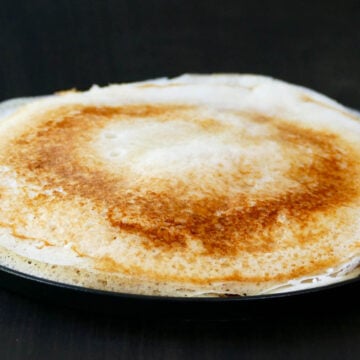
Dosa stacked overlapping on a plate.

This South Indian dosa recipe makes perfectly crispy, golden lacy dosas with soft centers every single time. These thin rice crepes are a staple in South India. I provide several important tips to show you how to make dosas perfectly.

Dosa stacked overlapping on a plate.

This post contains affiliate links. As an Amazon Associate, I earn from qualifying purchases. Please read the disclosure.

➡ If you’re new to Kerala cooking, start with my Kerala Cooking Basics guide for ingredient tips, shopping advice, and more authentic recipes.

What Makes My Kerala Dosa Recipe Different

I’ve had my share of dosa mishaps! Batter that didn’t rise, gummy blobs stuck to the pan – these disasters weren’t at all like the crispy, golden dosas of my childhood.

The biggest challenge in making dosas outside India is proper fermentation. South India’s warm, humid climate is incredibly forgiving.

In my mom’s Kerala kitchen, she never measures anything. For dosa, she eyeballs the rice and urad by handfuls, grinds everything in her Sumeet grinder, and somehow always gets perfect dosas.

However, in Western countries, especially during winter, making dosas requires some precision!

After years of watching my mom and plenty of trial and error, I’ve figured out the exact measurements that work every time—plus some modern techniques to make the process easier for today’s kitchens.

My mom still makes fresh batter every week at 80+ years old. She says store-bought dosas and idlis never taste like homemade.

After making this recipe, you’ll understand why. In this post, I’ll share all the techniques that make this recipe foolproof.

➡ For a complete masala dosa experience, try my sambar, red chutney, green chutney, and potato masala. Learn how to put it together with how to make masala dosa. And for a shortcut to making the dosas, learn how to make dosa with a crepe maker.

Ingredients and Tips

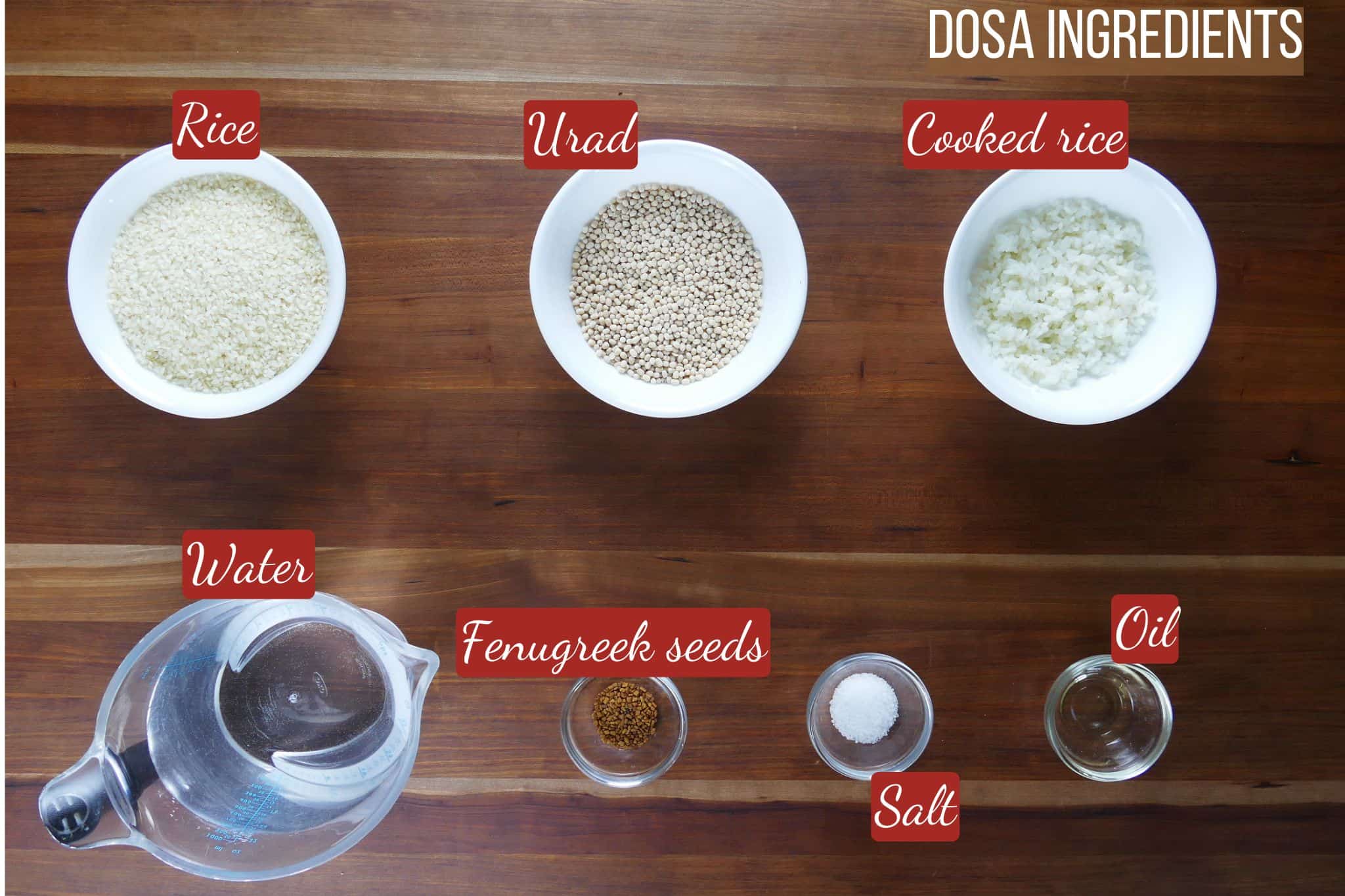
🧂 Ingredients for Authentic Dosa

Dosa ingredients - rice, urad, cooked rice, water, fenugreek seeds, salt, oil.

💡 Ingredient and Recipe Tips for Dosa

🍚 Rice: Stick to sona masoori, idli rice (a type of parboiled rice), or any regular white rice for best results. I’ve learned that basmati rice doesn’t ferment well.

🫘 Urad Dal: Use whole urad dal without the skin (urad gota) for best fermentation. Split urad dal works too.

You can find these ingredients at Indian grocery stores or on Amazon.

➗ Rice to Dal Ratio: My recipe uses a 1:3 (urad to rice) ratio, which makes crispy but soft dosas. For softer dosas, use less rice, and for crispier dosas, use more.

🚰 Water: If you have trouble with fermentation, it could be because of chemicals in your tap water. Try filtered water instead.

🔄 Blender: You need a high-powered blender (600 watts or more) like Vitamix, Nutribullet, BlendTec, or Ninja for grinding the batter. Using a low-power blender will not give you the same results. The batter can overheat and can be too gritty. You can still get the job done, but it’s much more labor intensive. You have to grind small amounts and let the blender rest between batches to prevent overheating. Soaking for longer also helps.

🍳 Griddle: Traditionally, dosa is made using a well-seasoned cast-iron griddle (tawa). Cast iron, when properly seasoned, is as good as a nonstick frying pan and retains heat very well. If using a nonstick griddle, it should be flat without edges, and heavy-bottomed.

🌡️ Fermentation Options

Fermenting in cooler climates can be a bit tricky. There are several ways you can ferment the batter.

Instant Pot

The Instant Pot is my favorite way to ferment dosa batter these days. Place the batter in the stainless steel liner and ferment it on the Yogurt setting (normal mode) for 12 hours.

Use a glass lid to cover the Instant Pot liner. Using the Instant Pot lid may cause the lid to get stuck if the batter rises too high.

Note: In the summer or in warm climates, you may not need as much time. Check on the batter in 6 to 8 hours.

Oven

Heat the oven to 170°F (77°C) for 2 minutes, then turn it off. Turn on the oven light, and leave the batter in for 10 to 15 hours. Use a large enough bowl to allow for expansion and place a large plate below the bowl to catch any overflow.

Countertop

The countertop method works best in summer, warm climates, or if you have good heating in your kitchen. Cover the bowl loosely with plastic wrap or a lid (left slightly open for air circulation). Ferment the batter on the counter for 8-16 hours. The warmer your kitchen, the less time it will take.

Troubleshooting

A properly fermented batter will be bubbly, slightly sour-smelling, and nearly doubled in volume. If this hasn’t happened, you need to let it ferment longer. It can take up to 16 hours or even longer.

🍚 How to Make Dosa Batter

Collage of dosa batter - urad and fenugreek being soaked, rice being soaked, urad in blender, urad batter in pot.
  1. Rinse the urad dal. Place the urad and fenugreek in a bowl with 2 cups of filtered water.
  2. Rinse the rice. Place the rice in a separate bowl with 3 cups of filtered water. Soak urad and rice for 4 to 6 hours and drain, reserving the urad soaking liquid and discarding the rice soaking liquid. [See note about rinsing].
  3. Blend the urad, adding enough soaking water to get a consistency like pancake batter. Don’t add the water all at once. You may end up using a total of about ⅔ to ¾ cup of water.
  4. Transfer to your fermentation container. [See note about container below].

💦 Rinsing: Wash the rice and urad dal very well in several changes of water until the water is no longer cloudy. This removes excess starch and any impurities that could affect fermentation.

🥣 Container: Use a stainless steel or glass bowl for fermentation. Metal bowls conduct heat better, which helps with fermentation. Plastic doesn’t work as well. Make sure your container is large enough for the batter to double in size.

Collage of dosa batter - rice in blender, batter stirred by hand, batter risen in Instant Pot, batter mixed.
  1. Blend the cooked rice and soaked rice with enough soaking water to get the consistency of pancake batter. You may end up using a total of about ½ to ¾ cup of water. Transfer to the same container as the urad. [See Note about blending consistency below]
  2. Use a clean hand to stir the batters together for a couple of minutes. The microbes on your hand act as natural starters for fermentation. Ferment in the Instant Pot, oven, or countertop. For the Instant Pot, program it to 12 hours in Yogurt mode (normal setting) and cover with a glass lid. See the section on fermentation methods for oven and countertop instructions.
  3. After the fermentation time is up, check to see if the batter is thick, foamy and has doubled in size. If not, ferment for a few more hours.
  4. Stir the contents of the container. If you won’t be making the dosas right away, cover and refrigerate immediately.

♺ Blending Consistency: The urad dal should be ground to a completely smooth, fluffy paste – no grittiness at all. The rice batter should be slightly grainy, with the largest pieces being the size of granulated sugar. Don’t over-grind the rice, or your dosas won’t get as crispy. Once mixed together, the batter should have the consistency of pancake batter (pourable but not runny). It should not be too thick. Add some more water if needed.

🔥 How to Cook Dosas on a Griddle or Tawa

Dosas made in a pan collage. Spread batter, cook first side, flip, cook second side.
  1. About half an hour before making the dosas, remove the batter from the refrigerator. Heat griddle or tawa over medium heat. Test to see if the pan is hot enough by sprinkling a few drops of water on the pan. The water should sizzle and slide around the pan. Lower the temperature to medium-low. Add ¼ teaspoon of oil to the pan and spread it around with a folded-up paper towel. Pour about ¼ cup of batter in the middle of the pan using a ladle. Immediately, using the back of the ladle, spread the batter in a circular motion, starting at the center and working your way out. If the batter doesn’t spread easily, thin it with a little water or reduce the temperature. [See Note about first dosa]
  2. You should see small holes forming on the crepe. Drizzle a few drops of oil all over the surface to help crisp up the dosa.
  3. After about a minute, the bottom should turn golden. Use a spatula to flip the dosa to the other side.
  4. After 30 seconds or when it’s lightly browned (more browned than my photo above!), fold the dosa in half and place on a serving plate.

✏️ NOTE ABOUT FIRST DOSA
I have noticed that the first dosa is usually a throwaway. It just doesn’t come out as well as subsequent ones. The second is usually better because the temperature is right.

See the recipe card below for detailed instructions.

❓ FAQS


My batter didn’t ferment. What should I do?

This usually happens due to chlorinated or hard water, incorrect temperature, or old ingredients. In colder climates, fermentation can take up to 16 hours, so try waiting longer. To fix the batter, add ½ teaspoon baking soda or 2 teaspoons yogurt. For next time, use filtered water, fresh dal and rice, and consider the Instant Pot method for more reliable results.

The batter smells very sour. Is it over-fermented?

If it tastes overly sour, it could be. Add a pinch of baking soda before cooking. Rava/semolina can also reduces sourness. You can also make uttappam with onions

Why aren’t my dosas crispy?

You may have ground the rice too smoothly (it should be slightly grainy). It can also be because the pan isn’t hot enough or you aren’t using enough oil. Try adding ¼ to ½ cup of rava (aka sooji, semolina, or cream of wheat). It will make the dosas crispier.

Cooking the dosas takes so long. How can I speed it up?

Use two griddles to make two dosas at a time for a faster process.

How long can I store fermented batter?

In the fridge, it lasts 4 to 6 days. It will get more sour over time. You can freeze portions for up to 3 months.

How to speed up fermentation if I’m in a hurry?

My recipe includes cooked rice, which helps with the fermentation. You can also add a splash of leftover dosa batter, a pinch of sugar, or half a teaspoon of plain yogurt to jumpstart the process. Increasing the temperature will also speed up fermentation (but not so high that you destroy the bacteria!)

The batter is too thick (or thin). What can I do?

For thick batter: Add water gradually until the consistency of pancake batter. For thin batter: Add a few tablespoons of idli rava (cream of rice) or rice flour.

Can I double the recipe?

Yes, you can double the recipe. Make sure you use a large enough fermentation container and blend the urad and rice in batches so you don’t crowd the blender and cause it to overheat.

Can I blend the rice and dal together?

Blending them together doesn’t allow you to blend each to just the right texture. Urad needs to be ground till very smooth, and the rice needs to be slightly grainy. If you decide to blend them together, you may save some time but sacrifice on texture.

Can I skip the fenugreek (methi)?

Methi helps the fermentation process, and helps with the texture. I highly recommend it, but it is not essential.

My dosa sticks to the pan. What am I doing wrong?

– Heat the pan to the right temperature.
– Add a little water if the batter is too thick.
– Add a bit of oil to coat the pan.

Can I make idlis with this batter?

Yes, you can! Actually, idlis are better the first two days, and dosas are better after that.

➡ If you’re looking for more Kerala recipes, try my chicken curry, beef curry, beef ularthiyathu, egg curry, fish curry, or vegetable stew.

Dosa stacked overlapping on a plate.
Print Recipe
Be The First to Rate This Recipe!

How to Make Dosa at Home | Foolproof Fermentation Tips

Make restaurant-quality dosas at home with this foolproof recipe. Perfect fermentation techniques and exact measurements for crispy, lacy dosas even in cooler climates.
Prep Time5 hours hrs
Cook Time30 minutes mins
Fermentation12 hours hrs
Total Time17 hours hrs 30 minutes mins
Course: Main Dishes
Cuisine: Indian
Method: Non Instant Pot
Servings: 9
Calories: 139kcal
Author: Paint the Kitchen Red

Equipment

  • 2 Medium Bowls
  • Blender high power model such as Vitamix or BlendTec [See Note 1]
  • Large Metal Bowl OR
  • Instant Pot Pressure Cooker
  • Tawa or Griddle heavy-bottomed

Ingredients

  • ½ cup urad gota or split urad dal
  • 1 teaspoon fenugreek seeds (methi seeds)
  • 1½ cups idli rice [See Note 2]
  • 5 cups water preferably filtered
  • 3 tablespoon rice cooked, day-old
  • 1¼ teaspoon kosher salt or 1 teaspoon table salt [See Note 3]
  • 1½ tablespoon vegetable oil

Instructions

SOAK

  • Wash the ½ cup urad gota and 1½ cups idli rice separately multiple times, until the water runs clear.
  • Soak the urad and 1 teaspoon fenugreek seeds in 2 cups of filtered water in a medium bowl. Soak the rice in 3 cups of filtered water in a separate medium bowl.
  • After 4 to 6 hours (or overnight), drain both, but reserve the urad soaking water.

BLEND [See Note 4]

  • Blend the urad with enough of the reserved soaking water to get a smooth pancake batter consistency (pourable but not runny). You might use about ⅔ to ¾ cup of water. Pour into a large metal bowl or your Instant Pot stainless steel liner.
  • Blend the 3 tablespoons cooked rice with the soaked rice using the reserved soaking water. If you run out, use plain filtered water. You may end up using a total of about ½ to ¾ cup of water. The batter should be a bit grainy. Rub a little batter between your fingers. The grains should be like granulated sugar. The consistency should be pourable (like pancake batter), but not too thin. Transfer to the same container as the urad.
  • Add 1¼ teaspoon kosher salt and mix the two batters with a clean hand for about two minutes. This helps with the fermentation process. The consistency should be pourable, but not too thick or thin. Add more soaking water or filtered water to thin out, if needed.

FERMENT in Instant Pot

  • Ferment the dosa batter in the Instant Pot using the Yogurt function for 12 hours in normal mode (not low or boil). If it has doubled and smells slightly sour, it's ready. If not, ferment for another couple of hours.

FERMENT in oven

  • Heat the oven to 170 degrees F (77 degrees C) for two minutes. Turn it off and turn on the oven light. Place the metal bowl on a large plate to catch any overflow. Ferment for 12 to 15 hours.

FERMENT on countertop

  • This method works best in warmer climates or in the summer. Cover the bowl loosely with a lid or plastic wrap. Ferment for 12 to 15 hours.

COOK on a griddle [See Note 5]

  • If you're not going to make the dosas right away, refrigerate immediately. About half an hour before making the dosas, remove the batter from the fridge.
  • Heat a griddle or tawa over medium heat. Test to see if the pan is hot enough by sprinkling a few drops of water on the pan. The water should sizzle and slide around the pan. Lower the temperature to medium-low.
  • Add ¼ teaspoon of oil to the pan and spread it around with a folded-up paper towel. Pour about ¼ cup of batter in the middle of the pan using a ladle. Immediately, using the back of the ladle, spread the batter in a circular motion, starting at the center and working your way out. If the batter doesn’t spread easily, thin it with a little water or reduce the temperature. [See Note 6]
  • You will have a thin crepe and you should see small holes forming. Drizzle a few drops of oil all over the surface to help crisp up the dosa.
  • After about a minute, the bottom will turn golden. Use a spatula to flip the dosa to the other side. After 30 seconds or when it’s lightly browned, fold the dosa in half and place on a serving plate. Repeat with remaining batter and serve immediately.

Video

Notes

Note 1: A lower-power blender can overheat easily. It can also result in a gritty batter.
Note 2: If you can’t find idli rice, use sona masuri rice or regular raw rice (not basmati).
Note 3: If using table salt, add it after fermentation is done and before making the dosas.
Note 4: If the blender becomes too hot, blend in 1-minute increments and let it rest for a few minutes till it cools down. Overheating can affect the fermentation process. 
Note 5: The griddle should be flat with little to no lip.
Note 6: The first dosa may be a throwaway. The second one usually turns out better because the griddle is the right temperature.
Note 7: Whichever method you use to ferment, check on the batter before the stated times, in case your batter is fermenting faster.
Note 8: If you’ve never had success making dosa batter, please read the whole blog post as it has several tips and tricks!

Nutrition

Serving: 2dosas | Calories: 139kcal | Carbohydrates: 22g | Protein: 4g | Fat: 4g | Saturated Fat: 1g | Polyunsaturated Fat: 1g | Monounsaturated Fat: 2g | Sodium: 306mg | Fiber: 1g

I am not a certified nutritionist.  I provide my best estimate of nutritional information merely as a courtesy to my readers.  If you depend on nutritional information for dietary or health reasons,  I suggest using your favorite online nutrition calculator to confirm the nutritional value of this recipe based on the actual ingredients that you use.

Did you know that the best way to support your favorite bloggers is to comment and rate recipes, and share on social media? If you loved this recipe, please comment and give it a five ⭐ rating in the comment section below. If you’re a pinner, pin this post using the Pin buttons at the top and bottom of this post and in the recipe card above. Thank you for your support!

BACK TO TOP

Coconut Red Chutney for Masala Dosa

September 9, 2025 by Neena Panicker 2 Comments

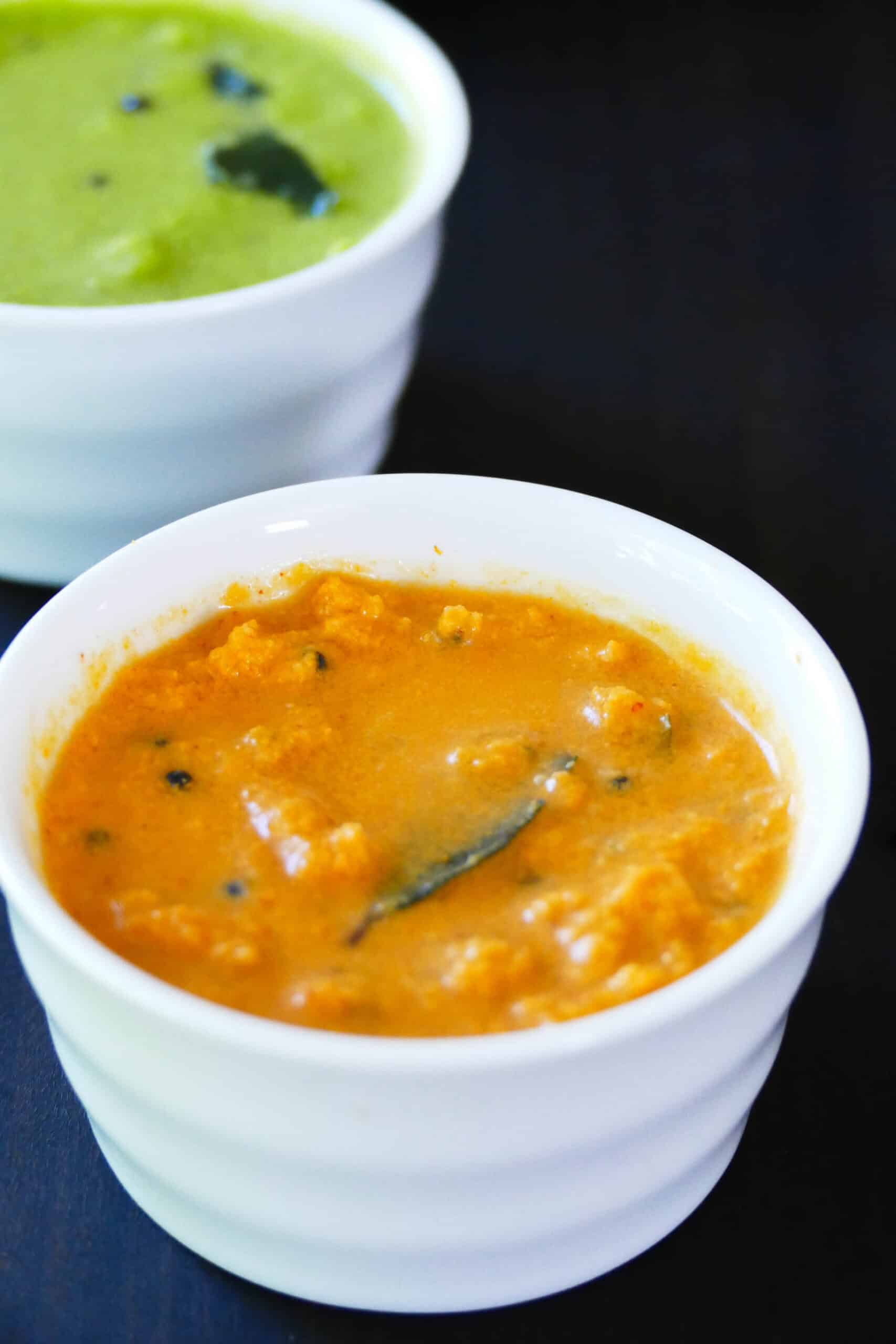
Coconut red chutney in white bowl.

This coconut red chutney recipe is the perfect accompaniment to your idli or dosa meal. Made with fresh coconut, Kashmiri chilies, and aromatic shallots, this traditional South Indian chutney recipe from Kerala adds warmth with its beautiful orange-red color.

Coconut red chutney in white bowl.

This post contains affiliate links. As an Amazon Associate, I earn from qualifying purchases. Please read the disclosure.

➡ If you’re new to Kerala cooking, start with my Kerala Cooking Basics guide for ingredient tips, shopping advice, and more authentic recipes.

The secret to a perfect red coconut chutney is getting the right balance of fresh coconut, Kashmiri chili powder for color and mild heat, ginger for its pungent bite, and shallots that add a mild onion taste without overpowering the coconut flavors.

While the ingredients in this Kerala coconut chutney are very similar to my green chutney, which is known for its fresh herb flavor, this red version has a completely different flavor profile. I like to make both chutneys and offer them as alternatives.

The masala dosa red chutney has a rich, earthy flavor with mild heat from the Kashmiri chilies and a slight sweetness from the shallots. The beautiful orange color makes it as visually appealing as it is delicious.

This family recipe from Kerala for coconut red chutney has been a staple in my mom’s kitchen for my whole life. She makes it for plain dosa but I like to make it for masala dosa.

She never follows a written recipe. She makes it without any measuring, eyeballing each ingredient with the confidence that comes from decades of cooking. And somehow it ends up tasting perfect every single time!

After a few kitchen experiments, I’ve done the work for you and nailed down the measurements that give you her signature taste.

The result is a smooth, creamy red chili chutney that’s perfect with a South Indian breakfast of steamed idli or crispy dosa. It’s also excellent with heartier dishes like uttappam or as a dip for pakoras or vadas.

➡ For the complete masala dosa experience, try my foolproof dosa, sambar, green chutney, and potato masala filling. Learn how to put it together with how to make masala dosa.

Ingredients and Tips

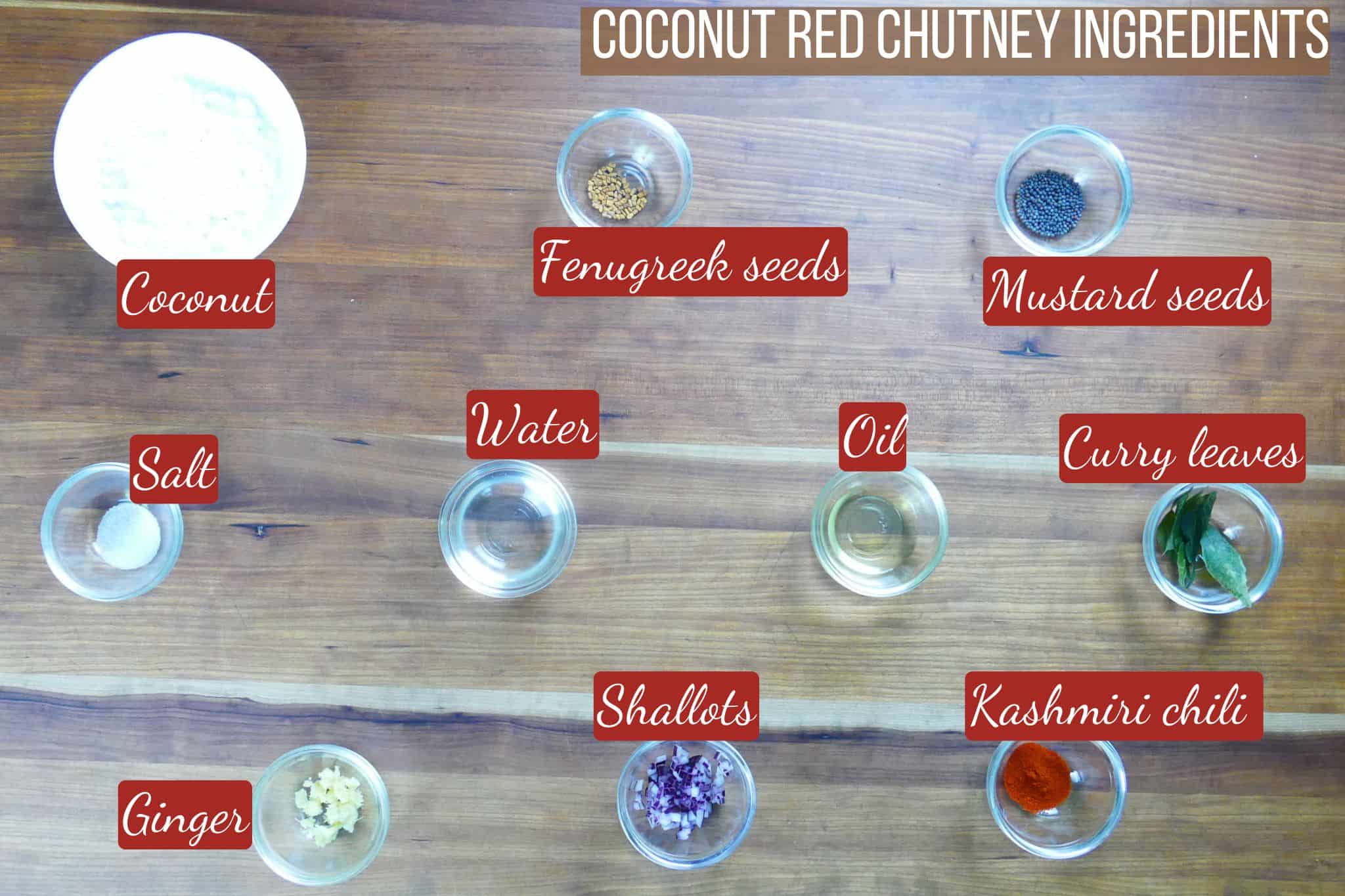
🧂 Ingredients for Authentic Masala Dosa Red Chutney

Coconut red chutney ingredients - coconut, fenugreek, mustard, salt, water, oil, curry leaves, ginger, shallots, Kashmiri chili.

💡 Ingredient and Recipe Tips for Red Coconut Chutney

🥥 Fresh Coconut: Fresh coconut gives the best texture and creamy consistency for this chutney. Frozen coconut works well as a substitute. If using desiccated coconut, rehydrate it by soaking in hot water for 15-20 minutes or longer. You can use any remaining liquid to blend the chutney.

🌶️ Kashmiri Chili Powder: This is what gives the chutney its signature orange-red color and mild spiciness. Start with ½ teaspoon and taste-test before adding more. If you can’t find Kashmiri chili powder, substitute it with a mix of paprika and a pinch of cayenne pepper for color and heat.

🫘 Fenugreek Seeds: These small, brown seeds (methi) can turn bitter if overcooked. I prefer to add them after turning off the heat – the residual heat will cook them perfectly without burning. Don’t confuse the seeds with fenugreek leaves.

🧅 Shallots: Shallots provide a sweeter, more delicate onion flavor than regular onions. You can use red onions, but reduce the quantity slightly as they’re stronger in flavor.

🧂 Salt: Season gradually and adjust salt to taste. The saltiness will vary depending on your preference and what you’re serving the chutney with.

💧 Water: Add liquid in batches while blending to control the final texture. Too much water at once can make the coconut difficult to process and result in grainy coconut and a watery chutney.

🎨 Color: The final color depends on the quality and quantity of your Kashmiri chili powder. It can range from light coral to deep orange-red.

🥡 How to Store Coconut Red Chutney?

You can keep this red coconut chutney refrigerated in an airtight container for up to 3 days. Fresh coconut has a short shelf life, so I prefer to make small portions and make a fresh batch when I need more rather than preparing large quantities.

The coconut oil from the tempering may harden once chilled, but a quick stir should bring it together.

If the chutney becomes too thick the next day, just add in a tablespoon of water to thin it out.

❓ FAQS


Can I freeze coconut red chutney?

I haven’t had luck freezing this chutney. It can become watery and separated. It’s better to make small batches as needed.

How do I know when to stop blending?

Stop when it reaches a creamy, spreadable consistency like thick yogurt or pasta sauce. It’s also personal preference. You can make it grainy or smooth.

Why is my chutney too watery?

You need to add the water gradually and blend in stages. If it ends up too watery, blend in more coconut or a slice of bread with the crust cut off.

♨️ How to Make Kerala Red Coconut Chutney

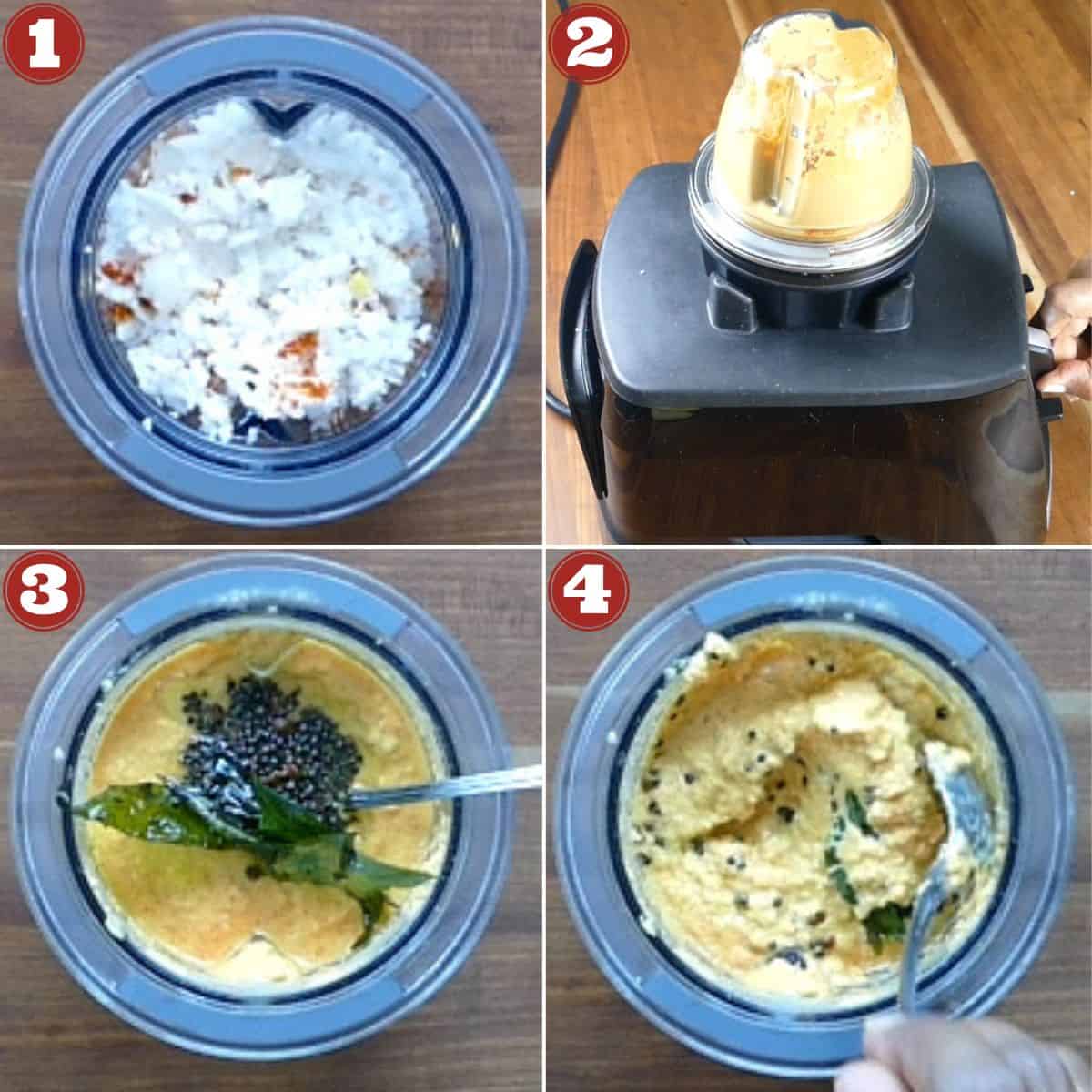
Coconut red chutney collage - grinding ingredients in jar, being blended, curry leaves and mustard seeds added, stirred.
  1. Add most of the grated coconut (reserve ¼ quantity for later), shallots, ginger, Kashmiri chili powder, salt, and 3 tablespoons of water to your blender bowl.
  2. Process until the mixture is coarsely blended, then add the remaining coconut and continue blending. If you need to, blend with more water one tablespoon at a time, until you achieve a creamy consistency similar to thick Greek yogurt or pasta sauce.
  3. For the tadka (tempering): heat coconut oil in a small frying pan over medium-high heat. When the oil starts to shimmer, add in the mustard seeds – they’ll begin crackling almost immediately. I recommend covering the pan to avoid splattering. Once the crackling stops, turn off the heat and immediately add the fenugreek seeds (this prevents them from burning), followed by the curry leaves. Stir for 30-60 seconds, allowing the residual heat to cook the ingredients, then drizzle this fragrant mixture over your chutney.
  4. Fold everything together until well combined and serve as a condiment for idli, dosa, masala dosa, vada, uttappam, or spread on sandwiches for extra flavor.

See the recipe card below for detailed instructions.

➡ If you’re looking for more Kerala recipes, try my egg curry, vegetable stew, parippu, or stir fried potatoes (mezhukkupuratti).

Coconut red chutney in white bowl.
Print Recipe
5 from 1 vote

Easy Coconut Red Chutney Recipe (Kerala Red Chutney for Dosa and Idli)

This authentic coconut chutney is a traditional South Indian red chutney that is the perfect accompaniment to steamed idlis or crispy dosa. This recipe has been perfected over years to have authentic flavor and a smooth creamy texture.
Prep Time10 minutes mins
Blend Time5 minutes mins
Total Time15 minutes mins
Course: Sauces
Cuisine: Indian
Main Ingredient: vegetarian
Method: Non Instant Pot
Servings: 4 servings
Calories: 67kcal
Author: Paint the Kitchen Red

Equipment

  • Blender
  • Small nonstick frying pan

Ingredients

  • ½ cup grated coconut fresh or frozen [See Note 1]
  • 1 teaspoon ginger minced
  • 1 tablespoon shallots or red onions, chopped
  • ½ teaspoon Kashmiri chili powder or to taste [See Note 2]
  • ¼ teaspoon salt or to taste
  • 3 to 5 tablespoon water
  • 2 teaspoon coconut oil [See Note 3]
  • ½ teaspoon black mustard seeds
  • 6 curry leaves fresh
  • ⅛ teaspoon fenugreek seeds (methi)

Instructions

  • Add most of the coconut (reserving about ¼ quantity), 1 teaspoon ginger, 1 tablespoon shallots, ½ teaspoon Kashmiri chili powder, ¼ teaspoon salt, and 3 tablespoons water to the blender bowl. Blend until coarsely ground.
  • Add the reserved coconut and blend until smooth. If needed, gradually add more water, one tablespoon at a time, until the chutney reaches a creamy consistency, similar to a jarred pasta sauce or a thick yogurt. You may not need to use all of the 3 to 5 tablespoon water.
  • Heat a small pan over medium-high heat. Add 2 teaspoon coconut oil and once the oil is shimmering, add ½ teaspoon black mustard seeds – they should start popping within seconds. I like to cover the pan at this stage.
  • Once the mustard seeds have popped, turn off the heat and immediately add 6 curry leaves (watch out, they splatter!) and ⅛ teaspoon fenugreek seeds. Stir constantly for 30 to 60 seconds in the residual heat.
  • Add the fragrant mustard mixture to the coconut and stir.

Video

Notes

Note 1: For best results, use fresh coconut, though frozen coconut works as a good alternative. If you only have desiccated (dried, unsweetened) coconut available, soak it in warm water for 15 to 20 minutes or longer, until softened.
Note 2: Start with ½ teaspoon of Kashmiri chili powder and adjust based on your heat tolerance. The goal is a medium spice level that complements rather than overwhelms the coconut base.
Note 3: While I strongly recommend coconut oil for its authentic taste and aroma, you can substitute it with any neutral vegetable oil if needed.
 

Nutrition

Serving: 2.5tablespoon | Calories: 67kcal | Carbohydrates: 3g | Protein: 1g | Fat: 7g | Saturated Fat: 5g | Polyunsaturated Fat: 0.1g | Monounsaturated Fat: 0.5g | Sodium: 145mg | Fiber: 2g | Sugar: 1g

I am not a certified nutritionist.  I provide my best estimate of nutritional information merely as a courtesy to my readers.  If you depend on nutritional information for dietary or health reasons,  I suggest using your favorite online nutrition calculator to confirm the nutritional value of this recipe based on the actual ingredients that you use.

Did you know that the best way to support your favorite bloggers is to comment and rate recipes, and share on social media? If you loved this recipe, please comment and give it a five ⭐ rating in the comment section below. If you’re a pinner, pin this post using the Pin buttons at the top and bottom of this post and in the recipe card above. Thank you for your support!

BACK TO TOP

Cilantro Coconut Chutney (Coconut Green Chutney)

September 9, 2025 by Neena Panicker 2 Comments

Coconut green chutney in white bowl.

This coconut green chutney recipe is the perfect accompaniment to your idli or dosa meal. Made with fresh coconut, green chilies, and cilantro, this traditional South Indian chutney recipe from Kerala has a fresh herby flavor and green color from the coriander leaves.

Coconut green chutney in white bowl.

This post contains affiliate links. As an Amazon Associate, I earn from qualifying purchases. Please read the disclosure.

➡ If you’re new to Kerala cooking, start with my Kerala Cooking Basics guide for ingredient tips, shopping advice, and more authentic recipes.

The secret to a perfect green coconut chutney lies in the delicate balance of fresh coconut, green chilies, ginger, and cilantro.

This family recipe from Kerala for cilantro coconut chutney for dosa and idli has simple, wholesome ingredients and can be made in just a few minutes.

The chutney is fresh and herby with a mild coconut flavor and gentle heat from the chilies.

It’s my mom’s recipe, but like many moms, she never actually follows a written recipe for this fresh coconut chutney. She works purely by instinct, eyeballing each ingredient with the confidence that comes from decades of cooking.

I started with her ingredient list and approximate amounts, but it took a bit of experimenting in my own kitchen to nail down the exact measurements that would recreate her signature taste.

The result is a smooth, creamy coconut coriander chutney that’s perfect with a South Indian breakfast of steamed idli or crispy dosa. And it’s better than any chutney you’ll get at a restaurant!

➡ For a complete masala dosa experience, try my foolproof dosa, sambar, red chutney, and potato masala. Learn how to put it together with how to make masala dosa.

Ingredients and Tips

🧂 Ingredients for Authentic South Indian Chutney

Coconut green chutney ingredients - coconut, fenugreek, mustard, salt, water, oil, curry leaves, ginger, green chili, cilantro.

💡 Ingredient and Recipe Tips for Coriander Coconut Chutney

🥥 Fresh Coconut: Use fresh or frozen coconut for the authentic flavor and texture. Desiccated coconut doesn’t work as well, but if that’s all you have, soak unsweetened dried coconut in enough hot water to cover it for 15-20 minutes (or longer) before using.

🌶️ Green Chilies: South Indians like it spicy but I’ve toned down the spice! Adjust the quantity of green chilies based on how spicy you want the chutney. Start with one, and add more as needed. I use Thai chilies, but you can use jalapeno or serrano chilies.

🫘 Fenugreek: Fenugreek seeds shouldn’t be confused with fenugreek leaves. They are also known as methi seeds. They can burn easily and so I suggest turning off the heat after popping the mustard seeds and letting them cook in the residual heat.

🌿 Cilantro: Fresh cilantro is a must for this recipe.

🧂 Salt: Add salt gradually and taste as you go. The amount depends on your preference.

💧 Water: Add water in stages while blending to get the right consistency. If you add too much at the beginning, the coconut won’t blend properly.

🎨 Color: The color of the chutney will vary based on how much cilantro and green chili you use. It can be light green or a brighter green.

🥡 How to Store Coconut Green Chutney?

Store this coconut green chutney in the refrigerator in an airtight container for up to 3 days. Since fresh coconut spoils quickly, it’s better to make smaller batches and prepare more as needed, rather than making a large quantity.

The oil from the tadka might separate or solidify when cold, but a quick stir should fix that.

If the chutney thickens too much in the fridge, just stir in a tablespoon of water to loosen it back up.

❓ FAQS


Can I freeze this chutney?

I don’t recommend freezing this chutney. It can become watery and separated. It’s better to make small batches as needed.

Why is my green chutney too watery?

You may have added too much water while blending. To fix it, add more grated coconut and blend some more. You can also add a slice of bread (crust removed) and blend to thicken.

What should be texture of the chutney be?

The texture of the chutney is personal preference. Some people like it smooth and others like a bit of texture and coarseness. Taste as you go and stop blending when it’s just right.

♨️ How to Make Coconut Chutney

Coconut green chutney collage - grinding ingredients in jar, being blended, curry leaves and mustard seeds added, stirred.
  1. Mix ¾ of the grated coconut, cilantro, ginger, green chilies, salt, and 3 tablespoons of water.
  2. Blend until combined, add the remaining coconut, and blend some more. If necessary, gradually add more water, a tablespoon at a time, until the chutney reaches a perfect creamy consistency, like that of a jarred pasta sauce.
  3. For the tadka or tempering: heat coconut oil in a small pan over medium-high heat. Once the oil shimmers, add the mustard seeds and let them pop for about 30 seconds. I like to cover the pan during this step. Once the mustard seeds have popped, turn off the heat and immediately add the fenugreek seeds (this prevents them from burning), followed by the curry leaves. The residual heat will cook everything perfectly – stir for 30-60 seconds until fragrant and pour over the chutney.
  4. Stir all the ingredients together and serve as a side to idli, dosa, masala dosa, vada, uttappam, or as a sandwich spread.

See the recipe card below for detailed instructions.

➡ Check out some of my other Kerala recipes, like beef fry, chicken curry, egg curry, or vegetable stew.

Coconut green chutney in white bowl.
Print Recipe
5 from 1 vote

Easy Coconut Green Chutney Recipe (Cilantro Coconut Chutney)

This authentic coconut cilantro chutney is a traditional South Indian green chutney that is the perfect accompaniment to steamed idlis or crispy dosa. This recipe has been perfected over years to have authentic flavor and a smooth creamy texture.
Prep Time10 minutes mins
Blend Time5 minutes mins
Total Time15 minutes mins
Course: Sauces
Cuisine: Indian
Main Ingredient: vegetarian
Method: Non Instant Pot
Servings: 4 servings
Calories: 67kcal
Author: Paint the Kitchen Red

Equipment

  • Blender
  • Small nonstick frying pan

Ingredients

  • ½ cup grated coconut fresh or frozen [See Note 1]
  • 2 tablespoon cilantro chopped
  • 1 teaspoon ginger minced
  • 1 to 2 green chilli serrano, jalapeno, or Thai – to taste [See Note 2]
  • ¼ teaspoon salt or to taste
  • 3 to 5 tablespoon water
  • 2 teaspoon coconut oil [See Note 3]
  • ½ teaspoon black mustard seeds
  • 6 curry leaves fresh
  • ⅛ teaspoon fenugreek seeds (methi)

Instructions

  • Blend ¾ of the coconut, 2 tablespoon cilantro, 1 teaspoon ginger, 1 to 2 green chilli, ¼ teaspoon salt, and 3 tablespoons water. Add the remaining coconut and blend some more. If needed, gradually add more water, a tablespoon at a time, until the chutney reaches a creamy consistency, similar to a jarred pasta sauce. You may not need to use all of the 3 to 5 tablespoon water.
  • Heat a frying pan over medium-high heat. Add the 2 teaspoon coconut oil and once the oil is shimmering, add ½ teaspoon black mustard seeds – they should start popping within seconds. I like to cover the pan at this stage. Once the mustard seeds have popped, turn off the heat and quickly add 6 curry leaves (careful, they splatter!) and ⅛ teaspoon fenugreek seeds. Stir constantly for 30 seconds.
  • Add the mustard mixture to the coconut and stir.

Video

Notes

Note 1: Fresh coconut is best, but frozen works well too. If using desiccated (dried, unsweetened) coconut, hydrate it in warm water for about 10 to 15 minutes. Gently squeeze out any remaining liquid before using.
Note 2: Add more green chili as needed. The spice level should be medium.
Note 3: Coconut oil adds authentic flavor, and I recommend using it, but it can be substituted with vegetable oil.
 

Nutrition

Serving: 2.5tablespoon | Calories: 67kcal | Carbohydrates: 3g | Protein: 1g | Fat: 7g | Saturated Fat: 5g | Polyunsaturated Fat: 0.1g | Monounsaturated Fat: 0.5g | Sodium: 145mg | Fiber: 2g | Sugar: 1g

I am not a certified nutritionist.  I provide my best estimate of nutritional information merely as a courtesy to my readers.  If you depend on nutritional information for dietary or health reasons,  I suggest using your favorite online nutrition calculator to confirm the nutritional value of this recipe based on the actual ingredients that you use.

Did you know that the best way to support your favorite bloggers is to comment and rate recipes, and share on social media? If you loved this recipe, please comment and give it a five ⭐ rating in the comment section below. If you’re a pinner, pin this post using the Pin buttons at the top and bottom of this post and in the recipe card above. Thank you for your support!

BACK TO TOP

Kerala Beef Fry (Beef Ularthiyathu)

August 28, 2025 by Neena Panicker 2 Comments

Kerala style beef fry - beef ularthiyathu - in a bowl.

This Kerala beef fry recipe makes tender, flavorful beef ularthiyathu with crispy edges and deep flavor. It’s one of Kerala’s most popular dishes: dry-roasted beef cooked with coconut, curry leaves, and aromatic spices until every piece is perfectly browned.

Kerala beef fry ularthiyathu served in traditional bowl

This post contains affiliate links. As an Amazon Associate, I earn from qualifying purchases. Please read the disclosure.

➡ If you’re new to Kerala cooking, start with my Kerala Cooking Basics guide for ingredient tips, shopping advice, and more authentic recipes.

What is Kerala Beef Fry?

Kerala beef fry is called erachi ularthiyathu in Malayalam. It’s pronounced err-a-chee oo-lar-thi-ya-thu (the final ‘thu’ sounds like “the” in “mother”) and means ‘sauteed meat.’ It’s also known as erachi varattiyathu.

This South Indian dish is commonly made in Syrian Christian Kerala households. It’s also commonly found at roadside stalls all over Kerala. This dish is also made with pork (panni ularthiyathu).

The key to good beef ularthiyathu is getting the beef tender first. Then you dry out all the liquid until the meat gets those crispy, caramelized edges. A properly cooked beef fry is dark brown, almost black when it’s done cooking!

Kerala-style beef fry takes a little time to prepare. This makes it a great Sunday lunch option. 80% of the hands-on cooking time involves reducing the liquid and letting the dish dry up.

It’s so important not to rush this process. If you do, you’ll end up with tough, chewy beef. But when you do it right, each piece of beef is soft inside with a slightly crispy outside.

This recipe uses pressure-cooked beef, fresh coconut, curry leaves, and a flavorful spice mix. It leaves the whole house smelling amazing for hours.

You’ll find variations of this dish all over Kerala and some other regions of India. My husband’s family is from Goa. They make a similar dish called beef chili fry.

My version uses plenty of fresh coconut and lots of curry leaves. It has that perfect balance of spices that makes each bite flavorful without being too spicy.

Beef ularthiyathu pairs perfectly with rice, appam, or naan.

➡ If you’re looking for more Kerala recipes, try my Kerala vegetable stew, egg curry, chicken curry, sambar, or coconut chicken korma or check out all the Kerala recipes!

Ingredients and Tips

🧂 Ingredients for Dry Beef Curry Kerala Style

Kerala Beef Fry Beef Ularthiathu Ingredients - beef, chili powder, coriander, fennel, garam masala, salt, black pepper, ginger, garlic, red onions, shallots, coconut oil, coconut slices, curry leaves, turmeric, green chili.

💡 Ingredient and Recipe Tips

🥩 Beef: Choose beef chuck or beef shoulder for best results. These cuts have enough fat and connective tissue to stay tender during the longer cooking process. Don’t cut the beef into too small pieces because they’ll break apart during cooking – 2-inch pieces work well. Remove excess fat.

🍶 Coconut Oil: Use good-quality coconut oil for the best flavor. It’s traditional and adds that authentic Kerala taste. Regular cooking oil works fine too.

🥥 Coconut Slices: Fresh coconut is best. The dried stuff won’t give you the same flavor. Look for frozen coconut slices at Indian grocery stores, or slice your own from a whole coconut. You want thin slices that will roast evenly.

🌶️ Spice: Use Kashmiri chili powder for the best color and mild heat. If using regular cayenne pepper, add a lesser quantity and use some paprika for color. If you want to tone down the spice, use paprika and omit the green chilis.

🥣 Garam Masala: Get a fresh batch of garam masala if yours has been sitting in a cabinet for a while or use my recipe to make fresh garam masala.

🧅 Shallots vs Red Onions: Traditional recipes use small shallots (cheriya ulli), but red onions work perfectly if that’s what you have. I use both larger shallots (because that’s all I can find) and red onions in my recipe.

🥄 Fennel Powder: Grind whole fennel seeds fresh if possible. Pre-ground fennel loses its flavor quickly. If using store-bought, make sure it’s not too old. I use a coffee grinder that I keep just for grinding spices.

🌿 Curry Leaves: Fresh curry leaves are a must for authentic flavor. Find them at Indian grocery stores and store extras in the freezer. Don’t substitute with anything else – curry leaves have a unique taste that can’t be replicated. If you can’t get them, just omit.

❓ FAQS


Can I use another cut of beef?

The key is choosing a cut that has marbling. This is not the dish to make with a lean cut of beef. Beef chuck or beef shoulder actually gets better the longer it cooks. Beef short ribs should also work, but they are much more expensive!

The beef turned out chewy. What did I do wrong?

– If the beef isn’t cooked long enough in the pressure cooker, it can be tough.
– If you used lean cuts, you’ll find them to be chewy using this method.
– Cutting the pieces too small can cause them to break apart and get overcooked. Keep them around 2 inches.
– During the frying stage, don’t try to speed things up by using high heat because this can cause the meat to be tough. The frying stage should be on medium or medium-high heat. This tenderizes the meat.

How will I know when the beef has cooked enough?

The final result should look like each piece of beef is shimmering in a thick mixture of spices – not swimming in sauce, but not too dry either. You should be able to stir the beef without hearing any liquid sizzling, and the bottom of the pan should be mostly dry.

How much of the cooking liquid should I use?

Use about 1 to 1½ cups of the cooking liquid, added gradually. Don’t add it all at once – add about ¼ cup at a time, let it reduce completely on medium heat, then add more.

The goal is to build up layers of flavor by adding the liquid bit by bit. Go by how the beef looks and tastes.

What if I don’t have a pressure cooker?

You can cook the beef in a slow cooker on low for 6 to 8 hours. Or you can cook it in a pot. Bring to a boil with enough water to cover the beef, then reduce heat to low, cover and simmer for 2 hours, stirring occasionally. Check every 30 minutes and add more water to prevent scorching.

♨️ How to Make Beef Fry Kerala Style

Kerala Beef Fry Beef Ularthiathu collage of cooking beef in pressure cooker.
  1. Add beef, chili powder, coriander powder, fennel powder, garam masala, pepper, and salt to the Instant Pot.
  2. Add curry leaves, shallots, ginger, and garlic.
  3. Add water and stir all the ingredients together, close the Instant Pot, and pressure cook the beef for 15 minutes with a natural release. [See note below].
  4. Open the lid and use a slotted spoon to separate the beef from the liquid. Set aside the beef and cooking liquid.

✏️ NOTE ABOUT PRESSURE COOKING LIQUID
I don’t add any liquid to the beef because the beef releases its own liquid, which is enough to bring the Instant Pot to pressure. However, I know it makes most people very nervous, so I suggest ½ cup of water. If you’re brave, try it without water, and if you get a burn message, add water.

Kerala Beef Fry Beef Ularthiathu collage of frying coconut and onions.
  1. Heat coconut oil in a large heavy-bottomed skillet over medium-high heat. Briefly saute coconut slices for about a minute. Add the turmeric and salt and saute for another couple of minutes, stirring constantly till lightly browned.
  2. Add the onions, garlic, ginger, and green chilies, and saute until the onions are golden brown.
Kerala Beef Fry Beef Ularthiathu collage of the beef through the cooking stages.
  1. Add the beef and curry leaves. Sauté for about 3 minutes or until the beef starts to stick to the bottom.
  2. Add ¼ cup of the reserved liquid, scrape up all the brown bits, and cook over medium heat until the liquid has mostly evaporated.
  3. Add another ¼ cup of liquid and repeat this process until you’ve used up about all the liquid (or 1 to 1 ½ cups). Taste as you go!
  4. The sauce will thicken up to coat the beef pieces. There should not be any sauce in the pan, but the meat should not be too dry. It should be shiny and very dark.

✏️ NOTE ABOUT SAUTEING THE BEEF
This cooking method of sauteing the beef and reducing the liquid tenderizes the meat. It also builds up layers of flavor by adding the liquid a little at a time. You don’t need to use up all the liquid. Taste as you go and stop when you feel the beef tastes tender and flavorful.

See the recipe card below for detailed instructions.

Kerala style beef fry - beef ularthiyathu - in a bowl.
Print Recipe
5 from 1 vote

Kerala Beef Fry Ularthiyathu

Learn to make authentic beef fry Kerala style (ularthiyathu) with tender beef, coconut, and curry leaves. This traditional South Indian recipe creates perfectly crispy, flavorful beef dry fry.
Prep Time20 minutes mins
Cook Time40 minutes mins
Pressure Cook40 minutes mins
Total Time1 hour hr 40 minutes mins
Course: Main Dishes
Cuisine: Indian
Main Ingredient: beef
Servings: 6 servings
Calories: 411kcal
Author: Paint the Kitchen Red

Ingredients

For Pressure Cooking Beef

  • 2 lbs beef stew meat or beef chuck, cut into 2 inch pieces – 1 kg [See Note 1]
  • 1 tablespoon Kashmiri chili powder or to taste. [See Note 2]
  • 2 teaspoon coriander powder
  • 1 teaspoon fennel powder preferably freshly ground
  • 1½ teaspoon garam masala
  • 1 teaspoon black pepper powder
  • 1½ teaspoon salt or to taste
  • 2 teaspoon garlic minced
  • 2 teaspoon ginger minced
  • ½ cup shallots sliced
  • 12 curry leaves [See Note 3]
  • ½ cup water [See Note 4]

For Sauteing Beef

  • ¼ cup coconut oil [See Note 5]
  • ½ cup coconut slices fresh or frozen [See Note 6]
  • ¼ teaspoon turmeric powder
  • ¼ teaspoon salt
  • 2 cups red onions sliced, about 2 medium
  • 2 serrano pepper or to taste [See Note 7]
  • 1 tablespoon ginger minced
  • 1 tablespoon garlic minced
  • 10 curry leaves
  • ¼ teaspoon fennel powder
  • ¼ teaspoon garam masala
  • ½ teaspoon black pepper powder

Instructions

Pressure Cook Beef

  • Add 2 lbs beef stew meat, 1 tablespoon Kashmiri chili powder, 2 teaspoon coriander powder, 1 teaspoon fennel powder, 1½ teaspoon garam masala, 1 teaspoon black pepper powder, 1½ teaspoon salt, 2 teaspoon garlic, 2 teaspoon ginger, ½ cup shallots, 12 curry leaves, and ½ cup water to the Instant Pot [See Note 4].
  • Close the lid and pressure cook for 15 minutes at High Pressure.
  • Allow the pressure to release naturally (NPR), press Cancel and open the lid. [Read More: The Different Pressure Release Methods.]
  • Transfer the beef to a large bowl using a slotted spoon and set aside. Reserve the beef and the cooking liquid.

Saute the Beef

  • In a large heavy-bottomed skillet, heat the ¼ cup coconut oil over medium-high heat. Briefly saute ½ cup coconut slices for about a minute. Add the ¼ teaspoon turmeric powder and ¼ teaspoon salt and saute for another couple of minutes, stirring constantly, until lightly browned. Add the 2 cups red onions, 2 serrano pepper, 1 tablespoon ginger, and 1 tablespoon garlic and saute until the onions are golden brown.
  • Add the reserved beef and 10 curry leaves. Sauté for about 3 minutes or until the beef starts to stick to the bottom. Add ¼ cup of the reserved liquid, scrape up all the brown bits, and saute over medium-high heat until the liquid has mostly evaporated.
  • Add another ¼ cup of liquid and repeat this process until you’ve used up about all the liquid (or 1 to 1 ½ cups). Taste as you go! [See Note 8]
  • The sauce will thicken up to coat the beef pieces. There should not be any sauce in the pan, but the meat should not be too dry. It should be shiny and very dark. During the last few minutes of cooking, add ¼ teaspoon fennel powder, ¼ teaspoon garam masala, and ½ teaspoon black pepper powder to finish.

Video

Notes

Note 1: Don’t use a lean cut of beef for this recipe. It cannot withstand this cooking method and will become tough!
Note 2:  Kashmiri chili powder is a milder and more colorful chili powder. If using cayenne pepper, reduce the quantity and add some paprika for color. 
Note 3: Curry leaves are an essential part of this recipe and there is no substitute. However, you can omit them if you can’t find them.
Note 4: I pressure cook the beef with NO water! The beef release enough water to bring the Instant Pot to pressure. However, this makes most people nervous, so I suggest adding ½ cup of water, which should be enough. If you have trouble, add additional water.
Note 5: Coconut oil is another ingredient that is essential for authentic flavor. Vegetable oil works fine as a substitute.
Note 6: Don’t use dried sliced coconut. Try and get either frozen slices or slice your own from a fresh coconut. Omit if you can’t get it. If using frozen, thaw completely and dry with a paper towel. 
Note 7: This is traditionally a spicy recipe, I’ve actually toned down the spice! You can adjust the quantity of chili peppers or just omit.
Note 8: This cooking method of sauteing the beef and reducing the liquid tenderizes the meat. It also builds up layers of flavor by adding the liquid a little at a time. You don’t need to use up all the liquid. Taste as you go and stop when you feel the beef tastes tender and flavorful.

Nutrition

Serving: 1serving | Calories: 411kcal | Carbohydrates: 9g | Protein: 38g | Fat: 25g | Saturated Fat: 15g | Polyunsaturated Fat: 1g | Monounsaturated Fat: 6g | Cholesterol: 106mg | Sodium: 757mg | Fiber: 2g | Sugar: 2g

I am not a certified nutritionist.  I provide my best estimate of nutritional information merely as a courtesy to my readers.  If you depend on nutritional information for dietary or health reasons,  I suggest using your favorite online nutrition calculator to confirm the nutritional value of this recipe based on the actual ingredients that you use.

Did you know that the best way to support your favorite bloggers is to comment and rate recipes, and share on social media? If you loved this recipe, please comment and give it a five ⭐ rating in the comment section below. If you’re a pinner, pin this post using the Pin buttons at the top and bottom of this post and in the recipe card above. Thank you for your support!
BACK TO TOP

Best Pad Kee Mao (Thai Drunken Noodles)

August 24, 2025 by Neena Panicker 2 Comments

Drunken Noodles Pad Kee Mao on plate.

Thai drunken noodles, or Pad Kee Mao, is a street cart favorite and one of Thailand’s most beloved comfort foods. These wide rice noodles are tossed with fresh Thai basil, chilies, and a sweet and savory sauce that’s bold and spicy! Comprehensive tips and substitutions provided.

Drunken Noodles Pad Kee Mao on plate.

This post contains affiliate links. As an Amazon Associate, I earn from qualifying purchases. Please read the disclosure.

What are Thai Drunken Noodles?

Pad Kee Mao translates to “drunken stir-fry” in Thai. This popular late-night Thai street food contains no alcohol – the name comes from it being perfect with beer or as drunk food!

For the most authentic version, I prefer to make this Thai noodle dish with fresh wide rice noodles, but you can also use dried ones. 

Thai holy basil is traditionally used for pad kee mow, but it can be hard to come by, so Thai basil or regular basil will also work.

Different types of basil - holy basil (tulsi), thai basil, italian basil.

The pad Kee mao sauce has a perfect balance of sweet, salty, umami, and spicy flavors. 

Unlike the more popular and milder Pad Thai or Pad See Ew noodles, Pad Kee Mao is quite spicy! In Thai street stalls, this dish is ordered by spice level – mai pet (not spicy) to pet maak (very spicy).

My recipe isn’t seriously spicy, and you can easily adjust the heat to your preference. 

The high-heat cooking method is important – everything happens quickly in the skillet or wok, preserving the freshness of the veggies while still having a rich and complex flavor.

My recipe is for 2 servings. If you want to double or triple the recipe, it’s very important to cook it in batches.

Once you gather the ingredients, the noodles can be cooked in less than 10 minutes!

➡ If you’re looking for more Thai recipes, try my Thai basil chicken, green curry, or the ever-popular Thai red curry!

Ingredients and Tips

🧂 Ingredients for Drunken Noodles Recipe

Drunken Noodles Pad Kee Mao ingredients with labels.

💡 Tips and Substitutions for Pad Kee Mao

🍝 Noodles: For sure, wide rice noodles (about 1-inch wide) are best for authentic Pad Kee Mao drunken noodles. Look for them in the refrigerated section of Asian grocery stores. Use them as soon as you buy them because they can dry out. However, they’re a bit harder to work with because they’re so delicate. If you’re not familiar with cooking with fresh noodles, I suggest starting with dried noodles; once you’ve made the recipe once, you can try fresh noodles.

When buying dried rice noodles, choose the widest ones available. I don’t follow the package instructions that say you need to boil them. I soak them in warm water (stirring occasionally to keep them separated) for 15 to 20 minutes or until pliable. Then I rinse with cold water, drain, and coat them with a little oil using my hands so they don’t dry out while I prepare the remaining ingredients.

Dry noodles and fresh noodles for drunken noodles.

🌿 Thai Basil: Thai holy basil (kra pao, also known as tulsi) is the traditional choice with its spicy, peppery flavor. Thai basil is a good substitute and can be found in Asian grocery stores. As a last resort, you can use Italian basil.

🥬 Vegetables: Chinese broccoli (gai lan) is traditional, but add your choice of greens. Use a vegetable that maintains some crunch after quick stir-frying.

🥣 Golden Mountain: Golden Mountain seasoning sauce is a Thai condiment that’s available at Asain grocery stores. Maggi seasoning sauce is an acceptable substitute. If you can’t get it, omit it.

🍶 Sweet Soy Sauce: Very similar to Thai black soy sauce but sweeter. It has a molasses-like consistency. I use Healthy Boy brand. Indonesian kecap manis is a good substitute, or equal parts regular soy sauce and brown sugar. Adjust the quantity according to taste. If you find the flavor too strong, use a bit of black soy sauce instead.

🌶️ Chilies: Fresh Thai bird’s eye chilies provide the authentic heat, but you can substitute with serranos or jalapeños. Start with fewer chilies than you think you need – you can always add more, but you can’t take them out once they’re in!

🥩 Meat: Traditional drunken noodles use pork or chicken, but beef, shrimp, or tofu also work great. Slice the protein into thin, bite-sized pieces for quick cooking. I use chicken and marinate it with a bit of oyster sauce and cornstarch for a few minutes while gathering up my other ingredients. If using tofu, I like to air fry tofu cubes first with a dash of soy sauce and oil.

🥄 Sauce Balance: The drunken noodles should be a combination of salty, sweet, and spicy. Adjust the seasonings after tasting. You don’t need to add all the sauce right away, especially the first time. Add about ¾ of it and add more after tasting.

🕐 Timing: Prep everything first before you start cooking. Have all ingredients cut and ready to go. Once you begin stir-frying, everything happens very quickly.

🔥 High Heat: This dish requires very high heat. Use your largest skillet or wok so it’s not too crowded.

🍜 Cooking: If doubling this recipe, cook the noodles in batches. If you crowd the pan, the ingredients will steam and not char. Also, you’ll need to stir and handle the noodles more, and that will cause the noodles to break!

⚫️ Pan: One way to avoid broken noodles is to use a nonstick frying pan or wok. It’s much easier to work with.

🥚 Eggs: Some people like to add eggs to pad kee mao. Once the noodles are almost cooked, push them to the side, add some oil, and add beaten eggs. Let the eggs sit for a few seconds, then flip the noodles over the eggs. Let the eggs set for about 15 to 20 seconds, then gently stir the noodles to mix the eggs in.

❓ FAQS


What if my fresh noodles are stuck together?

If using fresh noodles, gently separate the block into 2 parts and microwave them on a large plate for a minute. Separate them further and microwave for shorter increments until you can separate the individual strands. A little oil on your hands helps. For dried noodles, don’t oversoak them and keep stirring.

Can I make this dish vegan or vegetarian?

Use firm tofu or just vegetables, and substitute the oyster sauce with mushroom oyster sauce or extra soy sauce with a pinch of sugar. Substitute the fish sauce with coconut aminos or vegan fish sauce.

What can I use instead of Chinese broccoli?

Chinese broccoli (gai lan) is available at most Asian stores. Substitute bok choy or broccolini.

Are tomatoes necessary for this dish? I’ve seen recipes without them.

Tomatoes are included in drunken noodles, but there are versions of pad kee mao that don’t include tomatoes. You can omit them and add a bit of water to compensate. I love the flavor that the tomatoes provide.

♨️ How to Make Drunken Noodles

Drunken Noodles Pad Kee Mao Marinate Chicken
  1. Add cornstarch and soy sauce to the chicken pieces.
  2. Coat the chicken all over with the mixture and set aside.
Drunken Noodles Pad Kee Mao instruction collage of dried noodles being soaked.
  1. If using dried noodles, soak the wide noodles in hot water for 15 to 20 minutes or until pliable. Stir occasionally to keep the noodles separate.
  2. Drain, rinse with cold water, and use your hands to coat the noodles with some oil to keep them from sticking to each other.
Drunken Noodles Pad Kee Mao instruction collage of fresh noodles being separated.
  1. If using fresh noodles, separate the noodles with your hands.
  2. This can be harder to do if the noodles are stuck in a block. If they are, separate them carefully into 2 parts. Microwave them in a large dish for a minute, and separate them into smaller chunks. Microwave them again in 20 to 30-second intervals, separating into smaller chunks, until the noodles can be peeled individually. They will be hot, so be careful handling them!
Drunken Noodles Pad Kee Mao instruction collage of saute stages.

I strongly suggest you cook the dish in two batches, to make them easier to handle. Divide all components into two.

  1. Stir together all the sauce ingredients and set aside.
  2. Heat a large nonstick pan or wok over medium heat. Add half the oil and once hot, add half the garlic and saute for a few seconds. Increase the heat to high and add half the chicken. Sauté until the chicken is seared but not cooked through. Add half the Thai chili, shallots, and the Chinese broccoli (gai lan) stalks and stir fry for 30 seconds. Add half the gai lan leaves and tomatoes and saute, stirring constantly.
  3. When the tomatoes start releasing their juices, add half the noodles. Carefully stir the noodles for a few seconds. Pour half the sauce [See Note] and gently toss the noodles until coated with the sauce. To get some char spots on the noodles, stop tossing for 5 to 10 seconds, then toss them again. After doing that a few times, you’ll get nice, fragrant char spots on the noodles.
    Note: You don’t need to add all the sauce! Add according to your tastes.
  4. Now taste and adjust the seasonings. The noodles shouldn’t be too wet or dry. But if they’re too dry, then add water, a couple of teaspoons at a time. Turn off the heat and add the basil leaves. Toss to coat. The residual heat will wilt the basil.

See the recipe card below for detailed instructions.

Drunken Noodles Pad Kee Mao on plate.
Print Recipe
5 from 1 vote

Thai Drunken Noodles (Pad Kee Mao)

Thai drunken noodles, or Pad Kee Mao, is a stir-fried noodle dish that’s one of Thailand’s most popular street foods and a food truck favorite. These basil noodles with chilies and a sweet and savory sauce are bold and spicy!
Prep Time20 minutes mins
Cook Time15 minutes mins
Total Time35 minutes mins
Course: Main Dishes
Cuisine: Thai
Main Ingredient: chicken
Servings: 2
Calories: 343kcal
Author: Paint the Kitchen Red

Ingredients

Chicken

  • 4 oz boneless skinless chicken thighs (113 grams), cut into 1-inch pieces
  • ½ teaspoon cornstarch
  • 1½ teaspoon soy sauce or oyster sauce

Sauce

  • 1 tablespoon fish sauce
  • 1½ teaspoon oyster sauce
  • 1 tablespoon Thai sweet soy sauce [See Note 1]
  • 1½ teaspoon golden mountain seasoning [See Note 2]

Noodles

  • 8 oz fresh wide rice noodles (226 grams) or 4 oz (113 g) dried wide rice noodles [See Note 3]
  • 4 cups warm water if using dried noodles, for soaking

Stir Fry

  • 2 tablespoon vegetable oil
  • 1½ teaspoon garlic minced
  • 1 to 2 Thai bird's eye chilis minced (adjust to taste!)
  • 2 tablespoon shallots thinly sliced
  • 1 oz gai lan (28 grams) – Chinese broccoli – about 2 stalks [See Note 4]
  • ¼ cup tomatoes sliced into thin wedges
  • ⅛ teaspoon white pepper
  • 1 cup Thai basil or holy basil (leaves only) loosely packed [See Note 5]

Instructions

  • In a small bowl, marinate the 4 oz boneless skinless chicken thighs in ½ teaspoon cornstarch and 1½ teaspoon soy sauce. Set aside.
  • In another small bowl, mix together 1 tablespoon fish sauce, 1½ teaspoon oyster sauce, 1 tablespoon Thai sweet soy sauce, and 1½ teaspoon golden mountain seasoning. Set aside.
  • Separate the 8 oz fresh wide rice noodles into individual strands. If using dried wide rice noodles, soak them in 4 cups warm water for 20 minutes or until pliable. Drain, rinse, and coat with some oil to prevent sticking. Set aside. [See Note 6]
  • Heat 2 tablespoon vegetable oil in a large nonstick wok or skillet over medium heat. When the oil is hot, add 1½ teaspoon garlic. When you smell the garlic's fragrance (about 15-20 seconds in), that's when you add the marinated chicken in the next step. If the garlic starts to brown, it might become bitter.
  • Increase the heat to high heat. Add 4 oz boneless skinless chicken thighshe chicken pieces and stir-fry for 2-3 minutes until the chicken is seared. Add the 1 Thai bird's eye chilis and 2 tablespoon shallots. Saute briefly and add the stalks of the 1 oz gai lan. Saute briefly and add the ¼ cup tomatoes. Stir fry until the tomatoes release their juices. Stir in the Gai lan leaves.
  • Add in the noodles and pour in the sauce mixture [See Note 7]. Sprinkle on the ⅛ teaspoon white pepper. Carefully toss the noodles with the sauce, taking care not to break up the noodles.
  • Turn off the heat and add the 1 cup Thai basil (or holy basil leaves). Stir just until the basil is wilted, about 30 seconds.

Video

Notes

See the blog post for detailed tips!
Note 1: Thai sweet soy sauce is a molasses-like condiment that’s sweeter than Thai black soy sauce. It’s available at Asian grocery stores and online. If you can’t find it, use black soy sauce, Indonesian kecap manis, or equal parts soy sauce and sugar.
Note 2: Golden mountain seasoning sauce is a Thai sauce that’s similar to soy sauce but with a different flavor profile. Substitute Maggi seasoning sauce or omit.
Note 3: Fresh wide noodles are the most authentic and most similar to restaurant-style drunken noodles. They are a bit tricky to work with because they are delicate. If it’s your first time making this recipe, you may want to use dried noodles and get the fresh noodles next time!
Note 4: Chinese broccoli (gai lan) is available at Asian grocery stores. Cut the stems into ½ inch pieces and coarsely chop the leaves. Keep the stems and leaves separate and add them at different times. Substitute with bok choy or broccolini.
Note 5: Although holy basil is preferable, it’s hard to find in many regions of the West, so regular Thai basil is a good substitute. You can use Italian basil, but it should be your last resort due to the difference in flavor.
Note 6: Fresh wide rice noodles usually come in a block that can be hard to separate. Carefully separate the block into two parts and microwave on a large plate for 30 seconds to a minute. Keep separating them into smaller portions and microwaving for 20 to 30 second intervals until each noodle strand can be separated individually. Be careful of the heat!
Note 7: You don’t need to add all the sauce. If you prefer milder flavors, add ¾ of the sauce and add more later after stirring and tasting.

Nutrition

Serving: 0.5quantity | Calories: 343kcal | Carbohydrates: 39g | Protein: 16g | Fat: 13g | Saturated Fat: 3g | Polyunsaturated Fat: 4g | Monounsaturated Fat: 6g | Sodium: 1425mg | Fiber: 2g | Sugar: 6g

I am not a certified nutritionist.  I provide my best estimate of nutritional information merely as a courtesy to my readers.  If you depend on nutritional information for dietary or health reasons,  I suggest using your favorite online nutrition calculator to confirm the nutritional value of this recipe based on the actual ingredients that you use.

Did you know that the best way to support your favorite bloggers is to comment and rate recipes, and share on social media? If you loved this recipe, please comment and give it a five ⭐ rating in the comment section below. If you’re a pinner, pin this post using the Pin buttons at the top and bottom of this post and in the recipe card above. Thank you for your support!
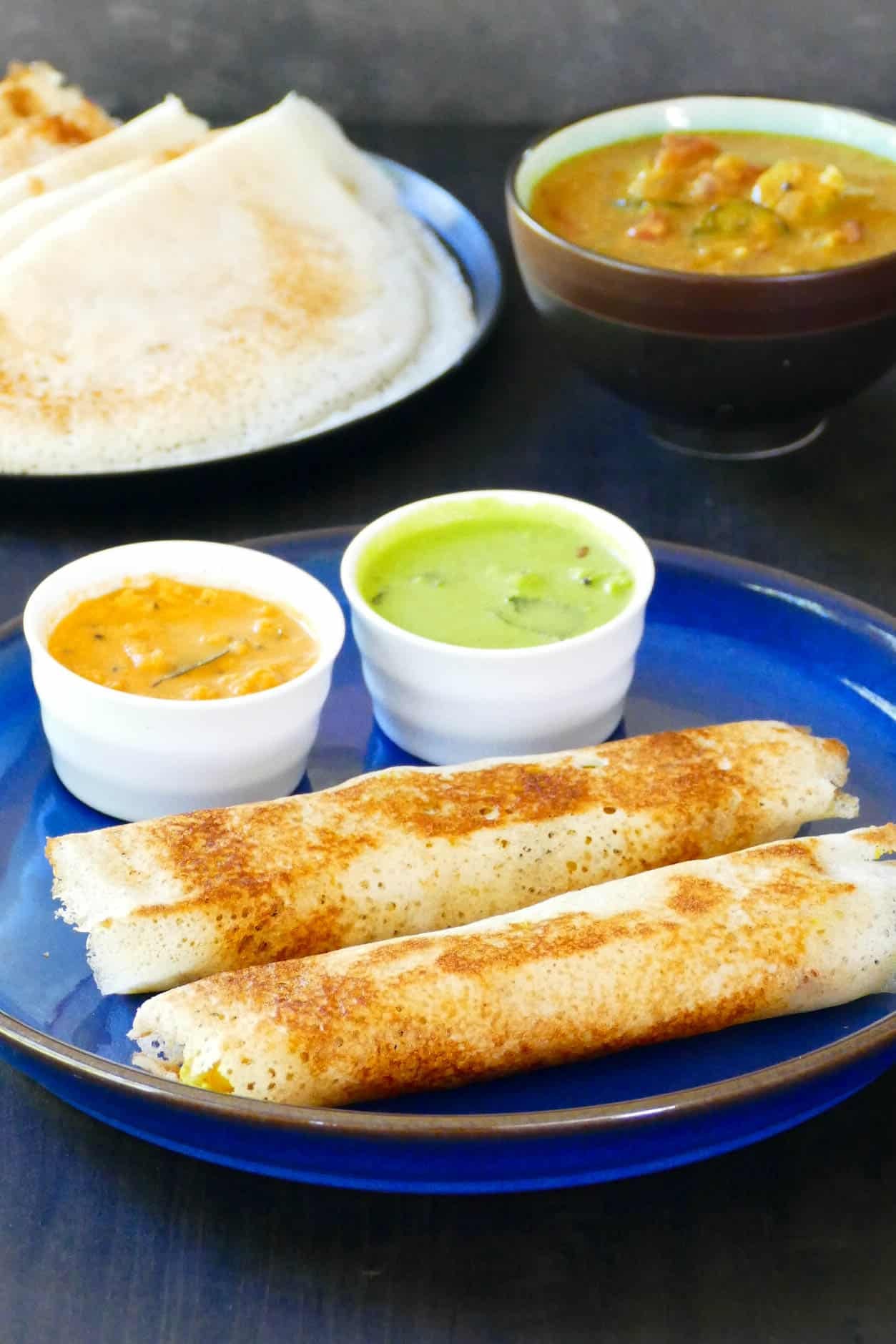
BACK TO TOP
  • « Previous Page
  • 1
  • 2
  • 3
  • 4
  • …
  • 27
  • Next Page »
Neena in red sweater head tilted

Hi, I'm Neena Panicker, and welcome! I am the creator, photographer, and author of recipes and tips at Paint the Kitchen Red. I live in the glorious west in Salt Lake City, Utah with my family.
More about me →

Popular

  • Reasons Why Instant Pot is Not Sealing or Pressurizing
    Reasons For Your Instant Pot Not Sealing
  • Instant Pot Thai Red Curry with colorful vegetables in white bowl with spoon on rich red napkin.
    Instant Pot Thai Red Curry with Chicken
  • 4 Instant pots - 3, 6, 8 and 10 quart - what size instant pot should i buy?!
    Sizes of Instant Pot – What Size do you Need?
  • Instant Pot Chili in white bowl on green cloth with cornbread; topped with cheese, sour cream and green onions - Paint the Kitchen Red
    Homemade Instant Pot Chili (using Dried Beans)
  • Natural Release vs Quick Release
    How To Natural Release Instant Pot vs Quick Release
  • Instant Pot Panang Curry with chicken, green beans, red and green peppers, Thai basil in a white bowl on a light wood background
    Thai Instant Pot Panang Curry with Chicken
  • Beginner's Manual and User's Guide Instant Pot Duo Crisp Air Fryer
    How to Use the Instant Pot Duo Crisp + Air Fryer | Beginner’s Manual

Seasonal

  • 4 ears of corn sitting on husks on a white plate
    Instant Pot Corn on the Cob
  • Wasabi Instant Pot Deviled Eggs with wasabi and pickled ginger on colorful blue plate - Paint the Kitchen Red
    Wasabi Deviled Eggs Recipe – Delicious Appetizer
  • Instant Pot Korean Chicken two thighs and four drumsticks on a dark background, garnished with sesame seeds
    Instant Pot Korean Chicken with Gochujang
  • Instant Pot Thai Grilled Chicken Thighs on dark background with sprinkled cilantro and green onions
    Thai BBQ Chicken
  • Instant Pot Banh Mi sandwich on black background, with meat, daikon, carrots and cilantro; cilantro and green onions sprinkled on surface - Paint the Kitchen Red
    Instant Pot Banh Mi | Vietnamese Sandwich
  • Instant Pot Jamaican Jerk Chicken L1 - Paint the Kitchen Red
    Grilled Instant Pot Jamaican Jerk Chicken
  • Instant Pot beet, arugula, candied walnut salad on white plate with fork or dark background
    Arugula Goat Cheese Beet Salad
  • Instant Pot Ratatouille - round wooden board with cheeses, basil, olives, crostini, cherries, nuts, crackers
    Instant Pot Ratatouille | Braised Summer Vegetables with Fresh Herbs

Featured In

Media that have featured Paintthekitchenred.com including cnet, nbc news, cnbc, instant pot, the huffington post.

Social Media

Footer

↑ back to top

About

  • About Me
  • Contact

Disclosures

  • Privacy Policy
  • Accessibility Statement

Shop

  • Amazon

As an Amazon Associate I earn from qualifying purchases.

Copyright © 2016 - 2026 Paint the Kitchen Red

Rate This Recipe

Your vote:


A rating is required
A name is required
An email is required