
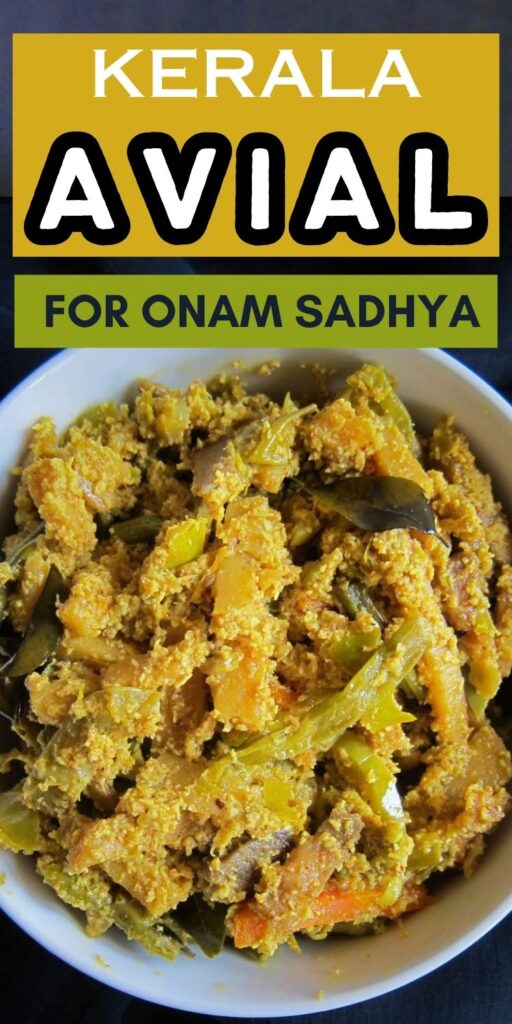
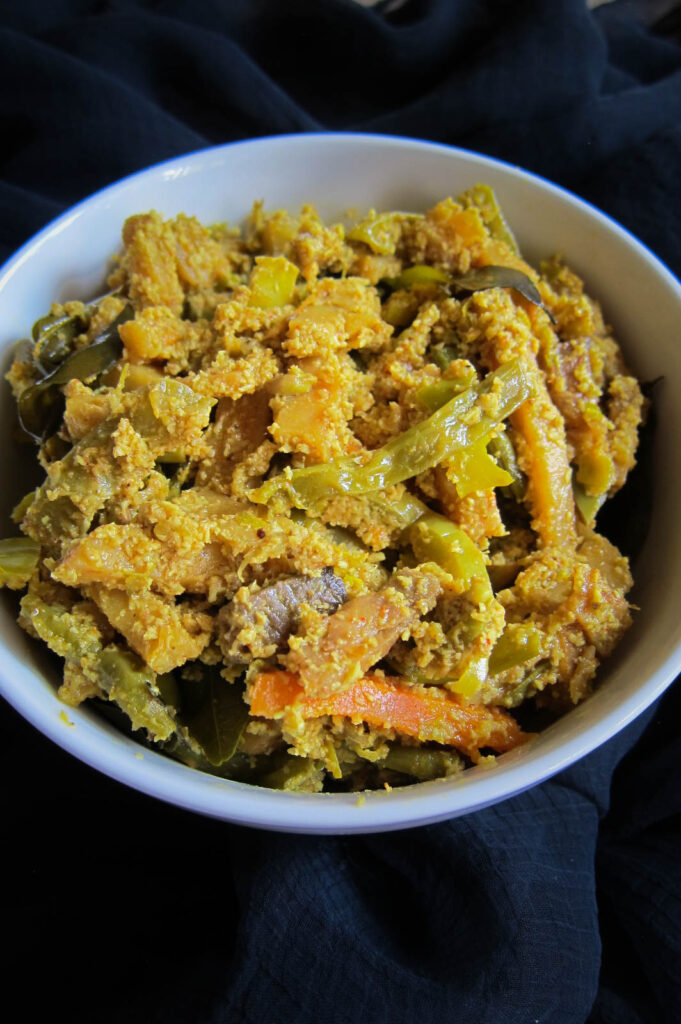
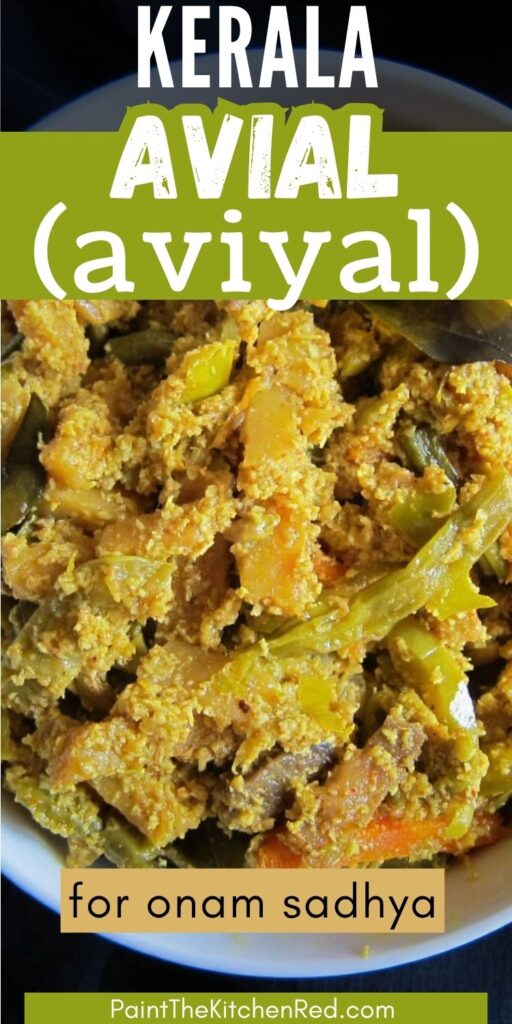
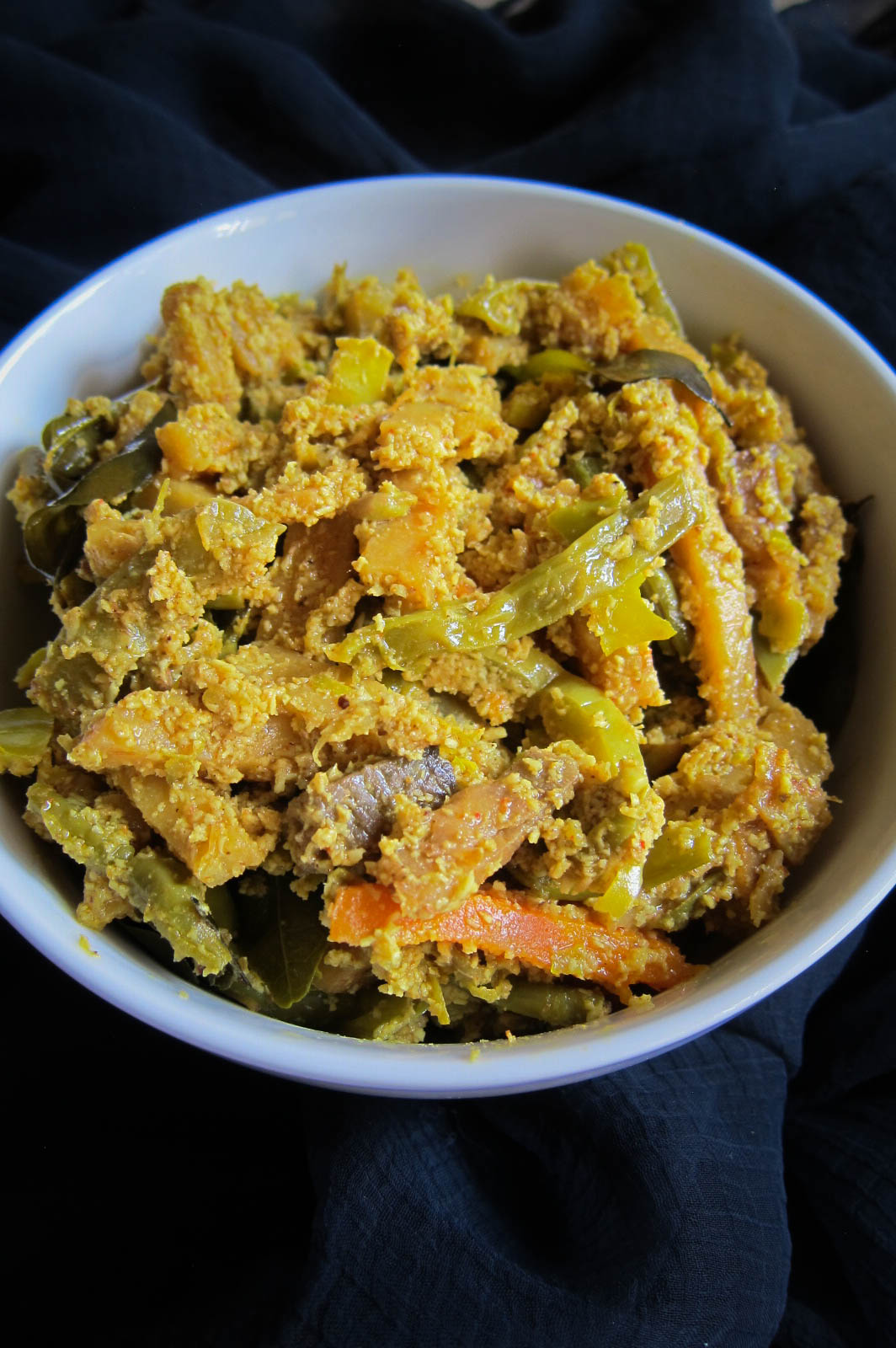
Avial (aviyal) is a Kerala mixed vegetable dish in a thick coconut sauce and is an essential part of a Vishu or Onam sadhya banana leaf meal. My version uses vegetables you can find at most US (or Western) grocery stores.
This post contains affiliate links. As an Amazon Associate, I earn from qualifying purchases. Please read the disclosure.
ℹ️ Introduction
A sadhya feast is not complete without avial (aviyal) – pronounced uh-vee-al. The vegetables are cut into long, thin strips, cooked until just tender, and then mixed with a coarse coconut paste with green chili, shallots, cumin, and curry leaves.
Every family seems to have its own version of Kerala avial recipe. Some use yogurt, others use raw mango for the slightly sour taste that characterizes this dish. My mom’s avial gets its tang from tamarind.

Traditional avial is made with vegetables like raw plantain, drumstick, elephant yam, and ash gourd.
Because I live in the United States, those vegetables aren’t easily available. I’ve adapted this recipe of avial to use carrots, potato, green beans, eggplant, and cucumber or zucchini.
You can add any vegetable you like, including butternut squash, pumpkin, or peas, to name a few. If you have an Indian grocery store nearby, swap in some raw plantain and drumstick.
This is a mild dish, not heavily spiced. It’s meant to sit on the plate next to other curries rather than stand alone. And it’s naturally vegan and gluten-free!
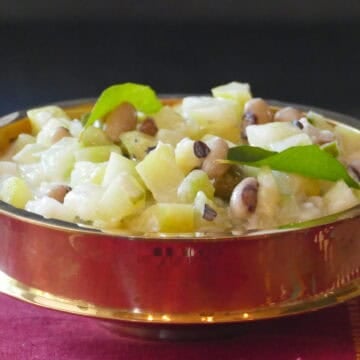
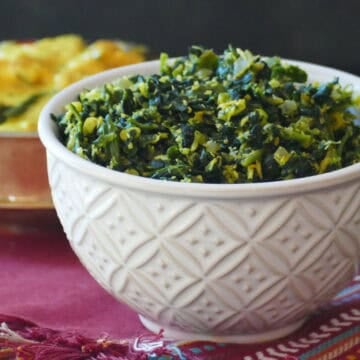
➡ If you’re looking for more authentic Onam sadhya recipes, try olan, spinach thoran, carrot beans thoran, Kerala parippu, cucumber pachadi (kichadi), mango pachadi, kootu curry, inji curry, sambar, and semiya payasam. Or see my full list of Onam sadhya recipes.
💡 Tips
- Curry leaves are important to this Kerala avial recipe. Some are ground into the coconut paste, and the rest go on top at the end, uncooked. Use fresh curry leaves, if you can.
- Use a good virgin, unrefined coconut oil. The final drizzle is not cooked through, so you’ll taste it. I like the one from Trader Joe’s or Viva Naturals from Amazon.
- Don’t overcook the vegetables. The potato is your guide: add the tamarind water when the potato is cooked through, but still quite firm. Everything finishes cooking in the coconut sauce.
- Frozen vegetables tend to become mushy, so use fresh ones. The exception is frozen drumsticks (muringakka), which can be added towards the end of cooking.
- While the vegetables sit with the spices for 15 minutes, soak the tamarind and grind the coconut paste.
- Grind the coconut to the texture of a thick pesto. It should be wetter than a thoran coconut paste but thicker than parippu coconut paste.
- Once you add the coconut mixture, keep the heat on low and don’t let it boil. Avial doesn’t have much liquid, but it shouldn’t be dry either. Add a splash of water if it gets too thick.
- Tamarind water is added once the vegetables are almost cooked, because adding it sooner can make the cook time longer.
- Avial gets drier as it sits, so if it’ll be a while before you serve it, leave it a little more liquidy.
- Peel the cucumber, but leave the skin on if using zucchini.
- Avial is best made fresh, but you can grind the coconut mixture ahead of time and keep it covered in the fridge until you’re ready to cook.
- Leftovers keep in the fridge for a maximum of 3 days. Don’t freeze avial, because the coconut doesn’t hold up well. Reheat in the microwave.
- I prefer the milder taste of shallots, but you can use onions instead.
- Add green chili to taste. One chili gives you a mild avial and two gives it a little more spice. I like to use serrano chili peppers because they tend to have a more consistent spiciness compared to jalapeño peppers.
🔄 Variations
- No onion: My mom uses shallots in her avial, and so do I. There are recipes that omit the onion. Feel free to do so.
- Raw plantain and drumstick: If you are able to find them, replace 1 carrot with ½ raw plantain and ½ drumstick, cut the same size as the other vegetables. Frozen drumstick works well here if you add it towards the end of cooking.
- Traditional vegetables: If you have an Indian grocery store nearby, make this avial with the traditional mix of carrot, ash gourd, eggplant, raw plantain, jackfruit seeds, elephant yam, drumstick, and green beans. Quarter the jackfruit seeds and cut everything else into the same 2-inch strips.
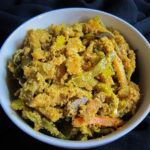
Kerala Avial (Aviyal) Recipe
Ingredients
- 2 carrots peeled
- 1 potato medium-sized, peeled
- 10 green beans
- 1 cucumber small, peeled [See Note 1]
- ¼ eggplant [See Note 1]
- ½ teaspoon turmeric powder
- 1½ teaspoon salt or to taste
- ½ teaspoon Kashmiri chili powder
- 2 teaspoons coconut oil
- tamarind pulp 1 inch, about the size of a cherry
- 2 tablespoons hot water
- 1 cup grated fresh coconut fresh or frozen, thawed [See Note 3]
- ¼ cup shallots chopped, or onion
- 1 to 2 green chilis to taste
- ½ teaspoon cumin seeds
- ½ to ¾ cup water
- 6 curry leaves
- ½ cup water
- 10 curry leaves
- 1 tablespoon coconut oil virgin, unrefined
Instructions
- Cut 2 carrots, 1 potato, 10 green beans, 1 cucumber, and ¼ eggplant into 2 x ½ inch sticks. [See Note 1]
- Mix ½ teaspoon turmeric powder, 1½ teaspoon salt, ½ teaspoon Kashmiri chili powder, and 2 teaspoons coconut oil with vegetables. Let it sit for 15 minutes.
- In a small bowl combine tamarind pulp with 2 tablespoons hot water. Break up the tamarind with your fingers. Set aside. If using tamarind concentrate, start with ½ teaspoon and you can add more later to taste. [See Note 2]
- In a blender or food processor, process the 1 cup grated fresh coconut, ¼ cup shallots, 1 to 2 green chilis (or to taste), and ½ teaspoon cumin seeds, with enough water to get the contents moving freely (about ½ to ¾ cup water). It should be the consistency of thick pesto (more than thoran, less than parippu). Right at the end, add 6 curry leaves and briefly process so they are roughly chopped.
- Combine the cut vegetables and ½ cup water in a large saucepan and bring to a boil. Cover the pan and cook the vegetables over medium-low heat for 10 minutes, or until the potato is cooked but still firm. Strain the solids from the reserved tamarind and stir in the liquid. Cook for another 5 minutes.
- Stir the coconut mixture into the cooked vegetables. Add a tablespoon or two of water if the mixture is too thick. Turn the heat down to low, and heat through for 5 minutes. Don’t let it boil. This curry doesn’t have much liquid, but should not be too dry. [See Note 4]
- Sprinkle in the remaining 10 curry leaves and 1 tablespoon coconut oil. Don’t stir. Cover until ready to serve. Stir just before serving. [See Note 5]
Notes
Nutrition
Thank you for visiting Paint the Kitchen Red. All photos and content are copyright protected. Please don’t use any content without prior written permission. If you’ve made this recipe and would like to share it with your friends, please link back to this recipe. Thank you!
I am not a certified nutritionist. I provide my best estimate of nutritional information merely as a courtesy to my readers. If you depend on nutritional information for dietary or health reasons, I suggest using your favorite online nutrition calculator to confirm the nutritional value of this recipe based on the actual ingredients that you use.
Did you know that the best way to support your favorite bloggers is to comment and rate recipes, and share on social media? If you loved this recipe, please comment and give it a five ⭐ rating in the comment section below. If you’re a pinner, pin this post using the Pin buttons at the top and bottom of this post and in the recipe card above. Thank you for your support!

Questions, Comments? I love hearing from my readers and I reply to all comments!